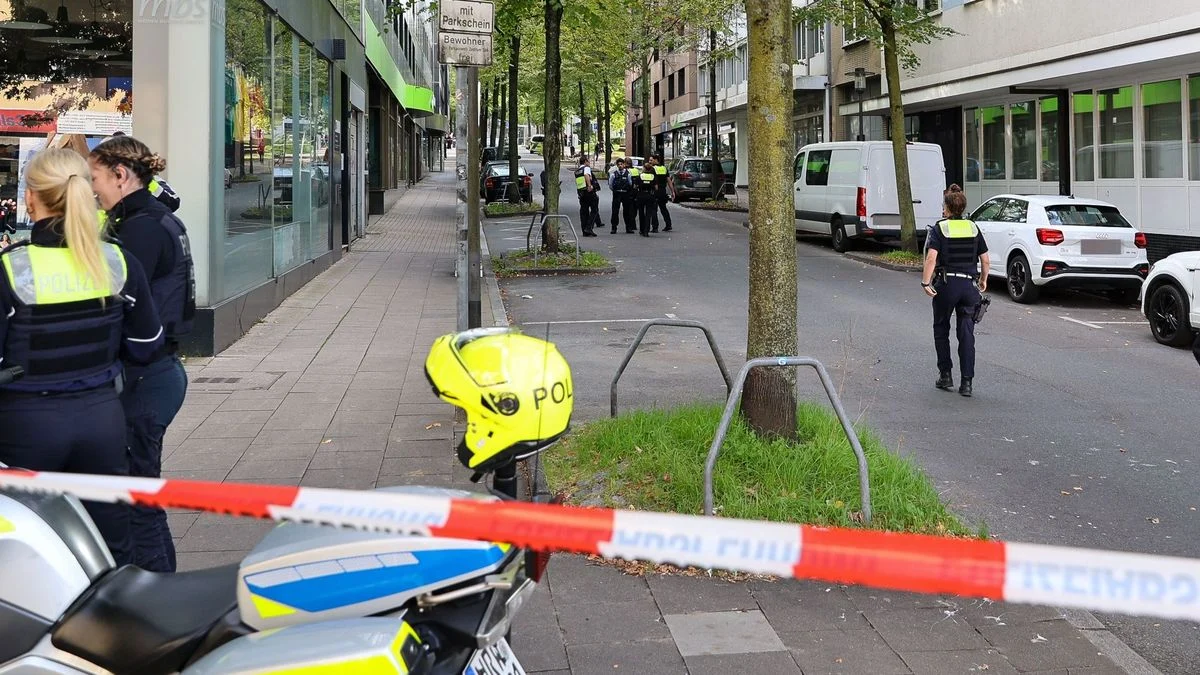
Executive Summary: A Brazen Daylight Escape
In a startling display of organized criminality, a 34-year-old prisoner escaped custody in the heart of Essen, Germany, on Wednesday afternoon. The incident, which took place at a medical practice near the bustling Kennedyplatz, involved a coordinated armed assault on two judicial officers tasked with escorting the inmate to a routine appointment.
The escape, which saw the prisoner vanish into the city’s dense urban center on an electric scooter, has triggered a massive, ongoing manhunt. Law enforcement agencies in North Rhine-Westphalia (NRW) have deployed a significant number of officers to scour the region, while simultaneously releasing photographs of the fugitive to the public in an urgent appeal for information. While the two judicial officers were subjected to a violent struggle and subsequent restraint, authorities have confirmed that, miraculously, neither sustained physical injuries.
The Chronology: Anatomy of an Escape
The sequence of events began shortly after midday on Wednesday. The 34-year-old inmate, whose identity has been publicized as part of the ongoing manhunt, was being escorted by two judicial officers to a medical appointment located in a multi-story building in the immediate vicinity of Kennedyplatz.
The Ambush
As the group reached the building’s hallway, they were intercepted by two armed accomplices. The operation appears to have been meticulously planned, catching the officers off guard in a high-traffic urban setting. According to reports from the news agency dpa, the encounter quickly devolved into a physical altercation.
During the struggle, one of the judicial officers managed to draw their service weapon in a desperate bid to defend themselves and maintain custody of the prisoner. However, the attackers succeeded in knocking the weapon from the officer’s hand, neutralizing the security detail. Sources familiar with the investigation confirmed that the officers were then forcibly restrained by the assailants.
The Flight
With the guards incapacitated, the group fragmented. The 34-year-old inmate fled the scene on an e-scooter, utilizing the nimble transport to weave through the pedestrian-heavy streets of Essen’s city center. His two accomplices fled in different directions, further complicating the initial police response.
The alarm was raised by employees at the medical practice who witnessed the aftermath of the assault and immediately contacted the authorities. Within minutes, the area was swarmed by police, but the fugitive had already successfully navigated away from the immediate vicinity of the Kennedyplatz.
Supporting Data and Contextual Geography
The location of the incident—Kennedyplatz—is one of Essen’s most prominent and recognizable urban hubs. It serves as a central intersection for the city, surrounded by a high density of restaurants, cafés, and office buildings, including a large concentration of specialized medical practices.
The Urban Challenge
Because the crime occurred during daylight hours in such a public, central location, the escape presented significant challenges for law enforcement. The square is a transit point for thousands of citizens daily, making it an ideal location for someone attempting to blend into a crowd, yet a nightmare for securing a perimeter.
The use of an e-scooter, a common mode of transit in German cities, highlights the opportunistic nature of the escape. By choosing a vehicle that is ubiquitous in modern urban environments, the suspect effectively exploited the city’s infrastructure to evade immediate detection.
The Search Effort
The police response was swift and extensive. By Wednesday evening, the official manhunt had been elevated to a state-wide priority. Authorities issued a public warning, urging citizens not to approach the suspect if spotted, but rather to report his location immediately to the nearest police station or via the emergency hotline.
The public call for information included the dissemination of the suspect’s photograph, an indicator of the urgency with which authorities are treating the case. As of Thursday morning, the search has expanded beyond the city limits, with police coordinating across multiple jurisdictions to ensure the suspect does not escape the region.
Official Responses and Security Implications
The brazen nature of this escape has sent shockwaves through the German judicial and law enforcement communities. The fact that a prisoner could be successfully liberated from two guards in a busy medical building raises uncomfortable questions regarding the current protocols for medical escorts of high-risk inmates.
Judicial Security Protocols
The Ministry of Justice in North Rhine-Westphalia is expected to launch a formal investigation into the security failure. Questions have already been raised regarding the risk assessment of the prisoner: Was he deemed a high-flight risk? Were the two officers sufficiently prepared for a potential intervention?
Sources within the security apparatus suggest that this incident will lead to a comprehensive review of transport procedures. It is highly likely that future medical escorts will require significantly higher levels of security, potentially involving armed police units rather than standard judicial personnel, particularly for individuals linked to organized crime syndicates.
The Debate on "Clankriminalität"
The escape has reignited a heated and long-standing debate in Germany regarding "Clankriminalität" (clan criminality). Authorities often use this term to describe criminal activities originating from ethnically segregated subcultures, specifically referring to large, transnational families of Turkish-Arab origin.
The term, however, remains highly contentious. Supporters of the label argue that it is a necessary tool for identifying specific social structures that enable organized crime, providing police with a framework to dismantle these networks. Conversely, critics argue that the term is discriminatory and stigmatizing. They contend that focusing on "clans" unfairly targets individuals based on their family name or ethnic background, rather than their individual actions, potentially fueling xenophobia and social alienation.
This incident serves as a flashpoint for this broader sociological debate. While police have not explicitly labeled the suspects as members of a specific clan in their public statements, the nature of the organized, tactical intervention is precisely the kind of behavior that officials associate with these groups.
The Broader Implications for Public Safety
This incident is not merely an isolated case of a fugitive on the run; it is a symptom of a larger struggle between state authorities and organized crime groups operating within Germany’s urban centers.
The Erosion of Public Order
When criminal organizations feel emboldened enough to launch an armed assault on state officers in broad daylight, it signals a direct challenge to the state’s monopoly on the use of force. The psychological impact on the public—who witnessed this violence in a common city square—cannot be overstated. It creates a sense of vulnerability and undermines confidence in the ability of the state to maintain law and order.
Future Prevention
Moving forward, the authorities face two primary tasks:
- The Apprehension: Successfully locating and re-arresting the 34-year-old fugitive.
- Systemic Reform: Ensuring that the methods used in this escape—the coordination, the tactical intervention, and the exploitation of public transit—cannot be repeated.
As the manhunt continues, the city of Essen remains on edge. The incident serves as a stark reminder of the complexities involved in modern law enforcement, where the lines between civil society and organized criminality are increasingly blurred. The success of the police in this case will be measured not just by the capture of the individual, but by the restoration of public trust in the security of the judicial system.
Final Word: The Road Ahead
The investigation is ongoing, with forensic teams continuing to process the medical practice and the surrounding areas for any additional evidence that might lead to the suspect’s whereabouts. Law enforcement remains tight-lipped about potential leads, maintaining a focus on the immediate apprehension of the suspect.
For the residents of Essen, the events of Wednesday are a sobering reminder of the volatility present in their daily lives. For the government of North Rhine-Westphalia, the clock is ticking to rectify the security failures that allowed this escape to occur, as the public waits for answers on how such a high-stakes crime could unfold in the center of their city.