In a bold move to bridge the gap between automotive heritage and the sustainable future, Citroën has unveiled its latest vision: the 2CV Concept. Revealed on the eve of the Paris Motor Show, the study serves as a poignant, electrified tribute to the legendary "Ente" (the Duck), arguably the most iconic French vehicle ever produced. As the Stellantis-owned brand sets its sights on a 2028 production timeline, the industry is buzzing with anticipation over whether a modern, budget-friendly, and lightweight electric vehicle (EV) can capture the soul of its mid-century predecessor.
The Core Concept: Simplicity Meets Modernity
The 2CV Concept is not merely a nostalgia project; it is a strategic attempt to redefine the entry-level segment of the European electric vehicle market. Measuring 3.76 meters in length—ironically, slightly shorter than the historical 2CV—the concept aims to slot neatly between the ultra-compact Citroën Ami and the more traditional e-C3 small car.
Citroën’s leadership, including CEO Xavier Chardon, has been emphatic that the project is not a simple "retro-copy." Instead, the goal is to distill the core philosophy of the original 2CV: simplicity, accessibility, and the sense of freedom it afforded its drivers. By focusing on a target weight of approximately one metric ton, Citroën hopes to solve the "weight creep" that currently plagues the EV sector. A lighter chassis allows for a smaller, more affordable battery pack, which in turn keeps both the production costs and the vehicle’s environmental footprint in check.
A Chronology of the 2CV’s Evolution
To understand the weight of this announcement, one must look at the timeline of the 2CV and the current trajectory of the Stellantis group:

- 1948: The original 2CV makes its debut at the Paris Motor Show, revolutionizing mobility for the rural and working-class population of post-war France.
- 1990: Production of the 2CV officially ceases, marking the end of an era that spanned over four decades of global cultural relevance.
- May 2024: Stellantis announces its "FaSTLane 2030" strategy, confirming plans to revisit the 2CV identity as part of its electrification roadmap.
- October 2026: The 2CV Concept is unveiled in Paris, signaling a clear intent to bring the nameplate back to European roads by 2028.
- 2028 (Target): The planned market launch for the series-production version, with a target entry-level price of approximately €15,000.
Supporting Data and Technical Ambiguity
While the concept car is a visual delight, Citroën remains tight-lipped regarding the technical specifications of the potential production model. There are no official details regarding battery chemistry, usable capacity, motor power, WLTP range, or charging capabilities. However, industry insiders and automotive publications like CAR Magazine suggest a target range of at least 200 kilometers (approx. 125 miles), which would make the vehicle a viable urban commuter capable of occasional highway travel.
The "one-ton" weight target is perhaps the most ambitious aspect of the proposal. For context, the original 2CV weighed between 500 and 600 kilograms. Doubling that weight in the modern era, given the requirements for crash safety, modern electronics, and battery cooling, is a significant engineering challenge. However, by modern standards, a 1,000kg electric vehicle would be exceptionally light, positioning it well against heavier competitors.
The design team has incorporated several "smart" cost-cutting measures, including the use of flat body panels and modular bumpers that are easy to replace. This focus on "repairability" is a nod to the original car’s DIY-friendly nature and aims to keep long-term maintenance costs significantly lower than the industry average.
Official Responses and Design Philosophy
Citroën’s design language for the concept is deliberate. It features free-standing round headlights, a steep, upright windshield, and the signature fabric folding roof—all hallmarks of the original design. The interior is a masterclass in minimalist charm: the front bench seat is removable, and the traditional center console has been replaced with a removable basket.

"Reinventing the 2CV does not mean copying a car from the past," explained CEO Xavier Chardon. "It means reinterpreting the attributes that made it unique: its simplicity, its accessibility, and the freedom it gave its users."
The dashboard features a clever blend of analog and digital: a "Radioën" unit that can be removed from the car, an integrated head-up display, and a modest 8-inch touchscreen. In a playful touch, the pedals are labeled with a turtle (for the brake) and a rabbit (for the accelerator), mirroring the playful spirit that defined the original 2CV’s driving experience.
Implications for the EU Market
Citroën’s bet on the 2CV is fundamentally a bet on the future of the European small-car segment. The brand is closely monitoring proposed EU regulations, specifically the potential introduction of an "M1E" vehicle sub-category for electric cars under 4.2 meters. If approved, this classification could grant manufacturers, such as Stellantis, credits toward their CO2 fleet emissions targets, incentivizing the production of smaller, more affordable EVs.
However, the path to a €15,000 price point is fraught with obstacles. Currently, competitors like the Renault Twingo E-Tech, the Dacia Spring, and the BYD Dolphin set the bar for the entry-level market. Each of these vehicles offers a different trade-off between range, features, and price. For the 2CV to succeed, it must not only compete on price but also convince a modern audience that its "minimalist" approach is a feature, not a compromise.

A Broader Trend: The Retro-Electric Wave
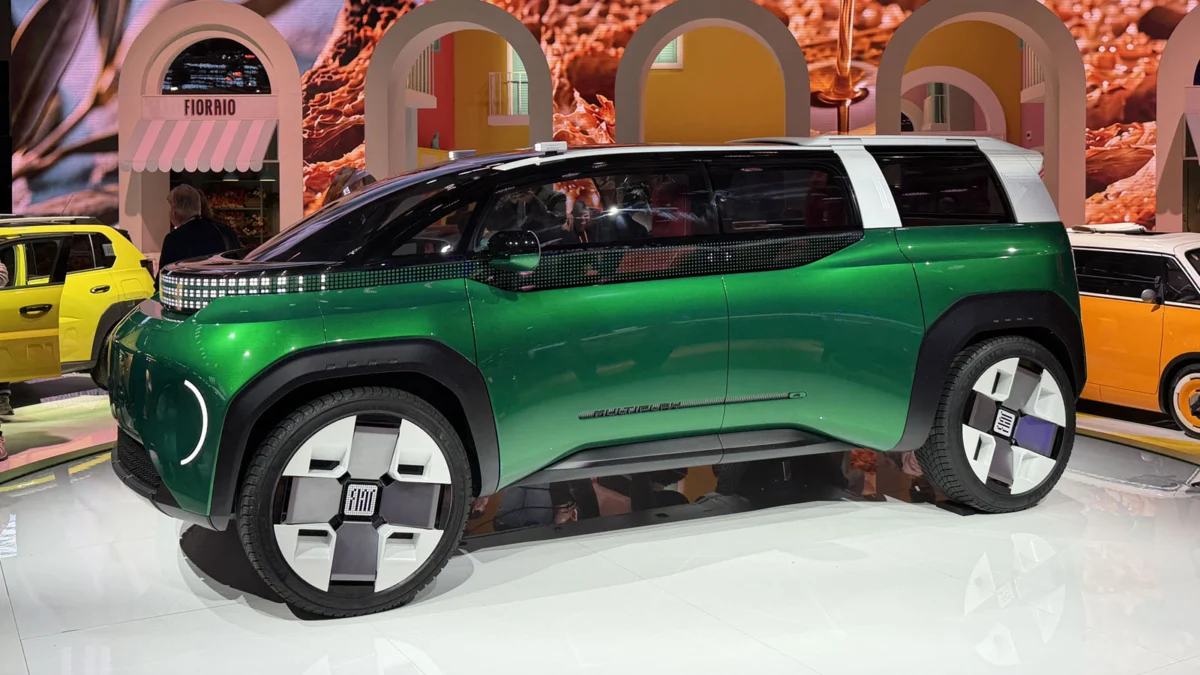
The 2CV Concept is part of a larger trend appearing at the 2026 Paris Motor Show. Manufacturers are increasingly looking to their back catalogs to differentiate themselves in a crowded EV market. Renault, for instance, has showcased its own electric design studies, including an R8-Gordini coupe and a conceptual "E-Space" van. Fiat has also joined the fray with the "Multiplay" concept.
These manufacturers are realizing that in a world where electric powertrains are becoming commoditized, brand identity and emotional connection are the most potent tools for capturing market share. By tethering the future of mobility to the fond memories of the 20th century, Citroën is hoping to turn the "Ente" into a symbol of modern, sustainable, and, above all, accessible urban mobility.
Conclusion
The Citroën 2CV Concept is a compelling proposition that balances the weight of history with the pressing demands of the future. Whether it can maintain its promised €15,000 price tag while delivering the range and safety features required by modern drivers remains to be seen. However, in an industry often criticized for producing increasingly large and expensive SUVs, the prospect of a lightweight, affordable, and charmingly simple electric car is a welcome breath of fresh air.
As the 2028 production deadline approaches, the automotive world will be watching closely to see if Citroën can indeed "re-invent" the icon, or if the 2CV will remain a beautiful, but unreachable, dream. For now, the concept serves as a reminder that the future of transportation doesn’t always have to be about more power or more technology—sometimes, it’s about returning to the essence of what made driving fun in the first place.