Brussels/Ramallah, October 15, 2026 – The European Union has voiced strong criticism regarding the recent decision by Palestinian President Mahmoud Abbas to once again postpone legislative and presidential elections, further extending a democratic deficit that has plagued the Palestinian territories for nearly two decades. The move, which pushes the anticipated November 2026 polls to September 2027, has drawn sharp rebuke from Brussels, emphasizing the urgent need for a legitimate and representative Palestinian leadership.
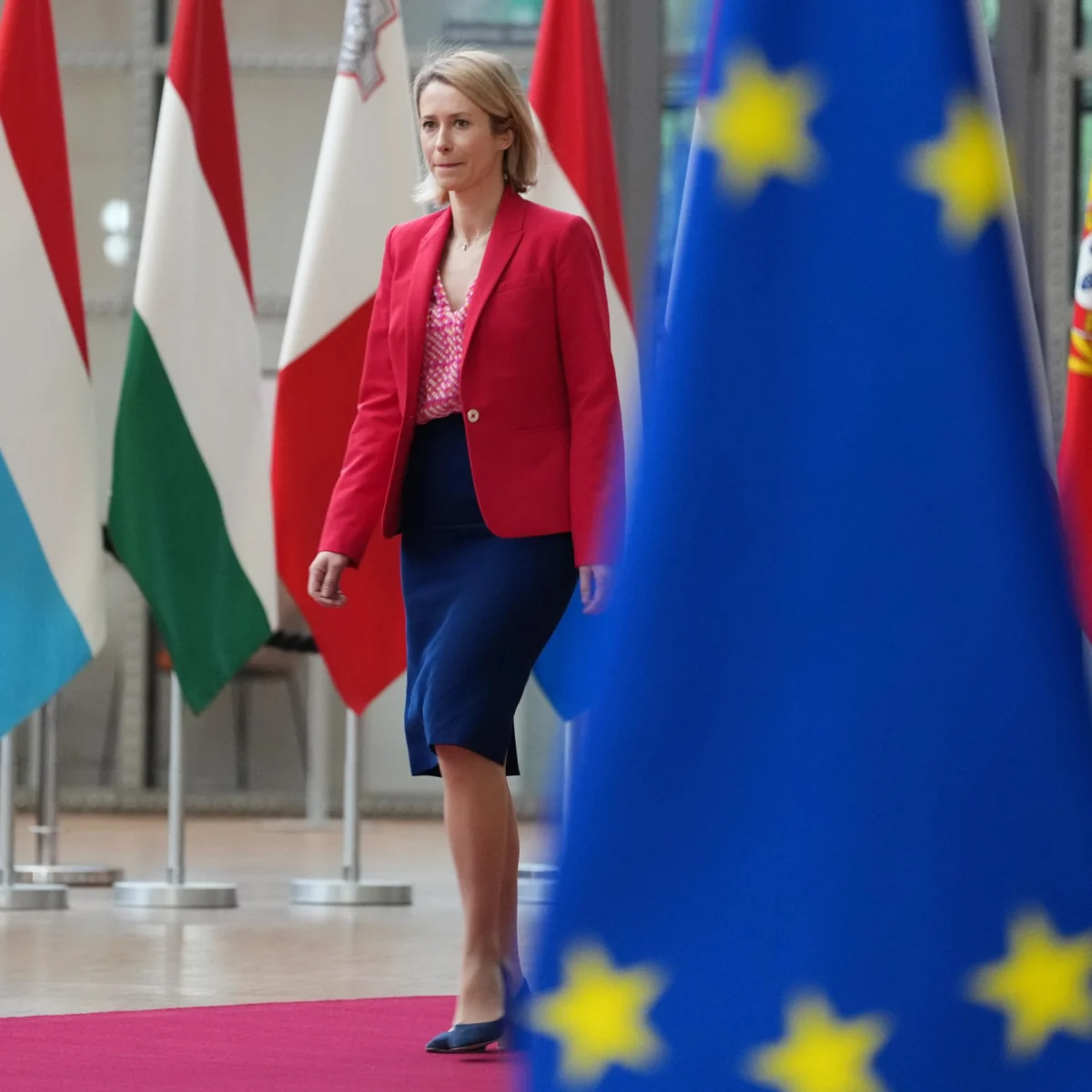
In a statement released by EU High Representative for Foreign Affairs and Security Policy, Kaja Kallas, the Union reiterated its long-standing position that "democratic and transparent elections are long overdue" for the Palestinian people. Kallas underscored the fundamental right of Palestinians to choose their political leadership and representatives in key institutions, a right essential for both internal legitimacy and the broader prospects of peace and self-determination. The image accompanying the statement depicted Kaja Kallas in Brussels, a symbolic representation of the EU’s diplomatic engagement (picture alliance/ASSOCIATED PRESS/Virginia Mayo).
President Abbas justified the postponement by citing a complex array of challenges, including ongoing Israeli military restrictions in the West Bank and East Jerusalem, as well as an alarming surge in attacks by armed Jewish settlers. However, critics, both internationally and domestically, view the delay with skepticism, pointing to President Abbas’s own extended tenure, which has far exceeded his constitutionally mandated four-year term since its expiration in 2009. This latest deferral marks another chapter in a troubled history of unfulfilled electoral promises, further entrenching the Palestinian Authority (PA) under a leadership that has not faced a popular vote in two decades.
A Decades-Long Democratic Deficit
The current crisis surrounding Palestinian elections is not an isolated event but rather the latest manifestation of a deeply entrenched democratic deficit. Since the last legislative elections in 2006, the Palestinian political landscape has been characterized by division, stagnation, and a persistent absence of popular mandate, significantly impacting governance, accountability, and the international community’s ability to engage effectively.
The EU’s Principled Stance
The European Union has consistently been a vocal advocate for democratic processes and human rights worldwide, and its position on Palestinian elections is no exception. As one of the largest donors to the Palestinian Authority and a key proponent of a two-state solution, the EU views legitimate elections as indispensable for fostering stability, strengthening institutions, and providing a credible partner for future peace negotiations. High Representative Kallas’s statement reflects this foundational belief. The emphasis on "democratic and transparent elections" highlights not only the need for polls but also for a process that is free, fair, and inclusive, allowing all eligible Palestinians, regardless of their political affiliation or geographic location within the West Bank, East Jerusalem, or Gaza Strip, to participate meaningfully. The EU believes that without a renewed popular mandate, the Palestinian leadership’s legitimacy, both at home and abroad, continues to erode, making it more challenging to address the profound political, social, and economic crises facing the Palestinian people.
President Abbas and the Prolonged Interim
Mahmoud Abbas was elected President of the Palestinian Authority in January 2005, following the passing of Yasser Arafat. His initial four-year term was intended to conclude in 2009. However, due to the deepening schism between his Fatah movement and Hamas, which took control of the Gaza Strip in 2007, and subsequent political deadlock, elections have not been held since. This prolonged "interim" period has meant that Abbas has governed without a fresh popular mandate for over seventeen years, making him one of the longest-serving non-elected leaders in the region.
This extended tenure has significant implications. It raises questions about the democratic credentials of the PA, diminishes its accountability to the Palestinian public, and weakens its negotiating position on the international stage. Critics argue that the absence of elections has stifled political renewal, consolidated power, and prevented a new generation of leaders from emerging, exacerbating public frustration and cynicism towards the political system. The lack of a clear succession plan further adds to the uncertainty surrounding the future of Palestinian governance.
A Troubled Chronology of Missed Opportunities
The history of Palestinian elections post-Oslo Accords is marked by sporadic success followed by long periods of political paralysis and repeated deferrals, painting a picture of a democratic process struggling to take root amidst geopolitical complexities and internal divisions.
The Promise of 2006 and its Aftermath
The last legislative elections, held in January 2006, were initially hailed as a significant step towards Palestinian self-determination and democratic governance. However, the unexpected victory of Hamas, an Islamist movement designated as a terrorist organization by Israel and several Western countries, plunged the Palestinian territories into a profound crisis. The international community largely refused to deal with a Hamas-led government, leading to a financial blockade. This, combined with internal power struggles, culminated in the violent Fatah-Hamas split in June 2007, with Fatah retaining control of the West Bank and Hamas consolidating power in Gaza. This geographical and political division has since remained the single most significant internal obstacle to holding unified, comprehensive elections across all Palestinian territories. The separation of governance, legal systems, and security apparatuses between the West Bank and Gaza makes any unified electoral process logistically and politically fraught.
Recurring Delays and Broken Pledges
Since 2006, there have been multiple attempts and pledges to hold new elections, all of which have ultimately failed.
- 2010: Abbas called for elections but faced resistance from Hamas, which did not recognize his legitimacy beyond 2009.
- 2014: A unity government was formed between Fatah and Hamas with the stated aim of preparing for elections, but this initiative quickly collapsed.
- 2021: Perhaps the most significant recent attempt, President Abbas issued a decree in January 2021 scheduling legislative elections for May, presidential elections for July, and Palestinian National Council elections for August. This announcement sparked widespread hope and enthusiasm among Palestinians and the international community. Political factions began campaigning, and voter registration saw a significant uptake. However, in April 2021, Abbas cancelled the elections, citing Israel’s refusal to allow voting in East Jerusalem. While the issue of East Jerusalem is a genuine and critical concern, many observers believed it served as a convenient pretext for Abbas, who feared a potential Fatah defeat amidst internal party divisions and growing public dissatisfaction.
The current postponement from November 2026 to September 2027, therefore, is not an anomaly but a continuation of a pattern. It further prolongs the political limbo and deepens the sense of disillusionment among a population yearning for a say in its future. The latest delay impacts both the parliamentary elections, which would elect a new Palestinian Legislative Council (PLC), and the presidential elections, which would determine the next head of the Palestinian Authority.
Complex Justifications and Contested Realities
President Abbas’s rationale for postponing the elections hinges on external factors, specifically Israeli actions and settler violence. While these are undeniable challenges within the Palestinian context, their role as the sole or primary reason for election delays is often debated.
Israeli Restrictions: A Persistent Obstacle
Abbas’s primary justification often centers on Israel’s alleged refusal to permit elections in East Jerusalem, which Palestinians claim as the capital of their future state. Israel maintains de facto control over East Jerusalem, which it annexed after the 1967 Six-Day War, a move not recognized by most of the international community. Holding elections there requires Israeli consent and cooperation for logistical reasons, including allowing campaigning, voter registration, and polling stations. Israel has historically been reluctant to facilitate Palestinian elections in East Jerusalem, particularly if candidates or parties perceived as hostile to Israeli security interests are involved.
Beyond East Jerusalem, Israeli military restrictions in the West Bank can also pose logistical hurdles. Movement restrictions, checkpoints, and military operations can complicate voter access to polling stations, disrupt campaigning activities, and deter potential voters and candidates. While these are legitimate concerns that need to be addressed to ensure free and fair elections, critics argue that they have sometimes been selectively highlighted or exaggerated by the Palestinian leadership to justify internal political decisions.
The Escalating Threat of Settler Violence
Another factor cited by President Abbas is the escalating violence perpetrated by armed Jewish settlers in the West Bank. In recent years, there has been a documented increase in settler attacks against Palestinians, their property, and agricultural lands. These attacks, often carried out with impunity or insufficient intervention from Israeli security forces, create an environment of fear and instability. For an election process, such violence could indeed deter voters, especially in vulnerable communities, and disrupt campaign rallies or voter outreach efforts. The presence of armed settlers and the resulting insecurity could make it genuinely challenging to ensure the safety of candidates, election workers, and the general public during an electoral period. This concern is particularly acute in areas adjacent to Israeli settlements or those prone to friction.
Internal Divisions and Hamas’s Role
While not explicitly highlighted by Abbas as a reason for this specific postponement, the enduring Fatah-Hamas split remains the most significant internal impediment to unified Palestinian elections. Hamas, which governs Gaza, has often viewed elections called by Abbas with suspicion, questioning their legitimacy if they don’t involve full agreement and participation from all factions. Past reconciliation attempts have failed to bridge the ideological and political chasm, leaving the two main Palestinian political entities at loggerheads. Without a genuine, inclusive national reconciliation, holding elections across both the West Bank and Gaza with unified lists and recognized results remains a monumental challenge. The risk of Hamas winning again, or of a low turnout due to internal boycotts, presents a strategic dilemma for Fatah and the PA, which seek to maintain their international legitimacy and donor support. Many analysts suggest that the internal political calculations and the fear of an unfavorable outcome for Fatah play a more significant role in election postponements than the external factors alone.
International Reactions and Mounting Pressure
The international community, particularly those nations and organizations invested in a peaceful resolution to the Israeli-Palestinian conflict, has consistently advocated for Palestinian democratic renewal. The EU’s latest condemnation is part of a broader, consistent call for accountability and the restoration of a popular mandate.
Beyond the EU: Global Calls for Democracy
Beyond the European Union, various international actors have expressed their concern over the lack of Palestinian elections. The United Nations has repeatedly called for free, fair, and inclusive elections as a cornerstone of Palestinian state-building and self-determination. The United States, while often more cautious in its public statements regarding internal Palestinian politics, has also implicitly and explicitly supported the idea of democratic governance and the need for a renewed mandate. Other regional and international bodies, recognizing the importance of stability and legitimacy, have echoed these sentiments. The cumulative effect of these international statements is to place continuous, albeit often indirect, pressure on the Palestinian leadership to uphold democratic principles.
The Fragile State of Palestinian Governance
The prolonged absence of elections has profoundly impacted the Palestinian Authority’s governance. Without a fresh mandate, the PA’s ability to implement reforms, command public trust, and engage in meaningful negotiations with Israel is severely hampered. Donor nations, including EU member states, face a dilemma: how to support an authority that lacks democratic legitimacy while still providing essential services to millions of Palestinians. This fragility not only undermines the PA’s internal effectiveness but also complicates the broader international efforts towards a two-state solution, as a strong, legitimate Palestinian partner is seen as crucial for any viable peace process. The current situation perpetuates a cycle where a weakened PA struggles to assert its authority, leading to further questions about its representativeness and effectiveness.
Implications for the Future of Palestinian Self-Determination
The repeated postponement of elections has far-reaching consequences, threatening to undermine the very foundation of Palestinian self-determination and potentially exacerbating instability in an already volatile region.
Erosion of Legitimacy and Public Discontent
The most immediate and critical implication is the further erosion of the Palestinian Authority’s legitimacy in the eyes of its own people. A generation of Palestinians has grown up without ever casting a vote for their national leadership. This democratic vacuum fosters deep cynicism, frustration, and a sense of disenfranchisement. It can lead to increased political apathy, but also, more dangerously, to radicalization, as disillusioned youth may turn to non-democratic or violent avenues to express their grievances. The inability of the PA to deliver on basic democratic rights undermines its claim to represent the Palestinian people and complicates its internal stability, potentially leading to increased protests or challenges to its authority. The lack of a clear mechanism for political change breeds resentment and reduces hope for a better future.
Challenges to the Two-State Solution
For proponents of a two-state solution, the democratic deficit within the Palestinian Authority presents a significant hurdle. A credible, legitimate Palestinian leadership is an essential prerequisite for any meaningful peace negotiations with Israel. An unelected, aging leadership struggles to make bold decisions or secure public buy-in for difficult compromises that would be necessary for a lasting peace agreement. The international community finds it increasingly difficult to rally support for a leadership that lacks a fresh mandate, further isolating the Palestinian cause on the global stage. This situation perpetuates the status quo, pushing the prospect of a two-state solution further out of reach and leaving the future of millions of Palestinians in a state of indefinite uncertainty.
The Path Forward: Demands for Accountability
Moving forward, the pressure for Palestinian elections is likely to intensify. The international community, led by the EU, will continue to demand concrete steps towards holding polls. This includes addressing the legitimate concerns about Israeli restrictions in East Jerusalem and West Bank security, but also requires a genuine commitment from the Palestinian leadership to overcome internal divisions and ensure an inclusive process. International monitoring and diplomatic engagement will be crucial to facilitate conditions conducive to free and fair elections. Ultimately, the onus is on the Palestinian leadership to demonstrate its commitment to democratic principles and to provide its people with the fundamental right to choose their future. This necessitates not just a new election date, but a credible roadmap, transparent preparations, and genuine political will from all Palestinian factions to participate and respect the outcomes.
Conclusion: A Critical Juncture for Palestinian Democracy
The European Union’s strong condemnation of the latest postponement of Palestinian elections underscores the gravity of the situation. With President Abbas’s term having expired over a decade and a half ago, the Palestinian political system is at a critical juncture. While the challenges posed by Israeli policies and settler violence are real and significant, the repeated delays also highlight deep-seated internal political calculations and divisions. The absence of a popular mandate not only erodes the legitimacy of the Palestinian Authority but also jeopardizes the aspirations for statehood and self-determination. For the sake of stability, accountability, and the future of the Palestinian people, a credible and timely path to democratic elections remains an urgent imperative that cannot be deferred indefinitely.