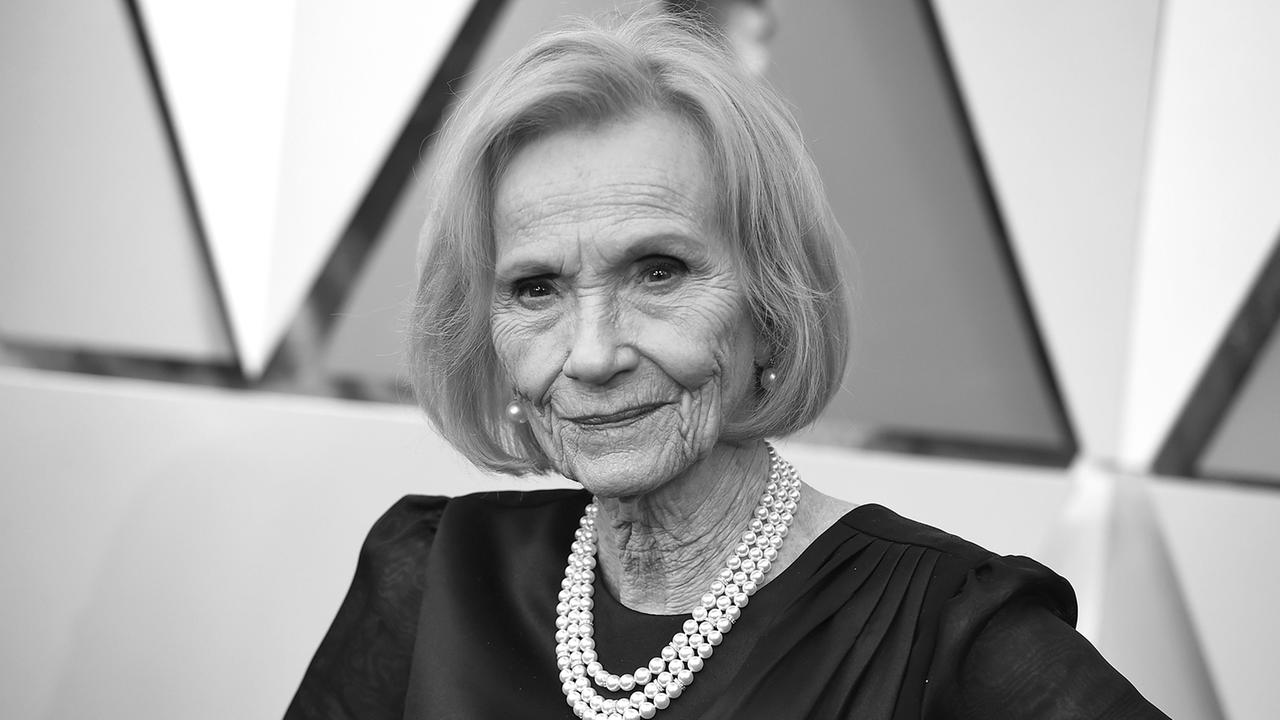
The silver screen has dimmed for one of its most luminous stars. Eva Marie Saint, the quintessential Hitchcock blonde and a foundational figure of mid-century American cinema, has passed away at the age of 102. Her death, confirmed by her representatives, marks the end of an era, closing the book on a career that spanned over seven decades and bridged the gap between the raw intensity of the Actors Studio and the polished glamour of the Hollywood studio system.
Eva Marie Saint died peacefully at her home in Los Angeles, surrounded by her family. Her departure leaves a void in the cinematic landscape, as she was one of the final living links to the post-war Golden Age of Hollywood—a time of black-and-white moral ambiguity, high-stakes suspense, and the rise of Method acting.
A Legacy Forged in Shadow and Suspense
Eva Marie Saint was never just a face on a screen; she was a transformative force. While many of her contemporaries were pigeonholed into singular archetypes, Saint’s career was defined by her versatility. She possessed an uncanny ability to oscillate between the vulnerable, wide-eyed ingénue and the steely, enigmatic femme fatale.
Her professional journey began in the crucible of New York’s theater scene. Training at the famed Actors Studio, she absorbed the principles of "Method acting," a technique that prioritized internal emotional truth over external performance. It was this rigorous preparation that caught the eye of director Elia Kazan, who was casting for a film that would go on to change the course of American cinema.
In 1954, at the age of 30, she made her film debut in On the Waterfront. Cast as Edie Doyle opposite Marlon Brando, Saint provided the emotional anchor for a film dominated by the hyper-masculine, gritty performances of its male leads. Her performance was a revelation. Critics of the era noted that she didn’t merely play opposite Brando; she held her own, delivering a nuanced, layered performance that earned her the Academy Award for Best Supporting Actress.
Chronology of a Storied Career
1924–1953: The Formative Years
Born on July 4, 1924, in Newark, New Jersey, to a family of Quakers, Saint’s early life was defined by the discipline and moral clarity that would later define her professional ethics. Initially, she studied at Bowling Green State University with aspirations of becoming a teacher. However, the siren song of the stage proved too strong. She moved to New York City, immersing herself in the burgeoning world of television and stage acting, refining her craft until the opportunity of a lifetime arrived.
1954–1959: The Rise to Stardom
Following her Oscar-winning debut, Saint became a highly sought-after talent. She worked with some of the greatest minds in the industry, including Otto Preminger and Alfred Hitchcock. Her collaboration with Hitchcock on the 1959 masterpiece North by Northwest remains one of her most iconic roles. As Eve Kendall, she navigated the complex, witty, and dangerous world of the Master of Suspense with effortless grace, cementing her status as an enduring screen legend.
1960–1990: Mature Roles and Artistic Evolution
Throughout the 1960s and 70s, Saint continued to challenge herself. She starred alongside Paul Newman in Exodus (1960), a landmark film about the founding of Israel. Throughout these decades, she balanced a high-profile film career with a commitment to her family life—a rarity in a town known for its fleeting personal loyalties. In 1990, she won an Emmy Award for her role in the miniseries People Like Us, proving that her talent remained undimmed by the passage of time.
2005–2026: The Elder Stateswoman
Even in her 80s and 90s, Saint refused to retire. She appeared in Wim Wenders’ Don’t Come Knocking (2005) and took on the pivotal role of Martha Kent in the blockbuster Superman Returns (2006). Her late-career resurgence was a testament to her enduring relevance and the respect she commanded within the industry.
Supporting Data: A Career of Excellence
Eva Marie Saint’s professional trajectory was marked by consistent recognition from the highest echelons of the industry. Her accolades include:
- The Academy Award: Best Supporting Actress for On the Waterfront (1955).
- The Emmy Award: Outstanding Supporting Actress in a Miniseries for People Like Us (1990).
- The Hollywood Walk of Fame: A rare double-star recipient, honored for her contributions to both Motion Pictures and Television.
- Nominations: Five Emmy nominations across various genres, reflecting her ability to transition seamlessly between film and television.
Official Responses and Industry Reflections
The news of her passing has prompted an outpouring of tributes from across the entertainment world. The Academy of Motion Picture Arts and Sciences released a statement calling Saint "a luminous presence who brought depth, intelligence, and grace to every role she touched."
Colleagues and historians alike have noted that Saint represented a bridge between eras. "She was the last of the truly great Method-trained stars of the 50s," noted film historian Marcus Thorne. "She didn’t just act; she inhabited. When you watch her in On the Waterfront, you aren’t seeing a performance—you are seeing a person struggling with the weight of the world. That was her gift."
Her family, in a statement, requested privacy, emphasizing that she passed as she lived: with quiet dignity and strength.
Implications: The End of an Era
The death of Eva Marie Saint serves as a sobering reminder of the finite nature of Hollywood’s Golden Age. With the passing of stars like Saint, the industry loses direct, living testimony to the working methods of directors like Hitchcock, Kazan, and Preminger.
However, the implications of her life go beyond mere nostalgia. Saint’s career is a case study in the longevity of talent. In an industry that often discards women as they age, Saint remained active, relevant, and celebrated well into her second century of life. Her refusal to be defined by a single decade or a single type of role serves as a blueprint for contemporary actors.
Furthermore, her personal life—a 65-year marriage to director Jeffrey Hayden—stands as a stark counter-narrative to the "Hollywood divorce" cliché. She proved that one could maintain a high-profile career while nurturing a stable, enduring personal life.
The Philosophy of an Artist
In one of her final interviews with Turner Classic Movies, Saint offered a reflection on the secret to her longevity:
"You have to live a life to understand a life. I think the work I did in my later years was richer because I had experienced more. You collect emotions like you collect memories. When you step in front of the camera, you aren’t pretending anymore; you are drawing from a well that has been filling up for decades."
As the industry moves toward an era of digital dominance and rapid technological change, the grounded, human-centric performances of Eva Marie Saint will remain a touchstone for quality. She leaves behind not just a body of work, but a philosophy of acting that prioritized empathy, discipline, and the pursuit of truth above the fleeting allure of fame.
Eva Marie Saint’s life was a masterclass in elegance and endurance. While the screen is now empty of her presence, her contributions remain etched into the fabric of cinematic history, ensuring that the "Hitchcock blonde" who could command a room with a single glance will never be truly forgotten.