The Dutch semiconductor powerhouse, ASML, has solidified its position as Europe’s most valuable corporation. As the sole provider of the machinery required to manufacture the world’s most advanced microchips, the company finds itself at the epicenter of the artificial intelligence (AI) gold rush. Despite market jitters and global economic uncertainty, ASML’s latest quarterly performance confirms that the infrastructure behind the AI boom is not just holding steady—it is accelerating.
The Indispensable Linchpin of the Digital Age
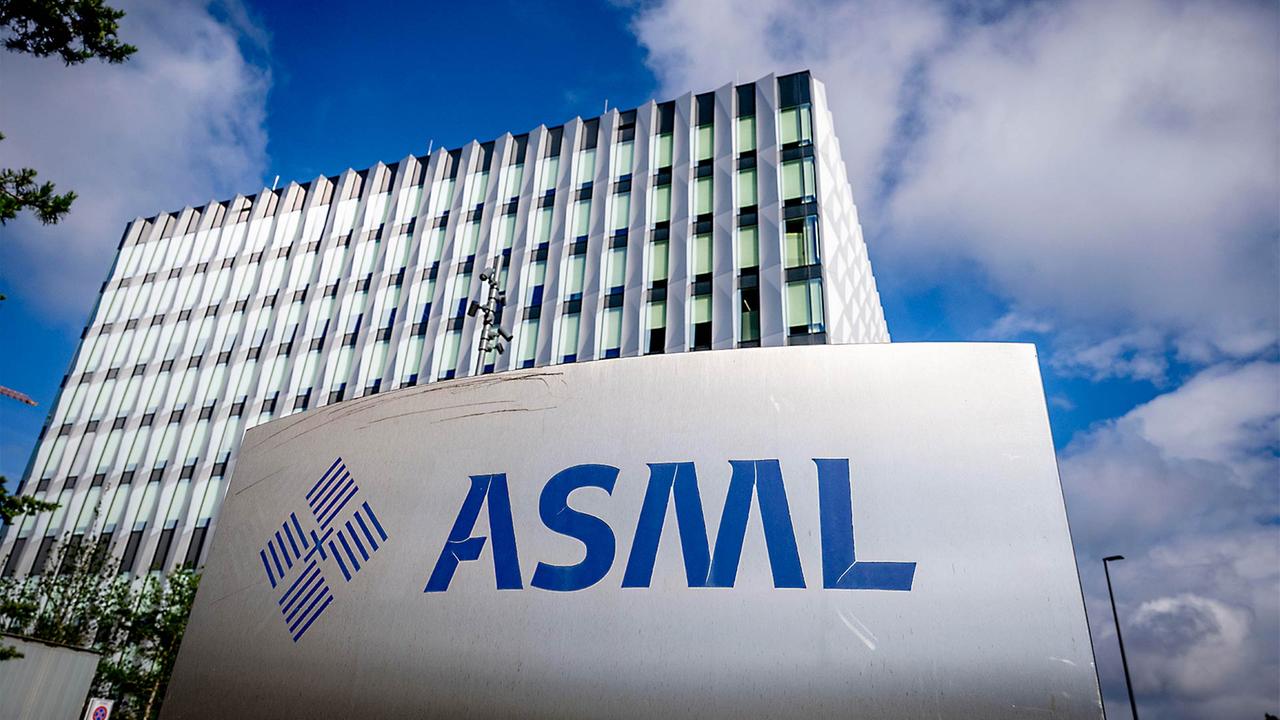
In the complex, multi-billion-dollar ecosystem of global technology, few companies hold as much structural power as ASML. Headquartered in Veldhoven, Netherlands, the company does not produce the chips that power your iPhone, your car, or your local data center. Instead, it builds the extraordinary, multi-million-dollar lithography systems that make those chips possible.
From Nvidia’s high-end GPUs—the workhorses of large language models like ChatGPT—to the processors powering the latest smartphones from Samsung and Apple, every major semiconductor manufacturer relies on ASML’s Extreme Ultraviolet (EUV) lithography machines. As the world shifts toward an AI-centric economy, the demand for these machines has transformed ASML from a specialized industrial manufacturer into the most vital pillar of the global AI infrastructure.
Quarterly Performance: A Surge in Growth
The latest financial results for the quarter ending in October 2026 underscore the company’s robust health. ASML reported a significant jump in quarterly revenue, rising to nearly €11.7 billion, up from €9.3 billion in the previous quarter. This trajectory aligns with analyst expectations, but the underlying efficiency metrics tell a more compelling story.
The company’s gross margin improved by 3.5 percentage points, reaching a healthy 57.5%. Most impressively, net profit reached nearly €5 billion, a substantial leap from the roughly €3 billion recorded in the previous quarter. These figures serve as a bellwether for the broader semiconductor industry. Because ASML operates at the very beginning of the supply chain, its order books provide a unique, long-range view of the capital expenditure plans of industry giants like TSMC, Intel, and Samsung. With lead times for their most advanced systems exceeding 12 months, ASML’s current success is a direct reflection of the massive, long-term investments being poured into AI infrastructure globally.
A Strategic Chronology: From Niche Supplier to Global Giant
To understand ASML’s current dominance, one must look at the decades of innovation that led to this point.
- 1984: ASML is spun off from Philips, initially struggling to compete with established Japanese and American manufacturers.
- 1990s-2000s: The company pivots toward cutting-edge lithography, pioneering deep ultraviolet (DUV) immersion technology.
- 2010s: ASML bets the company on Extreme Ultraviolet (EUV) technology, a revolutionary process that uses light with extremely short wavelengths to print microscopic circuitry onto silicon wafers. This transition was high-risk, expensive, and years in the making.
- 2020-2023: The COVID-19 pandemic triggers a global chip shortage, highlighting the world’s dangerous dependence on a few key suppliers. ASML’s importance becomes a matter of national security for major powers.
- 2024-2026: The explosion of Generative AI creates an insatiable appetite for compute power. ASML’s EUV machines become the single biggest bottleneck in the production of high-performance AI chips.
Market Sentiment: The "AI Bubble" Question
Despite the stellar financial performance, the mood on the stock market remains complex. Investors have repeatedly questioned the sustainability of the current AI boom. Critics argue that the massive capital expenditures by cloud providers and tech giants may eventually face a "reality check" if the return on investment (ROI) for AI models does not meet expectations.
This uncertainty has periodically triggered sell-offs in semiconductor stocks, creating volatility in the broader market. However, industry experts suggest that the fundamental data supports a continued expansion.
Marcus Weyerer, an investment strategist at Franklin Templeton Investments, emphasizes that the current investment cycle shows no sign of cooling. "We currently see no end to the ongoing investment cycle," Weyerer noted in an interview with the ARD financial desk. "This applies to all companies along the value chain." Weyerer does, however, caution that high corporate debt levels and fluctuating interest rates remain potential headwinds that could disrupt capital-intensive projects in the long term.
Official Responses: Demand Outstripping Capacity
If the market is nervous, the leadership at ASML is remarkably optimistic. In his recent remarks, CEO Christophe Fouquet highlighted a "luxury problem": the demand for their machines is currently outpacing their ability to build them.
"Given the momentum in order intake, which has increased quarter-over-quarter throughout the current year, we now anticipate that our currently planned supply for 2027 and 2028 will not fully meet the demand of our customers," Fouquet stated.
The CEO went further, indicating that the company is actively investigating ways to expand its production capacity for 2028 beyond the 30% increase already communicated to shareholders. Perhaps most tellingly, Fouquet revealed that major clients are already looking to secure orders for 2029 and 2030. This forward-looking demand suggests that the "AI Boom" is not a temporary trend, but a multi-year industrial transformation that will require years of sustained infrastructure development.
The Broader Implications for Global Markets
ASML’s success story ripples far beyond the Netherlands. As the crown jewel of the EuroStoxx 50, with a market capitalization exceeding €600 billion, ASML’s performance sets the tone for European stock indices. When ASML reports positive growth, it lifts sentiment across the board, as seen in the recent recovery of the German DAX, which climbed toward the 25,400-point mark.
Furthermore, the "ASML effect" is tangible in the broader semiconductor sector. Stocks like Infineon have seen direct boosts following ASML’s announcements, reflecting a "rising tide lifts all boats" scenario for European chip-related equities.
However, the market remains in a "wait-and-see" mode. As Thomas Altmann of QC Partners points out, the current market environment is characterized by caution. With the US corporate earnings season in its infancy and macroeconomic concerns—such as volatile oil prices and interest rate fears—weighing on sentiment, many institutional investors are hesitant to take massive new positions.
Future Outlook: Building the Foundation of the Next Decade
The trajectory of ASML is inextricably linked to the trajectory of the digital revolution. As AI models become more complex and integrated into every facet of the global economy, the requirement for increasingly powerful, efficient, and sophisticated chips will only grow.
ASML’s dominance is not merely a result of being in the right place at the right time; it is the result of a decades-long commitment to R&D in a field where perfection is the only acceptable standard. While the stock market may continue to grapple with short-term fears regarding the longevity of the AI hype, the order books at ASML suggest that the builders of the AI revolution are already planning for a future that extends well into the next decade.
For investors, policymakers, and industry observers, ASML serves as a primary indicator of where the tech sector is heading. If the current order trends continue, the company will remain the undisputed "arms dealer" of the digital age, powering the compute revolution that will define the 21st century. Whether the global economy can keep pace with this rapid expansion remains the central question, but for ASML, the focus remains clear: building the machines that build the future.