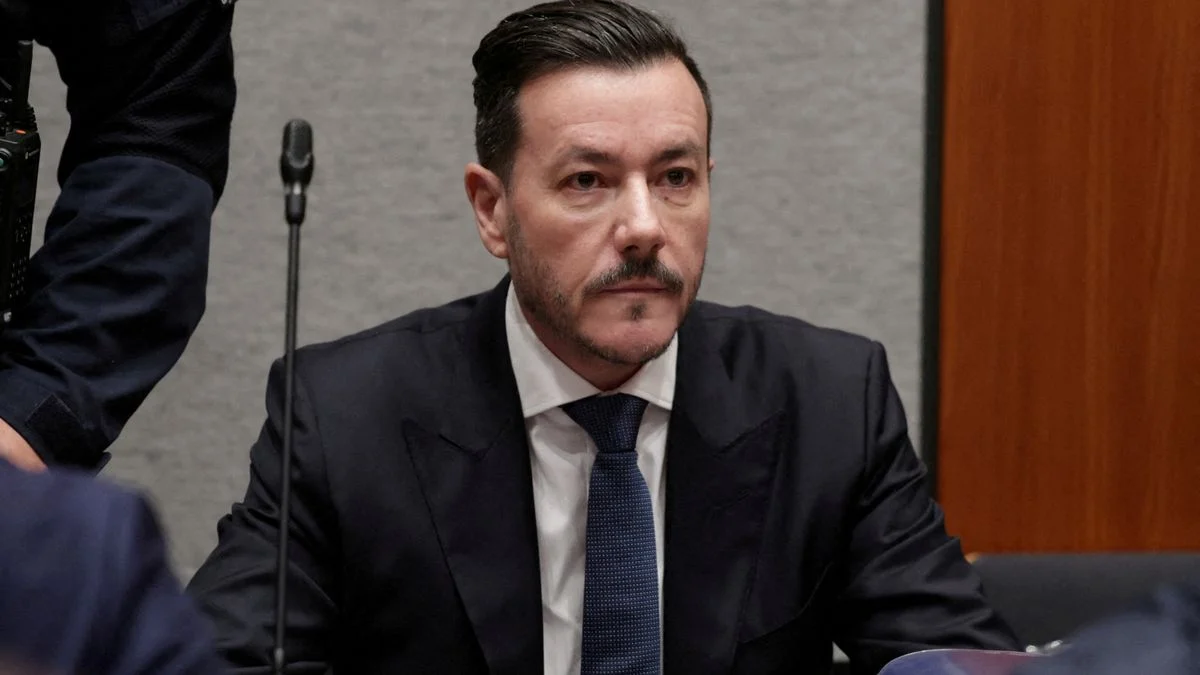
René Benko, the disgraced architect of the once-mighty Signa retail and real estate empire, has been granted a significant change in his custodial status. As of October 14, 2026, the 49-year-old former billionaire has transitioned from a traditional prison environment to house arrest, monitored by an electronic ankle tag.
The decision, handed down by the Innsbruck Regional Court, marks a pivotal moment in the ongoing legal saga of a man who once symbolized the zenith of European commercial real estate development. Having already served a substantial portion of his prison sentence, Benko’s relocation to a 60-square-meter apartment in Innsbruck is not an act of leniency, but a tactical legal adjustment requested by his defense team.
The Justification for Release
The legal strategy, spearheaded by defense attorney Norbert Wess, successfully argued that Benko’s continued incarceration hindered his fundamental right to prepare for an exhausting series of upcoming trials. The defense emphasized that the complexities of the various fraud and financial misconduct allegations required intensive, hands-on collaboration between the defendant and his legal counsel—a level of preparation that is logistically difficult within the constraints of a high-security prison facility.
Beyond the procedural necessity, Wess also cited the importance of protecting the entrepreneur’s family environment, balancing the requirements of the justice system with the humanitarian considerations often afforded to defendants in high-profile white-collar cases. The court’s approval of this motion signals an acknowledgment that the state’s interest in punishing the defendant must be weighed against the principle of a fair and effective trial.

Chronology of a Fall: From Empire to Insolvency
To understand the current legal status of René Benko, one must look back at the meteoric rise and the catastrophic collapse of his Signa Holding.
- 2004: The ascent began with the high-profile acquisition of the "Kaufhaus Tyrol" in Innsbruck, a project that solidified Benko’s reputation as a visionary in urban retail revitalization.
- The Golden Era: Over the next two decades, Benko expanded aggressively. From the "Golden Quarter" in Vienna to iconic international landmarks such as the Chrysler Building in New York, the luxury department store Selfridges in London, and a massive stake in the German retail giant Galeria Karstadt Kaufhof, Benko’s influence seemed boundless.
- Late 2023: The house of cards began to wobble under the pressure of soaring construction costs, rising interest rates, and over-leveraged assets. In November 2023, the Signa group was forced to declare insolvency, triggering a domino effect across European financial markets.
- 2024–2025: By March 2024, Benko was forced to file for personal bankruptcy. In January 2025, the authorities arrested him as the net of criminal investigations tightened.
- October 2025: The first major legal blow landed when Benko was convicted and sentenced to two years in prison for shielding assets from creditors just before the group’s collapse.
- September 2026: A new trial concluded with an additional two-and-a-half-year sentence, as the court found him guilty of fraudulent damage to creditors—specifically regarding a 360,000-euro rental advance for an Innsbruck estate, paid while his empire was already in a state of terminal decline.
Supporting Data: The Cost of Ambition
The charges against Benko are not merely abstract accounting errors; they represent deep-seated breaches of fiduciary duty that impacted thousands of jobs and billions in investor capital.
The most recent conviction regarding the 360,000-euro rental advance serves as a microcosm of the prosecution’s case: that Benko prioritized his personal lifestyle and the maintenance of his private estate while knowing his company could no longer meet its obligations to suppliers and lenders.
Furthermore, the legal landscape is far from settled. In November 2026, Benko will face yet another trial. This time, prosecutors are leveling charges of "aggravated fraud" related to a guarantee provided to Hans Peter Haselsteiner, the former head of the construction firm Strabag, and his family foundation. The financial intricacies of these guarantees and the alleged deception involved are expected to form the core of a trial that could potentially extend Benko’s time under judicial supervision significantly.

Official Responses and Judicial Stance
The Innsbruck Regional Court has maintained a stern posture throughout these proceedings. Despite allowing the transition to house arrest, the court remains firm that the evidence of fraudulent conduct is robust. A court spokeswoman confirmed the decision, noting that the ankle monitor will ensure compliance with the terms of the house arrest.
Legal experts note that the transition to home confinement is standard practice in the Austrian legal system for inmates who have served a portion of their sentence and do not pose a flight risk, provided they meet specific criteria. However, the optics of the situation remain sensitive. The public, particularly those who lost investments or jobs during the Signa liquidation, remains highly critical of the perceived "cushy" nature of home confinement for a man who once lived in the lap of extreme luxury.
Implications: The Long Road Ahead
The shift to house arrest does not mean that René Benko is nearing the end of his legal troubles. On the contrary, the move allows him to focus on the battles that remain.
The Impact on the Creditors
For the thousands of creditors, employees, and retail partners affected by the Signa bankruptcy, Benko’s house arrest is a secondary concern compared to the ongoing recovery of assets. The insolvency proceedings are among the most complex in European history, involving international legal jurisdictions and a labyrinth of shell companies. The question remains: how much of the "hidden" wealth can be clawed back to satisfy the creditors?

The "Lifestyle" Investigation
Financial authorities continue to probe allegations that Benko utilized corporate funds to subsidize his extravagant lifestyle. The investigation into the alleged tax evasion and the misuse of corporate assets for personal gain—including his private jets, yachts, and luxury chalets—is a parallel track that threatens to result in even more severe financial penalties or further prison time.
The Precedent for White-Collar Crime
The Benko case has sparked a wider debate in Europe regarding the regulation of "empire builders" and the accountability of high-net-worth individuals. Legislative bodies are already reviewing stricter transparency laws for private foundations and holding companies to prevent the kind of opacity that allowed the Signa crisis to escalate to such a massive scale.
Conclusion
As René Benko settles into his 60-square-meter apartment, the contrast between his former life and his present reality is stark. While he is no longer behind bars, the electronic tether around his ankle is a constant reminder of his fall from grace.
The next few months will be decisive. Whether he can successfully navigate the upcoming fraud trials from the confines of his living room remains to be seen. What is certain is that the collapse of the Signa empire has left a scar on the European economic landscape, and the legal repercussions for its founder are far from over. For the public, the transition to house arrest is merely an intermission in a drama that has come to define the dangers of unchecked corporate ambition and the enduring necessity of legal oversight.