CHEMNITZ – The industrial landscape in Saxony faces a period of intense uncertainty as the IG Metall union officially kicked off its latest round of collective bargaining this Wednesday. Representing approximately 155,000 employees across the state’s critical metal and electrical engineering sectors, the union has signaled a combative stance, demanding significant pay increases and improved job security. As discussions commence with the employers’ association, VSME (Verband der Sächsischen Metall- und Elektroindustrie), the tension between labor and capital has reached a palpable boiling point.
The Core Demands: A Five-Percent Benchmark
The negotiations began at the mid-morning hour, but the atmosphere was set well before the doors to the negotiation venue opened. From 8:00 a.m., IG Metall mobilized a significant show of force, holding a rally outside the building to ensure that the voices of the workforce were heard clearly by the negotiators.
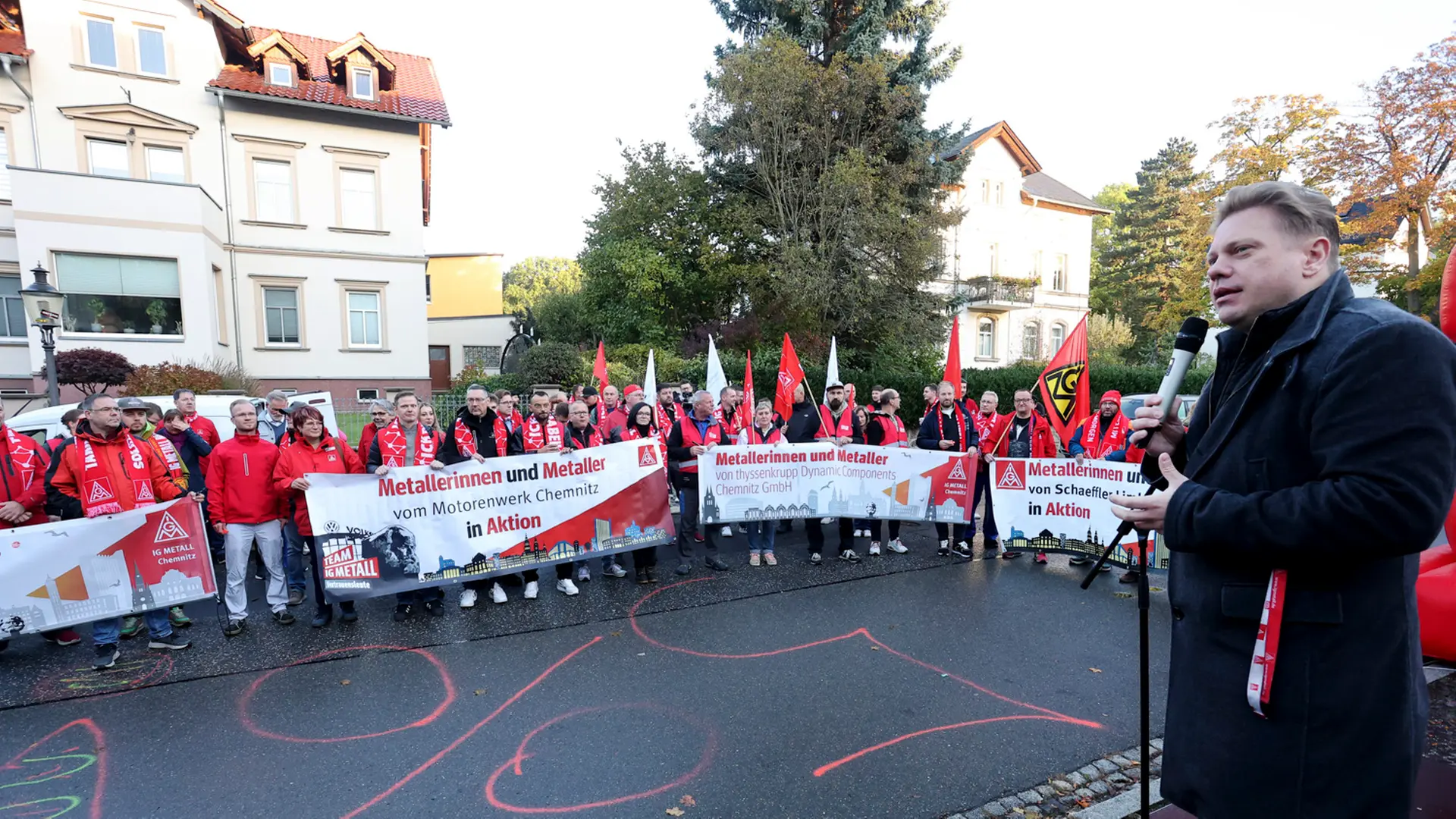
At the heart of the union’s platform is a primary demand for a five-percent increase in wages. For the thousands of workers currently grappling with the broader economic pressures affecting Germany, this raise is framed as a necessary adjustment to maintain their standard of living. However, the proposal extends beyond a simple paycheck boost. The union’s agenda is multifaceted, aiming to address:
- Employment Security: A primary focus on safeguarding industrial jobs and local production sites amidst a global shift toward electrification and automation.
- Profit Sharing: The introduction of a structured profit-sharing model for both regular employees and apprentices, ensuring that the fruits of productivity are shared more equitably.
- Social Equity: The implementation of a "social component"—a specific measure designed to disproportionately benefit lower-wage groups, ensuring that the lowest earners are not left behind during periods of economic transition.
Chronology of the Conflict
The current round of bargaining follows a period of mounting frustration within the ranks of the labor force. The timeline of this dispute highlights a growing disconnect between the expectations of the workforce and the fiscal realities presented by employers:

- Preparation Phase (Late Summer 2026): IG Metall locals across Saxony began holding internal meetings to coalesce around the 5% demand, citing inflationary pressures and the need for a stronger social floor.
- Mobilization (Early October 2026): As the date for the formal talks approached, the union shifted from internal discussions to public campaigning, culminating in the rally in Chemnitz on the morning of October 14.
- The Opening Move (October 14, 2026): Formal negotiations began. The union presented their demands, setting the stage for what many analysts predict will be a protracted and difficult negotiation cycle.
- The Employer Rebuttal: Almost immediately, the VSME signaled their opposition, mirroring the rejection faced by the union in Berlin-Brandenburg, where similar demands were met with a firm "no."
The Economic Context: A Tale of Two Perspectives
To understand the severity of these negotiations, one must examine the divergent realities occupied by the two sides of the table.
The Union’s Rationale
IG Metall argues that the metal and electrical industries remain the backbone of the Saxon economy. They point to steady, if fluctuating, production levels and the long-term potential of the region’s specialized manufacturing. From the union’s perspective, a five-percent wage increase is not merely a cost-of-living adjustment but a strategic investment in employee retention. In a competitive labor market, failing to offer attractive wages could lead to a "brain drain," where skilled technicians and engineers migrate to sectors or regions offering higher compensation.

The Employer’s Stance
On the other side, the VSME and other industrial leaders paint a much grimmer picture. They argue that the German manufacturing sector is currently navigating a "perfect storm." Energy costs remain elevated compared to historical averages, supply chain disruptions continue to haunt just-in-time production, and the transition to electric mobility requires massive capital expenditure that reduces available cash flow for wage hikes.
Employers have characterized the union’s five-percent demand as "wholly unrealistic" and "divorced from the economic reality" of the sector. They warn that such increases could force firms to reconsider their commitment to German production sites, potentially accelerating the trend of outsourcing to lower-cost regions.
Regional Implications: The Berlin-Brandenburg Precedent
The deadlock in Saxony does not exist in a vacuum. It is part of a wider national trend, underscored by the recent collapse of talks in the neighboring Berlin-Brandenburg region. In those negotiations, the employer side was categorical: they claimed that the current economic climate makes any significant increase in labor costs untenable.
The fact that the union is pushing the exact same demands in Saxony as they did in Berlin suggests a coordinated, national strategy. However, it also suggests that the employers are likely to use the same "rejection playbook." If the Berlin-Brandenburg outcome serves as a bellwether, the negotiations in Chemnitz are unlikely to result in a swift agreement. Instead, both sides may be preparing for a series of warning strikes—short-term, localized walkouts intended to exert pressure without bringing the entire industry to a standstill.
The Path Forward: Can Compromise Be Found?
The coming weeks will be critical. The role of the mediator will likely become paramount as the two parties move past their initial, stated positions.
Potential Scenarios:
- The Gradual Compromise: A deal where the five-percent demand is met, but stretched over a longer period, or coupled with "opening clauses" that allow struggling firms to deviate from the tariff agreement under specific financial conditions.
- The "One-Off" Payment Model: Employers may offer a significant one-time inflation-compensation bonus instead of a permanent, structural increase in the base wage. This is a common tactic to avoid compounding long-term labor costs while providing immediate relief to workers.
- Escalation: If the employer side remains rigid and the union feels their members’ livelihoods are under threat, we could see a return to the full-scale industrial action that marked the labor disputes of the mid-2010s.
The Human Element: Beyond the Statistics
While the debate is often framed in percentages and macroeconomic data, the human impact is significant. For the 155,000 workers in Saxony, these talks are not just about numbers on a spreadsheet; they are about the ability to afford rising housing costs, energy bills, and the general uncertainty of the future.

The emphasis on "job security" and "social components" reflects an underlying anxiety among the workforce. Many workers fear that if the industry faces a downturn, they will be the first to suffer, while the benefits of any recovery are rarely shared. By demanding profit-sharing and protections for apprentices, the union is trying to secure a future for the next generation of workers, not just a raise for the current one.
Conclusion
As the sun sets on the first day of formal negotiations in Chemnitz, the path forward remains obscured by deep-seated disagreements. Both the IG Metall and the VSME understand that they are playing for high stakes. For the union, it is a test of their ability to protect the purchasing power and security of their members. For the employers, it is a test of their survival in an increasingly hostile global market.
The negotiations will continue in the coming weeks, likely behind closed doors, though the public rhetoric is expected to remain sharp. The city of Chemnitz, a historic hub of industrial production, finds itself once again at the center of a national debate that will shape the future of German manufacturing. Whether these talks lead to a "win-win" scenario or a long, drawn-out conflict remains to be seen, but one thing is certain: the eyes of the German industrial sector are firmly fixed on Saxony.