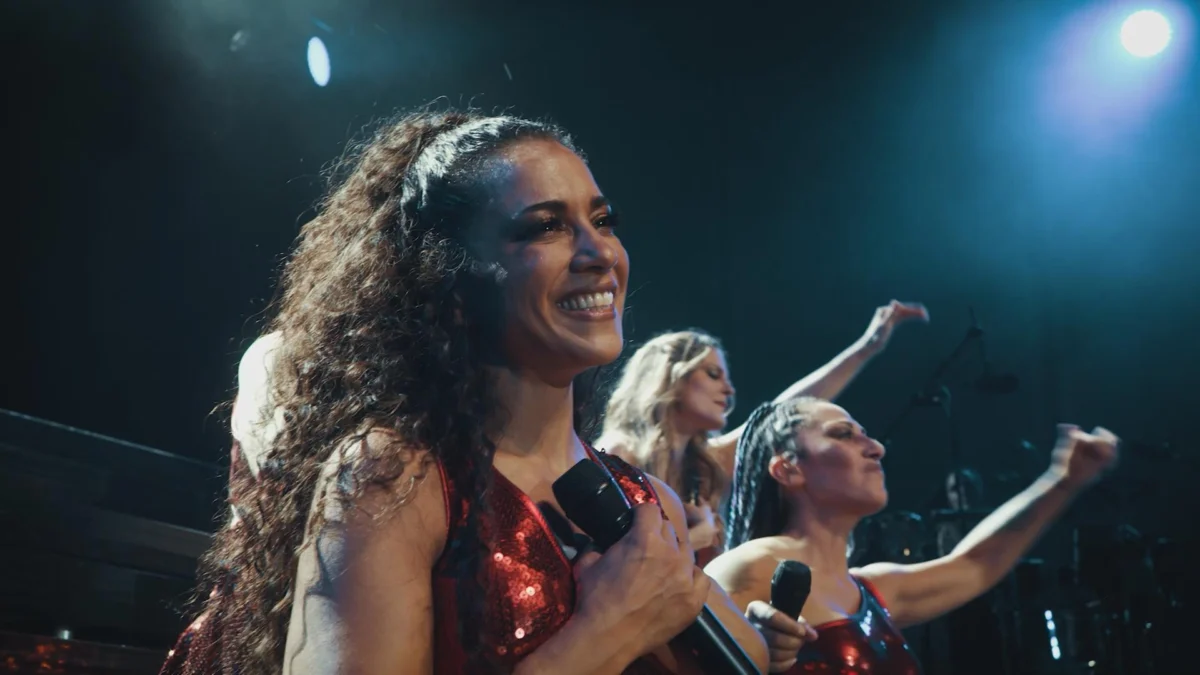
Twenty-five years after the birth of Germany’s most successful girl group, the No Angels, a new three-part ARD documentary titled “No Angels – Das sind wir” (No Angels – That’s Us) pulls back the curtain on the glittering surface of 2000s pop culture to reveal a story of exploitation, manipulation, and the arduous road to self-actualization. At the center of this narrative is Nadja Benaissa, whose life trajectory—from a troubled youth to global stardom, followed by a criminal trial and eventual recovery—serves as the emotional anchor of the series.
A Phenomenon Born from a TV Experiment
The year was 2001. The German music scene was about to be irrevocably altered by the arrival of the No Angels. Formed through the pioneering television experiment Popstars, the group was an overnight sensation. Their debut single, "Daylight in Your Eyes," became the undisputed anthem of the year, dominating the airwaves for months. It spent six weeks at the pinnacle of the singles charts, ten weeks in the top ten, and maintained a presence in the top 100 for a remarkable 16 weeks.
The band’s structure was carefully engineered to maximize commercial appeal, mirroring the archetypal formula of the Spice Girls: the vibrant, red-headed firebrand Lucy Diakovska, the elegant blonde Sandy Mölling, the creative force Vanessa Petruo, the relatable "girl next door" Jessica Wahls, and the soulful, enigmatic Nadja Benaissa.
However, behind the choreographed routines and chart-topping hits lay a high-pressure environment that prioritized profit over the well-being of the young women involved. As Benaissa poignantly reflects in the documentary: "It was like boarding a high-speed train. Everything rushed past, and there was simply no way to get off. It wasn’t healthy."

The Chronology of an Extreme Life
Nadja Benaissa’s life story reads like a cautionary tale of the pressures inherent in early-2000s fame. Before she was a household name, she navigated a landscape of profound hardship. "Addicted at 12, on the streets at 14, pregnant at 16, pop star at 18," Benaissa summarizes. This stark, singular sentence captures the whiplash of her youth—a sequence of events that left her ill-equipped for the predatory nature of the music industry.
The Rise and the Fractures
The year 2001 alone saw the band perform 29 concerts in just 52 days, punctuated by a relentless cycle of promotions, award ceremonies, and media appearances. The pace was unsustainable. By 2003, the first major crack in the facade appeared: Jessica Wahls was forced out of the group following her pregnancy.
While the public was told the departure was a mutual decision, the reality was far more cynical. According to the documentary, the band’s management pressured Wahls to leave, with the cold justification that "four people fit better into a taxi than five." Benaissa, reflecting on her own role in the incident, admits to being deeply complicit in the toxicity of the time, noting, "I was so easily manipulated that I simply fell in line."
The 2009 Crisis and Public Scrutiny
The most harrowing chapter of Benaissa’s life occurred in 2009, when she was arrested shortly before a scheduled concert in Frankfurt. The charge was grievous bodily harm; she was accused of having transmitted the HIV virus to a sexual partner without disclosure.

The ensuing media firestorm was unprecedented. The documentary reveals that the band’s management had long been aware of Benaissa’s HIV-positive status but chose to suppress the information to preserve the "girl next door" brand. "They said: ‘Your fans are little children; you can’t stand on stage as an HIV-positive woman,’" Benaissa recalls. This concealment turned her medical history into a source of constant blackmail. Industry figures allegedly threatened to expose her condition if she did not comply with specific media demands.
Supporting Data: Legal and Ethical Implications
The handling of Benaissa’s case by the judicial system and the media remains a point of contention for legal experts. Sabine Rückert, a renowned legal journalist who covered the trial for Die Zeit, highlights the unethical behavior of the Darmstadt public prosecutor’s office.
"They were not allowed to disclose private information about the accused, especially not from medical records," Rückert notes in the documentary. "It was unlawful." The prosecutor’s decision to hold a press conference to detail the accusations against Benaissa effectively invited a "witch hunt," according to her bandmates.
Ultimately, the public pressure and the clear violation of her privacy rights may have influenced the court’s sentencing. Benaissa received a two-year suspended sentence, a verdict that many observers at the time viewed as a reflection of the court’s recognition of the immense, disproportionate suffering she had endured under the public spotlight.

The Path to Redemption and Modern Perspectives
The narrative of “No Angels – Das sind wir” is not one of perpetual despair, but of survival. Benaissa openly discusses the period of her life where she attempted to cope with the immense stress of the trial and public vilification through a self-destructive cycle of antidepressants, alcohol, and substance use.
Today, eight years "dry and clean," Benaissa has emerged as a different person. At 44, she has found a sense of autonomy that was denied to her in her youth. She has embarked on a solo career, reunited with the No Angels for their 25th anniversary, and participated in high-profile television formats like Promi Big Brother. Beyond the stage, she has become a vocal advocate for HIV awareness, mental health, and women’s rights.
Reflections on a Quarter-Century Legacy
The documentary serves as a cathartic exercise for the four remaining members of the group. Watching them today, one sees mature women who view their past not with nostalgia, but with a complex blend of humor, anger, and professional pride.
"The ones who shine the brightest are the ones who have walked through the darkness," Jessica Wahls observes. This sentiment encapsulates the core theme of the documentary: the No Angels were not merely a product of the pop industry, but a group of individuals who survived the machinery that created them.

The journey of the No Angels is a testament to the resilience of women in the entertainment industry. While their music defined a generation, their story—and specifically Nadja Benaissa’s journey—defines the changing landscape of how we view celebrity, trauma, and the right to a private life. As Benaissa concludes, "My life has only just truly begun."
For those wishing to witness this evolution, the three-part documentary is currently available in the ARD Mediathek, offering an unflinching, necessary look at a band that, 25 years later, is finally telling its own truth.