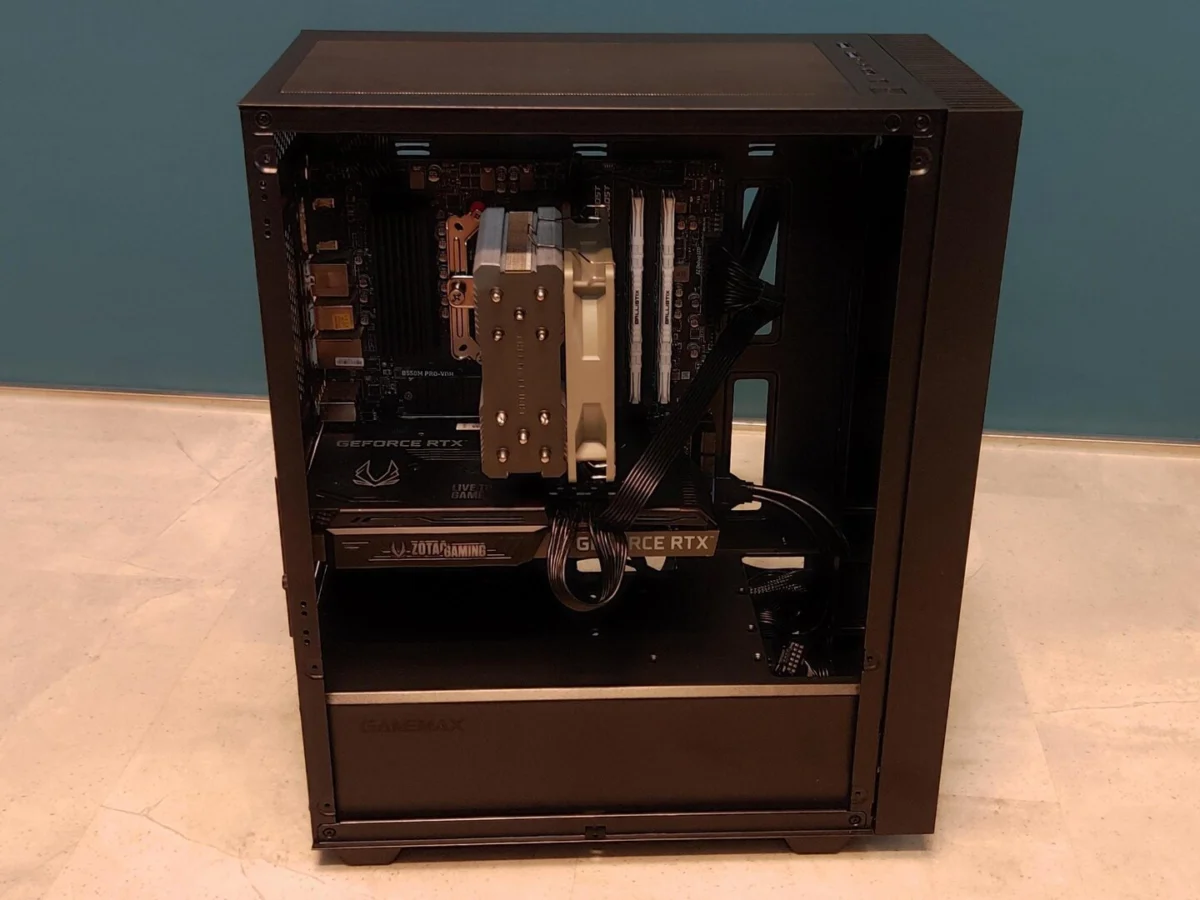
In an era where the cost of high-end gaming hardware continues to climb, the allure of the secondary market has never been stronger. For many, the prospect of building a capable machine on a budget feels like a pipe dream, often overshadowed by the risks of scams and unreliable components. However, a recent project by community member “Vanger” has proven that with enough patience, meticulous research, and a calculated approach to risk management, it is entirely possible to construct a powerhouse PC—featuring an NVIDIA GeForce RTX 3070—for just €577.91.
This article explores the intricacies of Vanger’s journey, examining the strategy behind his success, the inherent dangers of the used hardware market, and whether the time investment truly justifies the financial savings.
The Genesis: From Viral Inspiration to Strategic Planning
The project began as an attempt to replicate a popular YouTube configuration from the channel HardwareDealz, which showcased a build centered around a Ryzen 5 2600 and a Radeon RX Vega 56 for approximately €215. While the video served as a proof-of-concept, Vanger quickly realized that such “unicorn” prices are rarely reflective of the broader market reality.
“A GeForce RTX 2070 for €80 might appear once in a blue moon, but it is the exception, not the rule,” Vanger noted in his detailed retrospective. Recognizing that chasing the absolute lowest price often leads to dead ends or fraudulent listings, he pivoted his strategy. Instead of focusing on individual “steals,” he analyzed the average market value of various components relative to their real-world performance.
By mapping out price-to-performance tiers, he developed three distinct configurations ranging from €320 to €560 (plus shipping). His friend, for whom the build was intended, ultimately opted for the most powerful iteration, setting a target budget of roughly €600.
Chronology of a Build: 24 Hours of Intensive Labor
The timeline of the project spanned roughly two and a half weeks from the initial search to the final assembly. Vanger estimates that he invested approximately 24 hours of labor into the project. This time was split roughly down the middle: 12 hours dedicated to scouring platforms like Kleinanzeigen and communicating with vendors, and the remaining 12 hours spent on planning, logistical coordination, and the physical build process.
Phase 1: The Search and Security
The most daunting hurdle was navigating the digital landscape of the second-hand market. Vanger’s experience underscores the prevalence of bad actors: within just one week, he encountered at least five suspicious listings. In one instance, he recognized images from a different listing, leading him to report the fraudster. Thanks to his diligence, the platform removed the fraudulent ad within an hour.
Phase 2: Component Procurement
The procurement phase required a hybrid approach. While he prioritized high-value second-hand parts for the "heavy lifters," he opted for new components for the power supply, case, and CPU cooler.
- The Bundle: Vanger secured the motherboard, processor, and RAM as a single, tested bundle.
- The GPU: The crown jewel—the RTX 3070—was sourced from a professional vendor rather than a private seller. By requesting a live benchmark demonstration, he mitigated the risk of receiving a "dead on arrival" card.
- Supplementary Parts: A 3TB hard drive was donated by a friend, providing significant storage at zero cost, which helped keep the overall project under the €600 threshold.
Phase 3: Assembly and Testing
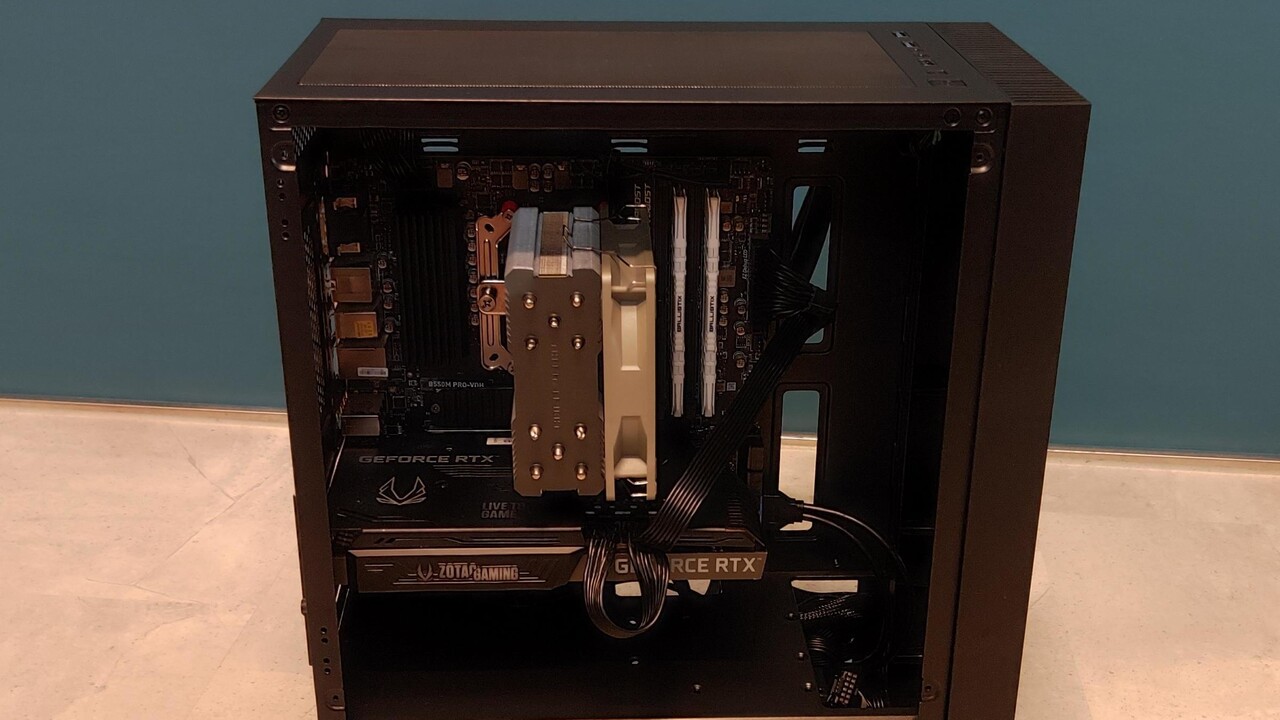
Once the components arrived, the assembly was straightforward. Vanger chose a new GameMax Edge case, noting that while he had initially hoped to find a used chassis, the time and travel costs associated with local pickups made a €25 new case a more logical and cost-effective choice.
Supporting Data: The Value Proposition
To understand the scale of the savings, one must compare the build to the cost of a modern equivalent. Vanger estimates that an equally performant new system would retail for approximately €1,100. By choosing to source used parts, he effectively slashed his friend’s costs by nearly 50%.
Technical Specifications and Thermal Performance
The final machine underwent rigorous stress testing to ensure stability. Under a combined load of Prime95 (for the CPU) and FurMark (for the GPU), the system reached equilibrium at 80°C and 85°C, respectively. Notably, the system achieved these temperatures without the need for additional case fans, demonstrating excellent airflow efficiency for a budget chassis.
Note: All prices cited reflect market conditions as of September 12-13, 2026.
The Ethics of the Used Market: Official Guidance and Warnings
Vanger’s report serves as a primer for prospective builders, emphasizing that long-standing seller accounts are not a guarantee of safety. He highlights the growing trend of “account hijacking,” where scammers take over established profiles to build false credibility.
Best Practices for Buyers:
- Demand Documentation: Never settle for stock photos. Ask for additional, timestamped photos of the hardware from multiple angles.
- Request Benchmarks: For GPUs and CPUs, request recent screenshots of benchmarks or stability tests.
- Check Storage Health: When buying SSDs or HDDs, insist on receiving SMART status reports to verify the drive’s health and total power-on hours.
- Avoid Unprotected Payments: Utilize buyer protection services whenever possible. If a seller insists on "Friends and Family" transfers, it should be treated as a major red flag.
- Look for Signs of Wear: For GPUs, inquire about fan noise, coil whine, and thermal history.
Implications: Does the "Sweat Equity" Pay Off?
The most critical question posed by the community following Vanger’s report was whether the 24-hour time investment was truly worth the €500+ savings.
Vanger’s conclusion is nuanced. He admits that the administrative burden—the endless back-and-forth with sellers and the vigilance required to avoid scams—was exhausting. However, he maintains that the process of planning and the satisfaction of a successful, high-performance build provided genuine enjoyment.
“For my best friend or family, I would do it again in a heartbeat,” Vanger stated. “For a stranger? Probably not.”
This sentiment highlights the core motivation of the "PC Master Race" ethos: building a computer is often as much about the journey and the personal challenge as it is about the final frame rate. While not every user has the time or the stomach for the volatile world of online marketplaces, Vanger’s project stands as a testament to the fact that when technical knowledge meets persistence, the barriers to high-end gaming can be significantly lowered.
As the machine prepares for its true test—a local LAN party in November—it remains a symbol of what can be achieved when one chooses to look beyond the retail price tag and into the vast, if occasionally treacherous, world of second-hand hardware.