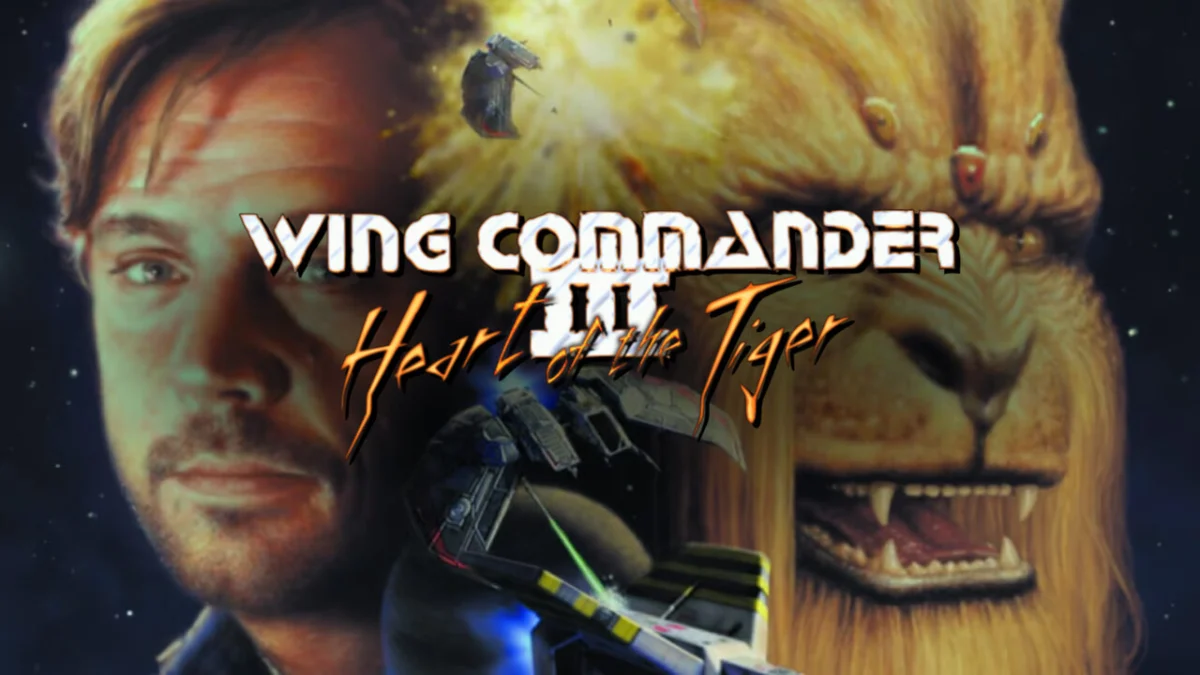
More than three decades after it redefined the boundaries of interactive storytelling, the legendary space combat simulator Wing Commander III: Heart of the Tiger is returning to modern hardware. Electronic Arts (EA) producer Jim Vessella, a figure well-regarded by retro gaming enthusiasts for his work on the Command & Conquer Remastered Collection, unveiled the project at the Portland Retro Gaming Expo this past Saturday.
The announcement, which sent ripples of excitement through the community, centers on a "30th Anniversary Edition" of the 1994 masterpiece. Perhaps most significantly, the project is powered by a treasure trove of rediscovered source material from the depths of EA’s corporate archives, promising a level of visual fidelity that was physically impossible to achieve when the game first launched on the DOS platform.
The Archive Discovery: Rescuing History from the Cutting Room Floor
The story behind this remaster begins not in a development studio, but in a dusty archive. Jim Vessella, whose current mandate at Electronic Arts involves the preservation and restoration of legacy software assets, revealed that the project was spurred by the discovery of roughly 600 original film reels.
While these reels encompass a broad spectrum of EA’s historical catalog, they include the pristine, raw source material used for the groundbreaking "Interactive Movie" sequences of Wing Commander III. To understand the gravity of this discovery, one must recall the technological limitations of 1994. When Wing Commander III was released, it was a massive undertaking that spanned four CD-ROMs—a storage capacity that was, at the time, considered astronomical.
Despite this, the video sequences had to be heavily compressed and downscaled to a mere 320 x 240-pixel resolution to fit within the memory and processing constraints of contemporary PCs. The version players saw in the mid-90s was a heavily artifacted, postage-stamp-sized representation of the high-quality film captured on set. With these newly discovered reels, EA is not simply upscaling low-resolution video; they are accessing the source masters, potentially allowing for a visual experience that captures the original cinematic intent of director Chris Roberts with unprecedented clarity.
Chronology: From the Kilrathi War to the Digital Age
To appreciate the significance of this remaster, it is necessary to look back at the historical trajectory of the Wing Commander franchise.
1994: The Cinematic Revolution
When Wing Commander III: Heart of the Tiger hit shelves, it was a cultural phenomenon. Chris Roberts, the visionary behind the series, had secured an A-list cast that rivaled Hollywood productions. Mark Hamill, fresh from his tenure as Luke Skywalker, stepped into the role of Colonel Christopher Blair. He was joined by legendary actors such as Malcolm McDowell and John Rhys-Davies. The game was hailed as the "future of gaming," seamlessly blending high-intensity 3D dogfighting with branching, live-action narrative cutscenes.
1996: The Kilrathi Saga
Following the success of the first three titles, EA released The Kilrathi Saga in 1996. This collection brought the initial trilogy together for a new generation of hardware, though it was plagued by compatibility issues as the industry moved toward Windows 95 and later operating systems. For many years, the saga remained trapped in a "compatibility limbo," requiring complex fan-made patches to function on modern systems.
2024: The Preservation Initiative
The current effort, dubbed the 30th Anniversary Edition, represents a shift in corporate strategy. EA’s decision to assign Jim Vessella—a producer known for his respect for legacy titles—suggests a pivot toward preservation. By leveraging the Community Enhancement Patch—a project maintained for years by dedicated fans—the new remaster aims to combine community-driven bug fixes and feature sets with official, high-fidelity assets.
Supporting Data: Technical Enhancements and Modernization
The technical specifications revealed at the Portland Retro Gaming Expo indicate that this is not a "low-effort" port. According to a presentation capture shared by Steve Lin of the Video Game History Foundation, the project is designed to bridge the gap between 1994 and 2024.
Visual Fidelity
The core of the remaster is the dual approach to video playback. Players will be able to experience the cutscenes in two distinct ways:
- Restored Source Material: Utilizing the newly found 600 reels to provide a crisp, clean presentation.
- Upscaled Presentation: Utilizing modern AI-driven upscaling for scenes where original film may have been lost or degraded.
Performance and Input
The engine powering the dogfighting segments will be overhauled to support a target of 60 frames per second (FPS), a massive jump from the original’s variable, often sluggish frame rate. Furthermore, the game will include native controller support, finally removing the need for complex joystick emulation software that has hindered the experience for years.
The "Kilrathi Saga" Integration
The inclusion of "Kilrathi Saga" assets is perhaps the most intriguing aspect of the technical roadmap. While the exact scope is unclear, it hints that EA may be looking to standardize the entire trilogy under one modern, stable framework. Whether this means the remaster will eventually expand to include the original Wing Commander and Wing Commander II remains a subject of intense speculation among the fan community.
Official Responses and Industry Context
EA has yet to issue a formal press release, choosing instead to allow the project to be unveiled through a grassroots channel at the Portland Retro Gaming Expo. This "low-key" approach is typical for projects that are in the middle of development, allowing the developer to gauge community reaction before committing to a firm marketing schedule.
Jim Vessella’s involvement is the primary "stamp of approval" that fans have been waiting for. His work on the Command & Conquer Remastered Collection was lauded for its faithfulness to the source material—he famously consulted with the original development team and fans to ensure that the "soul" of the game remained intact while the resolution was bumped to 4K. By applying a similar methodology here, EA is positioning itself to win over the skeptical retro-gaming audience that is often wary of "lazy" remasters.
Implications: The Future of Legacy Gaming
The announcement of the Wing Commander III remaster has broader implications for the gaming industry. For years, the "Abandonware" debate has centered on the preservation of digital culture. Major publishers like EA have been criticized for allowing their back catalogs to gather dust, leaving the burden of preservation to unpaid fans and non-profit organizations like the Video Game History Foundation.
A New Model for Preservation
This project represents a hybrid model of preservation. By acknowledging the Community Enhancement Patch and integrating it into an official product, EA is validating the labor of the fan community. This symbiotic relationship—where corporations provide the raw, high-quality assets and fans provide the technical framework—could set a blueprint for how other publishers handle their legacy IPs.
The Return of the "Interactive Movie"
Furthermore, this remaster brings the "Interactive Movie" genre back into the spotlight. In an era where AAA games are increasingly cinematic, Wing Commander III serves as a reminder of the genre’s roots. If the remaster is successful, it could signal a resurgence in interest for FMV (Full Motion Video) gaming, proving that there is still a massive, untapped market for high-quality, narrative-driven experiences that prioritize performances over procedural generation.
Availability and Next Steps
While the lack of a release date or price point is frustrating for fans, the confirmation that the game will be distributed across Steam, GOG, and the EA App is a positive sign. It ensures that the game will be accessible to the widest possible audience, free from the proprietary launcher exclusivity that often hampers classic game accessibility.
As the development process continues, the community remains on high alert for further updates. For the thousands of pilots who once fought the Kilrathi in the cockpit of a Hellcat or a Thunderbolt, the news that they will soon be able to return to the Victory with crystal-clear video and smooth frame rates is nothing short of a dream come true.
The legacy of the Wing Commander series is secure, and with the help of these long-lost film reels, the "Heart of the Tiger" is poised to beat with newfound strength in the modern age.