By Sports Desk | October 12, 2026
The atmosphere surrounding the upcoming UEFA Nations League clash between Serbia and Germany, scheduled for November 13 at the Rajko Mitić Stadium in Belgrade, has taken a dramatic and uncertain turn. Following a stern ruling by UEFA’s disciplinary committee, the high-stakes encounter—pivotal for both nations’ progression in the tournament—is currently slated to take place behind closed doors. This development threatens to strip the match of its traditional electric atmosphere, leaving Jürgen Klopp’s German side facing a surreal, silent environment in one of Europe’s most intimidating footballing cauldrons.
The Core Conflict: A Ruling Rooted in Misconduct
The UEFA disciplinary panel issued the mandate as a direct consequence of persistent issues involving the Serbian national team’s supporters. According to the official UEFA statement released this week, the Serbian Football Association (FSS) has been found guilty of failing to control its fans, specifically citing incidents of "racist and discriminatory behavior" during Serbia’s recent Nations League fixtures against Greece and the Netherlands. Both matches, which ended in 1-2 defeats for the Serbians, were marred by reports of xenophobic chanting and banners that violated UEFA’s strict anti-discrimination statutes.
In addition to the stadium closure order, the Serbian governing body has been hit with a financial penalty totaling 50,000 euros. This is not merely a symbolic gesture; it represents a significant escalation in UEFA’s ongoing campaign to purge intolerance from European football. The governing body has made it clear that repeated offenses within a short timeframe leave little room for leniency.
A Timeline of Escalation: From Munich to Belgrade
The tension surrounding this fixture has been simmering for weeks. To understand the gravity of the current situation, one must look back at the progression of disciplinary actions taken by UEFA throughout this Nations League campaign.
- October 1, 2026: The reverse fixture took place at the Allianz Arena in Munich. It was a landmark evening for German football, as the match marked Jürgen Klopp’s first official victory as the head coach of the German National Team, ending in a clinical 2-0 win. Notably, that match was already played under the cloud of sanctions; the Serbian Football Association was prohibited from allocating tickets to their traveling supporters as a preemptive measure following earlier incidents in the tournament.
- Mid-October 2026: Following the Munich encounter, reports surfaced detailing further disturbances during Serbia’s away games in Athens and Amsterdam. UEFA’s investigative unit fast-tracked the review of these incidents, leading to the current ruling.
- October 12, 2026: The official announcement of the stadium ban sent shockwaves through the respective federations, just one month before the scheduled kickoff on November 13 at 20:45 CET.
This sequence of events underscores a pattern of behavior that has left the Serbian Football Association in a precarious position, as they are now operating under the strict scrutiny of UEFA’s disciplinary monitors.
The Attempted Mitigation: A "Mini-Kulisse" Strategy
The Serbian Football Association has not accepted the ruling without a fight. In a formal statement released shortly after the UEFA announcement, the FSS expressed its commitment to "rectifying the situation" and stated its intention to petition UEFA for a modification of the sanction.
The proposed solution involves a tactic that has been utilized in European football before: the "Mini-Kulisse" (mini-crowd) approach. The Serbian FA is lobbying for an exemption that would allow children under a certain age to attend the match. This strategy has precedent; for instance, the Croatian Football Federation once successfully appealed a similar stadium ban by inviting thousands of local schoolchildren to fill the stands, effectively negating the "ghost game" atmosphere while ensuring the match remained free of the hooliganism that triggered the initial ban.
Furthermore, the FSS is negotiating for a limited allocation of 2,000 tickets to be set aside for German fans who have already made travel arrangements. While this would be a logistical relief for traveling supporters, the UEFA hierarchy has remained tight-lipped. As of the time of writing, there are no official protocols in place for such an exception, and the status of the stadium for November 13 remains strictly "closed to the public."
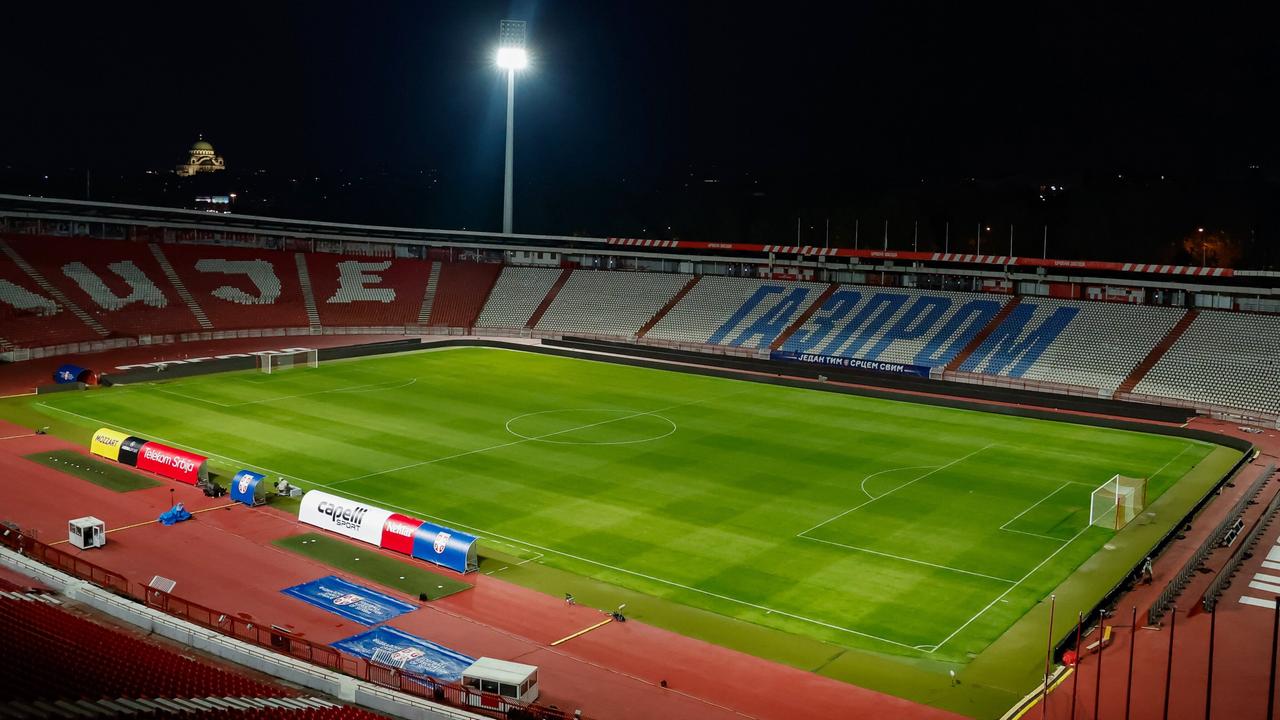
Supporting Data: The Magnitude of the Rajko Mitić Stadium
The Rajko Mitić Stadium, colloquially known as the "Marakana," is one of the most iconic venues in Eastern Europe. With a total capacity of approximately 55,000, it is designed to be a cauldron of noise and pressure. The prospect of playing in such a massive arena without a crowd is a jarring thought for players accustomed to the adrenaline of a full stadium.
For the German team, the tactical preparation remains unchanged, but the psychological element of the match has shifted entirely. Playing in a silent stadium often alters the tempo of the game; the lack of crowd noise changes the way players communicate on the pitch and can significantly impact the momentum swings that usually define high-level international football.
The financial strain on the Serbian FA is also mounting. Beyond the initial 50,000-euro fine, further disciplinary breaches have resulted in additional penalties totaling nearly 80,000 euros. Perhaps most damaging is the inclusion of a two-year suspended sentence, which dictates that any further breach of conduct will result in an automatic ban for the national team’s away supporters. This essentially puts the Serbian fan base on probation, a high-stakes scenario that could influence the behavior of the supporters—if they are allowed in—or heighten the anxiety of the federation during future matches.
Implications for German Supporters and the Team
For the DFB (German Football Association), the situation is a logistical nightmare. Thousands of German fans have already booked flights and hotels for the trip to Belgrade. The uncertainty surrounding whether they will be granted entry to the stadium is causing significant frustration.
From a sporting perspective, Klopp and his staff are focused on maintaining the momentum gained from their win in Munich. Klopp has been vocal in the past about the importance of fans in football, often stating that "football without fans is nothing." While he will likely instruct his players to treat the match with the same professional intensity regardless of the crowd, the reality is that a quiet, empty stadium favors a more technical, clinical style of play, which may suit the German side’s current tactical evolution under Klopp.
Looking Ahead: The Path to Resolution
As November 13 approaches, the footballing world will be watching closely to see if UEFA’s disciplinary committee grants the Serbian FA’s appeal. If the request for a children-only crowd is denied, the match will serve as a stark reminder of the consequences of failing to address intolerance within the game.
If the appeal is partially granted, it will highlight a delicate balance between punitive justice and the necessity of maintaining the spirit of the sport. For now, however, the German squad is preparing for the possibility of a sterile, eerie evening in Belgrade. Whether the stadium remains empty or is filled with the innocent cheers of children, the match remains a vital hurdle for Germany as they look to secure their spot in the next stage of the Nations League.
The incident serves as a sobering reminder that even as football evolves on the pitch, the culture of the terraces remains a volatile component that the sport’s governing bodies are increasingly determined to regulate, regardless of the impact on the spectacle.