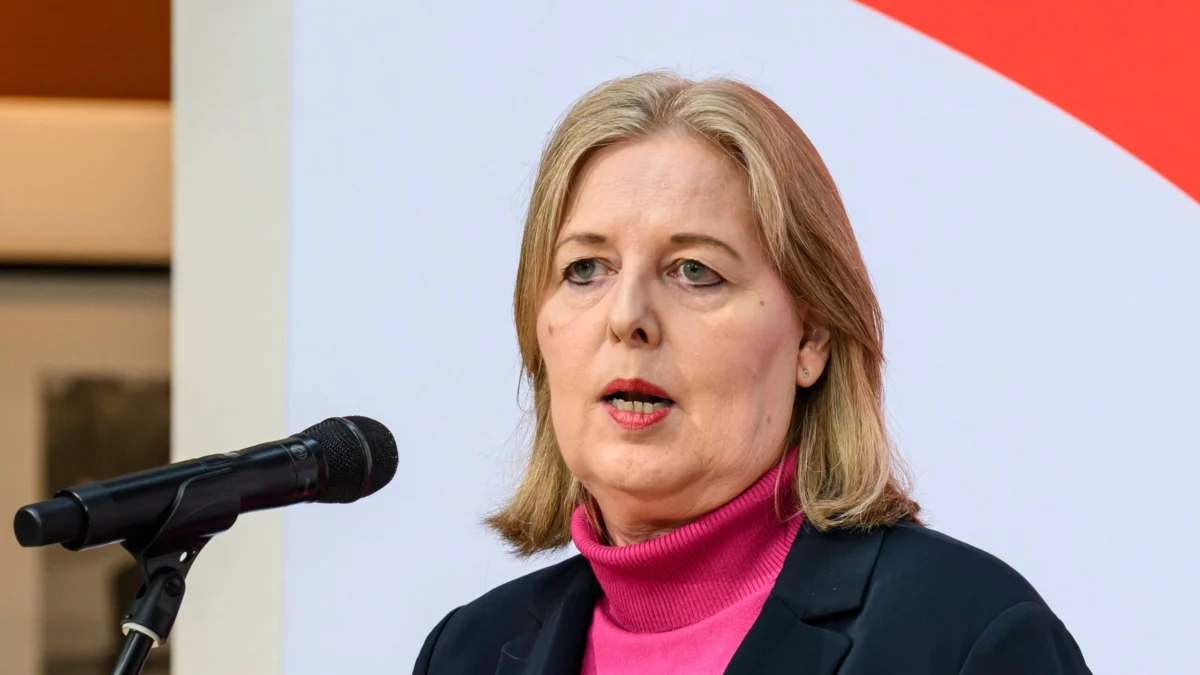
Berlin, Germany – October 12, 2026 – In a swift political manoeuvre, Alexander Schweitzer, the former Minister-President of Rhineland-Palatinate, has been named Germany’s new Federal Minister of Labour and Social Affairs. The appointment comes in the immediate wake of the unexpected resignation of Bärbel Bas, who cited profound personal grief and escalating political pressures as her reasons for stepping down from both her ministerial post and her co-chairmanship of the Social Democratic Party (SPD). Schweitzer, a seasoned politician with a background in regional leadership, now inherits a portfolio fraught with complex, long-delayed reforms crucial to Germany’s future social and economic stability.
His nomination, announced by the SPD leadership just hours after Bas’s resignation, signals a clear intent to stabilize the federal government’s social policy agenda. Schweitzer, 53, faces the daunting task of navigating contentious issues such as the comprehensive pension reform and the highly debated flexibilisation of working hours, both of which have been sources of significant friction within the ruling "traffic light" coalition of the SPD, Greens, and Free Democratic Party (FDP). The new minister’s ability to forge consensus and drive these critical legislative initiatives forward will be a defining challenge, shaping not only the SPD’s standing but also the coalition’s capacity to govern effectively.
Main Facts
Alexander Schweitzer, a 53-year-old jurist and prominent figure within the Social Democratic Party (SPD), is set to assume the critical role of Federal Minister of Labour and Social Affairs. This appointment follows the abrupt resignation of his predecessor, Bärbel Bas, who simultaneously vacated her position as SPD co-chair. Bas’s departure was attributed to the recent death of her stepdaughter and an intense period of public and political scrutiny, including what she described as "attacks from the ranks of coalition partners."
Schweitzer brings to the federal cabinet a wealth of executive experience, having served as Minister-President of Rhineland-Palatinate from 2024 until his party’s loss in the state election in March 2026. Prior to his premiership, he held various leadership roles within the state government and the SPD parliamentary group. He is currently one of the deputy party leaders of the SPD and the parliamentary group leader in Rhineland-Palatinate. His move to Berlin has been widely anticipated since his electoral defeat, seen by many as a logical progression for a politician of his calibre.
The Labour and Social Affairs portfolio is considered one of the most challenging in the current federal government. Key reforms awaiting Schweitzer include the long-overdue pension reform, which aims to ensure the sustainability of Germany’s social security system amidst demographic shifts, and the contentious proposal to introduce greater flexibility into the country’s working hours legislation. Both issues have been points of intense disagreement within the "traffic light" coalition, highlighting the deep ideological divides that Schweitzer will now be tasked with bridging. His success in these areas will be pivotal for the government’s legislative agenda and its public image.
Chronology of Events
The path to Alexander Schweitzer’s appointment as Federal Minister of Labour and Social Affairs is intertwined with a series of significant political and personal events, culminating in a rapid reshuffle at a critical juncture for Germany’s social policy.
March 2024 – March 2026: Schweitzer’s Premiership in Rhineland-Palatinate
Alexander Schweitzer served as the Minister-President of Rhineland-Palatinate, leading an SPD-led coalition. During his tenure, he gained experience in executive leadership, policy implementation, and coalition management at the state level. His period in office was marked by efforts to strengthen the regional economy and address social challenges, providing him with a strong understanding of governance.
March 2026: State Election Defeat in Rhineland-Palatinate
In the state parliamentary elections held in March of this year, the SPD, under Schweitzer’s leadership, suffered a significant defeat, losing its majority and consequently the Minister-President’s office. This electoral setback led to immediate speculation about Schweitzer’s political future, with many observers predicting a potential move to federal politics, given his standing within the national SPD. He retained his role as parliamentary group leader in the state, but the loss opened a clear pathway for new ambitions.
Early 2026: Intensification of Pension and Labour Reform Debates
Throughout the first half of 2026, debates surrounding the federal government’s planned pension reform and the flexibilisation of working hours reached a fever pitch. The "Rentenkommission" (Pension Commission) had submitted its recommendations in June, laying out various proposals to ensure the long-term viability of the German pension system. However, the ensuing discussions among the coalition partners – SPD, FDP, and Greens – revealed deep divisions, particularly concerning the future of the "Rente mit 63" (retirement at 63 after 45 years of contributions) and the overall financing mechanisms. Minister Bas was actively involved in drafting a legislative proposal to implement these reforms. Simultaneously, a draft for the Arbeitszeitgesetz (Working Hours Law) aiming for greater flexibility, as stipulated in the coalition agreement, faced strong opposition from within the SPD and from trade unions.
Throughout 2026: Mounting Pressure on Minister Bas
As the minister responsible for these contentious reforms, Bärbel Bas found herself at the epicentre of political debates. While working diligently on the legislative drafts, she faced increasing criticism regarding the pace and direction of the reforms. Sources close to the government indicated growing impatience from the FDP regarding the pension reform, while the working hours proposal alienated significant parts of the SPD’s traditional base and its union allies. This period was reportedly marked by intense negotiations and internal disputes within the coalition, placing immense pressure on Bas.
Early October 2026: Personal Tragedy Strikes Bas
Tragically, in the days leading up to her resignation, Bärbel Bas suffered the immense personal loss of her stepdaughter. This devastating event added an unbearable burden to her already demanding political responsibilities.
October 12, 2026 (Morning): Bärbel Bas Announces Resignation
In a deeply emotional statement, Bärbel Bas announced her immediate resignation from her positions as Federal Minister of Labour and Social Affairs and as co-chair of the SPD. She explicitly cited the need to process the grief of her stepdaughter’s death as the primary reason for her withdrawal from public office. Critically, she also highlighted the "public attacks" she had endured during this personally difficult time, lamenting that these had been "unfortunately also from the ranks of the coalition partner," indicating a breakdown of trust and support within the governing alliance.
October 12, 2026 (Mid-morning): SPD Präsidium Meeting and Schweitzer’s Nomination
Following Bas’s announcement, the SPD leadership, including party co-chair Lars Klingbeil, convened an urgent meeting of the Präsidium (Presidium). In a swift decision, Alexander Schweitzer was formally nominated as her successor. The rapid succession underscored the SPD’s desire to project stability and continuity, particularly given the critical legislative agenda awaiting the ministry. Klingbeil was expected to make a public statement later in the day, confirming the appointment and outlining the party’s expectations for the new minister.
This sequence of events underscores the volatile nature of federal politics, where personal tragedies can intersect with complex policy challenges, leading to sudden shifts in leadership and renewed urgency for reform. Schweitzer steps into this environment with high expectations and an immediate mandate to tackle the most pressing social issues facing Germany.
Supporting Data and Context
Germany’s social and economic landscape in 2026 provides a complex backdrop against which Alexander Schweitzer will begin his tenure. The challenges facing the Federal Ministry of Labour and Social Affairs are deeply rooted in demographic shifts, economic realities, and evolving societal expectations regarding work and welfare.
Demographic Shift and the Pension System:
Germany, like many developed nations, is grappling with an aging population. Data from the Federal Statistical Office indicates a consistent decline in the birth rate over decades and a significant increase in life expectancy. By 2026, the ratio of retirees to active contributors in the statutory pension insurance system has become increasingly strained. Projections show that without substantial reforms, the "dependency ratio" – the number of people above retirement age compared to the working-age population – will continue to worsen. This demographic reality is the primary driver behind the urgent need for pension reform, as the current pay-as-you-go system, reliant on intergenerational solidarity, is under severe pressure. The debate around "Rente mit 63" exemplifies this, as it allows early retirement for long-term contributors, potentially exacerbating the financial strain on the system and reducing the pool of skilled labour.

Economic Climate and Labour Market:
Germany’s economy in 2026 is facing a confluence of challenges. While resilient, it is navigating the lingering effects of global supply chain disruptions, elevated energy prices, and persistent inflation, which impacts the purchasing power of pensioners and workers alike. The labour market, though generally robust, is experiencing a growing skilled labour shortage across various sectors. This deficit not only hinders economic growth but also places additional stress on the social security system. Policies concerning working hours and labour market flexibility are directly aimed at addressing these economic realities, seeking to maximize workforce participation and productivity.
The "Traffic Light" Coalition Dynamics:
The ruling coalition, comprising the SPD, Greens, and FDP, is inherently diverse in its ideological foundations. The SPD, traditionally advocating for strong social protections and worker rights, often clashes with the FDP’s market-liberal approach, which prioritizes fiscal discipline and economic freedom. The Greens, while sharing some social policy goals with the SPD, also bring their own distinct emphasis on ecological transformation and social justice. This ideological spectrum has made consensus-building on major reforms particularly arduous. The public disputes over pension and working hours reforms are symptomatic of these internal tensions, where each party attempts to uphold its core principles while navigating the exigencies of coalition governance. Bärbel Bas’s complaint of "attacks from coalition partners" underscores the fragility of this working relationship.
Public Opinion and Social Expectations:
Public sentiment regarding social security is often polarized. There is a strong desire for reliable pensions and adequate social provisions, yet also a recognition of the need for reform. The "Rente mit 63" is popular among those who qualify but criticized by younger generations and economists for its long-term cost. Similarly, while many workers desire more flexibility in their working lives, there are concerns, particularly from trade unions, that unchecked flexibilisation could erode worker protections and lead to increased exploitation or stress. Schweitzer must contend with these diverse public expectations, balancing the need for reform with the imperative of maintaining social cohesion and public trust.
Precedent of Past Reforms:
Germany has a history of significant, often controversial, social reforms. The "Agenda 2010" reforms under Chancellor Gerhard Schröder in the early 2000s, which included deep cuts to unemployment benefits and labour market deregulation, remain a powerful, if divisive, reference point. These past reforms illustrate the profound social and political impact that changes to the welfare state can have, setting a high bar for any new minister to navigate such sensitive policy terrains. Schweitzer will undoubtedly draw lessons from these historical precedents, aiming to avoid the political fallout while still achieving necessary adjustments.
Official Responses and Political Reactions
The announcement of Alexander Schweitzer as the new Federal Minister of Labour and Social Affairs, following Bärbel Bas’s resignation, triggered a wave of immediate responses across the political spectrum, reflecting both relief at a quick succession and lingering concerns about the challenges ahead.
Social Democratic Party (SPD):
SPD Co-Chair Lars Klingbeil, in a statement delivered after the party’s presidium meeting, lauded Schweitzer as an "exceptionally experienced and deeply principled politician" who is "perfectly suited to lead the Ministry of Labour and Social Affairs in these challenging times." Klingbeil emphasized Schweitzer’s proven track record in Rhineland-Palatinate, highlighting his ability to build consensus and implement complex policies. He expressed the party’s full confidence in Schweitzer’s capacity to drive forward the critical pension and working hours reforms, asserting that the SPD would provide its full support. Regarding Bas’s departure, Klingbeil conveyed the party’s profound sadness and respect for her decision, acknowledging the immense personal tragedy she faced and thanking her for her dedicated service. He subtly addressed Bas’s comments about "attacks from coalition partners" by calling for greater solidarity and constructive dialogue within the government moving forward. The SPD leadership’s swift action in naming a successor was widely interpreted as an attempt to project stability and minimize any perception of disarray.
Free Democratic Party (FDP):
The FDP, a key coalition partner, offered a cautious welcome to Schweitzer’s appointment. FDP Secretary-General Bijan Djir-Sarai congratulated Schweitzer and stressed the urgency of the pending reforms. "We expect the new minister to approach the pension reform with renewed vigour and a clear commitment to financial sustainability," Djir-Sarai stated, implicitly criticizing the pace under Bas. He reiterated the FDP’s demands for a long-term, intergenerationally fair solution, particularly advocating for a stronger capital-backed component in the pension system and expressing continued skepticism about the "Rente mit 63." On the working hours reform, the FDP spokesperson emphasized the need for greater flexibility to boost economic competitiveness and respond to the demands of a modern workforce, signaling a strong desire for quick legislative action in line with the coalition agreement.
Alliance 90/The Greens:
The Greens, the third coalition partner, also extended their congratulations to Schweitzer. Green Party Co-Leader Ricarda Lang highlighted the importance of a socially just and ecologically sustainable transformation of the labour market. She underscored the Greens’ commitment to strengthening social security nets and ensuring fair working conditions. While expressing readiness to work constructively with Schweitzer, Lang also reiterated the Greens’ positions on the pension reform, emphasizing the need to protect vulnerable groups and ensure adequate living standards for retirees. On working hours, the Greens are generally open to flexibility but insist on safeguards to prevent worker exploitation and ensure work-life balance, aligning more closely with the SPD’s concerns than the FDP’s more liberal approach.
Opposition Parties (CDU/CSU and AfD):
From the opposition benches, the reactions were predictably critical. Friedrich Merz, leader of the CDU, described the ministerial change as a symptom of the "traffic light" coalition’s "internal disunity and inability to govern." He questioned whether Schweitzer, despite his experience, could overcome the deep ideological rifts that had paralyzed the ministry under Bas. Merz called for immediate, decisive action on pension reform, accusing the government of procrastination and endangering the future of Germany’s social system. The AfD, meanwhile, used the opportunity to criticize the entire federal government, portraying the reshuffle as further evidence of what they termed the "establishment’s failed policies." An AfD spokesperson suggested that the new minister would merely continue the "misguided course" of his predecessor without fundamental change.
Trade Unions and Business Associations:
Trade unions reacted with a mixture of hope and caution. DGB (German Trade Union Confederation) Chairwoman Yasmin Fahimi welcomed Schweitzer, emphasizing the crucial role of the ministry in safeguarding worker rights and social justice. She reiterated the unions’ strong opposition to any fundamental weakening of the eight-hour workday principle and stressed the need for a pension reform that genuinely strengthens the statutory system without raising the retirement age. Business associations, represented by the BDA (Confederation of German Employers’ Associations), expressed their expectation that Schweitzer would prioritize reforms that enhance Germany’s economic competitiveness. They specifically called for accelerated progress on working hours flexibility and a pension reform that reduces non-wage labour costs for employers, suggesting a push for a more market-oriented approach.
Overall, while there was a general acknowledgement of Schweitzer’s political pedigree, his appointment is clearly viewed through the lens of the deeply entrenched policy disputes that led to Bas’s departure. His first weeks in office will be closely watched for any indications of how he intends to navigate these treacherous waters and whether he can succeed where his predecessor faced insurmountable obstacles.
Implications for Germany’s Social Fabric and Political Future
Alexander Schweitzer’s appointment to the Federal Ministry of Labour and Social Affairs carries significant implications for Germany’s social policies, the stability of the "traffic light" coalition, and the broader political landscape. His success or failure in this demanding role could define the government’s legacy and shape the lives of millions of Germans.
Implications for Germany’s Social Fabric:
- Pension System Sustainability: The most immediate and profound impact lies in the future of Germany’s statutory pension insurance. Schweitzer’s approach to the long-delayed pension reform will directly affect the financial security of current and future retirees. If he can successfully broker a compromise within the coalition that addresses demographic realities without alienating major societal groups, it could secure the system for decades. Conversely, a failure to act decisively or a reform perceived as unfair could exacerbate intergenerational tensions and erode public trust in the welfare state. The fate of "Rente mit 63" is a particularly sensitive point, symbolizing a broader debate about equity and solidarity.
- Future of Work and Worker Rights: The reform of the Arbeitszeitgesetz (Working Hours Law) will redefine the relationship between employers and employees. If Schweitzer pushes for significant flexibilisation, as desired by the FDP and business associations, it could boost economic productivity and offer employees more autonomy, but it also carries the risk, as warned by unions and parts of the SPD, of increasing work intensity, stress, and eroding established worker protections. His ability to balance these competing interests will determine whether Germany’s labour market evolves sustainably or becomes a source of social friction.
- Social Cohesion: The Ministry of Labour and Social Affairs is at the heart of Germany’s social contract. Decisions made under Schweitzer’s leadership on unemployment benefits, basic income, and social assistance programs will directly impact vulnerable populations and the overall level of social inequality. Navigating these issues with sensitivity and effectiveness is crucial for maintaining social cohesion in an era of economic uncertainty and global challenges.
Implications for the SPD and the Coalition:
- SPD’s Political Standing: For the SPD, Schweitzer’s appointment is a critical test. As a party historically rooted in social justice, its ability to deliver on these reforms is central to its identity and electoral appeal. A successful implementation of a fair and sustainable pension reform could shore up the party’s support among its core electorate. However, internal disagreements or a perceived surrender to FDP demands could further alienate its base and deepen internal divisions, especially in the run-up to the next federal election.
- Stability of the "Traffic Light" Coalition: Bärbel Bas’s resignation, partly attributed to "attacks from coalition partners," exposed the deep fissures within the SPD-Greens-FDP alliance. Schweitzer’s primary challenge will be to rebuild trust and foster consensus. If he can successfully mediate between the often-conflicting demands of the FDP (fiscal discipline, market orientation) and the SPD/Greens (social protection, solidarity), it could inject much-needed stability into the government. Conversely, continued deadlock or escalating public disputes over these fundamental issues could further weaken the coalition’s authority and potentially lead to early elections.
- Leadership Test for Chancellor Scholz: The effectiveness of Schweitzer’s tenure will also reflect on Chancellor Olaf Scholz’s leadership. Scholz will need to provide strong backing and strategic direction to his new minister, ensuring that the coalition partners adhere to common goals despite their ideological differences.
Broader Political Landscape:
- Opposition Strategy: The opposition parties, particularly the CDU/CSU, will closely scrutinize Schweitzer’s every move, using any perceived missteps or delays to highlight the coalition’s weaknesses. The handling of these reforms will be a central campaign issue in future elections, offering the opposition fertile ground for critique.
- Future of German Politics: The success or failure of these reforms under Schweitzer’s guidance will have long-term consequences for the political discourse in Germany. It will either demonstrate the capacity of diverse parties to compromise and address complex societal challenges or expose the limitations of coalition governance in a fragmented political landscape. The outcome will influence voter confidence in the political system and potentially reshape party allegiances.
In conclusion, Alexander Schweitzer steps into a ministry that is not merely an administrative department but a crucial battleground for Germany’s social and economic future. His ability to navigate the personal and political legacies of his predecessor, bridge deep ideological divides, and forge sustainable solutions for pension and labour reforms will determine not only his own political fate but also the trajectory of Germany’s social fabric and the stability of its federal government for years to come. The expectations are immense, and the stakes are undeniably high.