In a provocative assessment of Germany’s economic trajectory, Deutsche Bank CEO Christian Sewing has challenged the sanctity of the nation’s long-standing labor protections. As Germany faces mounting geopolitical and economic pressures, Sewing argues that the era of rigid job security must yield to a new paradigm of radical flexibility.
Executive Summary: A Call for Radical Change
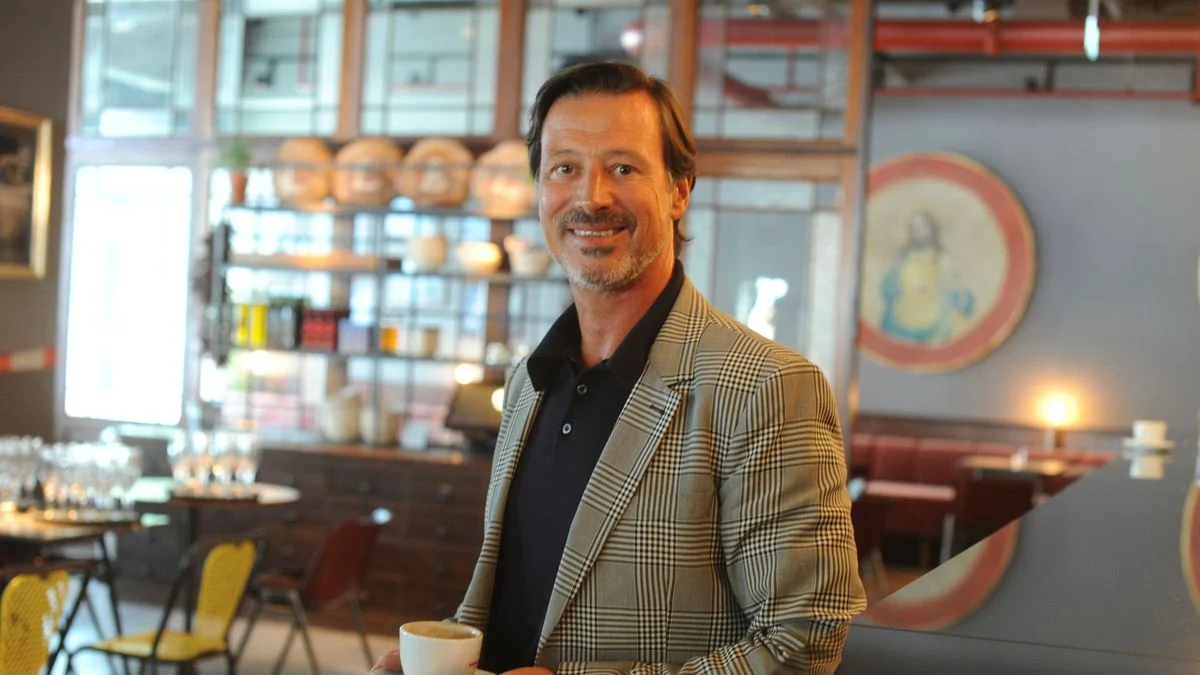
Christian Sewing, the long-serving CEO of Germany’s flagship lender, Deutsche Bank, has issued a stark warning to the federal government: the status quo is no longer sustainable. In an extensive interview with Bild am Sonntag, Sewing laid out a vision for a "leaner, faster, and more competitive" Germany. At the heart of his proposal is a controversial suggestion to loosen the nation’s stringent dismissal protection laws—a cornerstone of the German social market economy.
Sewing’s comments come at a time when the German economy is grappling with sluggish growth, high energy costs, and a shifting political landscape. For the financial leader, the path forward is clear: the government must abandon the politics of compromise and pivot toward structural reforms that prioritize economic velocity over social consensus.
The Core Proposal: Redefining Job Security
At the center of the debate is the German Kündigungsschutz (dismissal protection), which historically ensures that employees cannot be easily terminated without significant legal and financial hurdles.
Sewing acknowledges the cultural sensitivity of the topic but insists that the global economic environment has fundamentally changed. "I fear we have to address things that have become dear to all of us: that is dismissal protection," Sewing stated. He argues that in a world defined by rapid technological disruption and fluctuating market demands, the current framework is an anchor dragging down corporate agility.
The "Top Earner" Precedent
Sewing points to a modest reform already in place, which provides greater flexibility for employees earning over €180,000 annually. He suggests that this threshold is too high and should be lowered, effectively expanding the pool of employees who can be dismissed with greater ease. While he stopped short of providing a specific figure for a new threshold, the implication is a broad deregulation of the middle and upper tiers of the workforce.

Chronology of a Shifting Economic Narrative
To understand the weight of Sewing’s demands, one must look at the timeline of Germany’s recent economic turbulence:
- 2023–2024: Following the post-pandemic recovery, German industry faced the "triple threat" of high energy prices, supply chain bottlenecks, and a skilled labor shortage.
- Early 2025: The federal government introduced several "Growth Packages," which industry leaders, including Sewing, criticized as insufficient.
- Late 2025: A series of political scandals and regional election results (notably in Berlin and Saxony-Anhalt) fueled national anxiety regarding political stability and the rise of populist parties.
- October 2026: Sewing formalizes his critique, linking the success of the German economy directly to the urgency of political reform.
Sewing’s commentary is not an isolated outburst but the culmination of years of frustration regarding the pace of administrative and legal modernization in Berlin.
Supporting Data: The Case for Flexibility
The German labor market is often lauded for its low unemployment rates, yet it remains one of the most heavily regulated in the OECD.
- Productivity Stagnation: Data suggests that German labor productivity has plateaued compared to the United States and emerging Asian markets, partly due to the high costs associated with workforce restructuring.
- The Debt Dilemma: Sewing highlighted the precarious state of federal finances, explicitly criticizing measures like the "tank rebate" (subsidies for fuel). He argues that such interventions are fiscally irresponsible in an era of high sovereign debt. "We cannot simply keep adding more on top," he remarked, noting that every euro spent on temporary relief is a euro taken away from long-term investment in infrastructure and digitalization.
- Investment Climate: Foreign Direct Investment (FDI) into Germany has slowed significantly, with international observers often citing "bureaucratic complexity" and "inflexible labor laws" as the primary barriers to entry.
Political Implications: The "Brand-Dangerous" Development
Perhaps the most striking aspect of Sewing’s intervention is his explicit linkage of economic policy to national political stability. He characterized the current political climate as "brand-dangerous" (brandgefährlich).
The Rise of Extremism
Sewing argues that economic stagnation acts as a petri dish for political extremism. By referencing the political shifts in Saxony-Anhalt and the volatility in Berlin, he is sending a message to the political establishment: If you do not deliver prosperity, the democratic center will continue to erode.
He contends that "reforms for growth, originating from the democratic center," are the only viable defense against the surge of both right-wing and left-wing populism. In his view, the failure of the government to act decisively is not just an economic error; it is a fundamental threat to the stability of the German republic.

Official Responses and Public Reaction
The reaction to Sewing’s comments has been polarized, reflecting the deep-seated ideological divide in Germany.
- Labor Unions: Predictably, the unions have lashed out. Representatives from major industrial unions have labeled the proposal a "frontal attack on the social peace of Germany." They argue that the security provided by current laws is exactly what encourages worker loyalty and long-term investment in professional training.
- Government Stance: While members of the governing coalition have expressed a desire for "more efficiency," they have been careful to distance themselves from a direct rollback of workers’ rights. The political cost of alienating the traditional voter base is high, particularly as the coalition attempts to maintain a semblance of unity.
- Business Leaders: Within the private sector, there is a quieter, yet pervasive, support for Sewing’s rhetoric. Many DAX-listed companies have expressed private frustration with the inability to shift personnel quickly to match the rapid transition toward AI and green technology.
The "Saubermann" Persona and the Burden of the Past
Christian Sewing is often viewed as the "clean man" (Saubermann) of German finance—the CEO who successfully turned around the reputation of Deutsche Bank after years of scandal and losses.
However, his authority is not without friction. In 2025, the institution was once again thrust into the spotlight regarding legacy issues stemming from the 2008 financial crisis. Critics argue that by demanding greater labor flexibility, Sewing is attempting to deflect from the bank’s own internal struggles to modernize its culture and risk management. Despite this, his voice carries immense weight in Berlin; he is one of the few figures who can force a debate on the "holy cows" of German social policy.
Conclusion: A Turning Point for the German Model?
Christian Sewing’s challenge is ultimately a call for a redefinition of the German social contract. The question he poses is whether the "German Model"—built on the pillars of consensus, job security, and gradual change—is still fit for purpose in the 21st century.
As the government continues to weigh its options, the debate over the Kündigungsschutz will likely intensify. Whether the result is a moderate adjustment of dismissal regulations or a hardening of the status quo remains to be seen. What is certain, however, is that the era of comfortable, consensus-driven stagnation is over. For Germany, the choice is no longer between reform and the status quo; it is between a painful, proactive modernization and a slow, involuntary decline.
Sewing’s message is clear: The time for compromise has passed; the time for bold, even unpopular, action has arrived.