


Introduction: A Milestone in the World of Ski Jumping
This weekend, the quiet town of Klingenthal in Saxony transforms into the epicenter of the international winter sports world. The Vogtland Arena, a landmark of modern architectural engineering and a symbol of regional resilience, celebrates its 20th anniversary. To mark the occasion, the facility is hosting the grand finale of the FIS Ski Jumping Summer Grand Prix. As the world’s elite athletes descend upon the region, the atmosphere is electric, blending the nostalgia of two decades of competition with the high-octane anticipation of a championship showdown.
For twenty years, the Vogtland Arena has served as more than just a ski jumping hill; it has been a catalyst for tourism, a beacon for youth development in sport, and a permanent fixture on the international calendar. As the first jumpers begin their practice sessions, the local community and the global ski fraternity reflect on a facility that successfully bridged the gap between traditional heritage and cutting-edge sports technology.
Chronology: From Vision to Global Icon
The Genesis (2004–2006)
The construction of the Vogtland Arena was not merely a building project; it was a strategic decision to revitalize Klingenthal as a center for excellence. Before the current structure, the area struggled to maintain facilities that met the rapidly evolving requirements of the International Ski Federation (FIS). Groundbreaking in 2004 marked the beginning of a monumental effort to move away from the traditional, snow-dependent jumping hills of the past toward an all-weather, high-tech complex.
The Inauguration and Early Years (2007–2010)
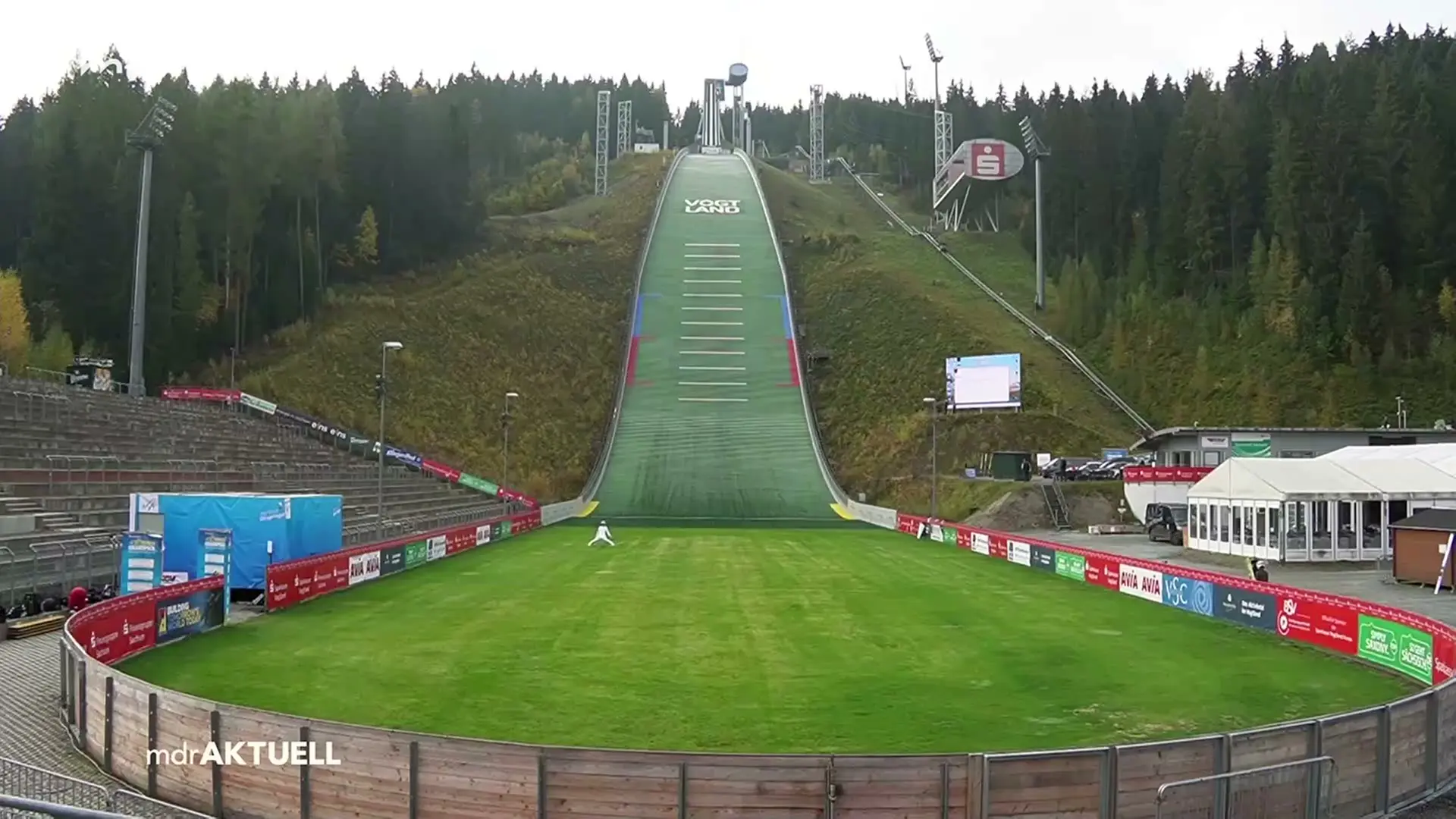
In 2007, the arena officially opened its doors, instantly drawing praise for its modern design and the "Green Monster" (the nickname for its imposing, steep profile). It quickly secured a spot on the World Cup circuit. The facility proved its worth immediately by hosting continental and international events that tested the limits of both the athletes and the logistical capabilities of the small Saxon town.
Consolidation and Modernization (2011–2024)
Over the last decade, the Vogtland Arena has undergone several critical upgrades, specifically focusing on the landing surface and the in-run technology, ensuring it remains at the forefront of the sport. It has survived the challenges of climate change by investing in high-quality plastic matting that allows for competition in all seasons, making it one of the most reliable venues in the Summer Grand Prix series.
The Anatomy of the Arena: Why Klingenthal Matters
The Vogtland Arena stands out for its unique structural footprint. Unlike older hills that were carved directly into natural slopes, the Klingenthal facility features a massive, free-standing steel structure for the in-run, providing a consistent, fair, and high-speed start for every athlete.

Technical Specifications
- Hill Size (HS): 140 meters, placing it among the largest "Large Hills" globally.
- K-Point: 125 meters.
- The In-run: A steel bridge construction that minimizes wind turbulence, allowing for safer jumps under varying conditions.
- The Crowd Factor: The arena is designed to accommodate thousands of spectators, creating a "cauldron" effect that intensifies the pressure on the jumpers—a psychological hurdle that defines many career-defining performances.
Supporting Data: Impact Beyond the Sport
The significance of the 20th anniversary extends well beyond the points and podiums recorded during the Summer Grand Prix. The economic and social impact on the Vogtland region has been profound.
Tourism and Local Economy
Data from the local tourism board indicates that international events at the Vogtland Arena generate a significant uptick in regional hospitality revenue. During event weekends, occupancy rates in Klingenthal and surrounding municipalities often hit 100%. The "ski jumping tourism" model has allowed the town to maintain its relevance throughout the year, rather than relying solely on the erratic winter snow season.
The Pipeline for Talent
Perhaps the most lasting legacy of the arena is its role in training. The nearby boarding schools for athletes have used the proximity of the world-class hill to nurture a new generation of German ski jumpers. The visibility of the arena acts as a primary recruitment tool, drawing youth from all over Germany to pursue their dreams in the heart of Saxony.

Official Responses and Perspectives
The celebration has drawn tributes from across the sporting world.
The Athlete’s Perspective
Current world-class jumpers, many of whom have competed in Klingenthal for over a decade, describe the hill as "honest but demanding." The consensus among the jumpers currently in training is that the wind conditions at the arena are notoriously difficult to master, requiring a high level of technical precision. "When you stand at the top of the tower in Klingenthal, you know you are at a place where history is made," one competitor remarked during a press conference this week.
The Local Administration
The Mayor of Klingenthal and the organizing committee have emphasized the collaborative effort behind the anniversary. "Twenty years ago, many doubted that a small town could sustain a world-class arena. Today, we are proud to show that we have not only sustained it but turned it into a crown jewel of international winter sports," said the event director in a recent briefing. The local government views the arena as a permanent investment in the town’s identity.

Implications for the Future: Sustainability and Innovation
As the arena looks toward its next twenty years, the focus is shifting toward environmental sustainability and technological integration.
Environmental Stewardship
Maintaining a large-scale sports facility in a sensitive ecological area like the Vogtland requires meticulous planning. The organizers are currently exploring ways to reduce the energy footprint of the artificial snow-making systems and the power consumption of the floodlights. The use of sustainable materials in the maintenance of the landing hill is a priority for the upcoming decade.
Digital Integration
The next evolution of the sport involves high-tech sensor integration. There is talk of implementing real-time biomechanical analysis directly into the jump track to provide spectators and coaches with instant data on speed, angle of attack, and aerodynamic efficiency. Klingenthal, with its modern infrastructure, is seen as the ideal pilot site for such technological advancements in the sport of ski jumping.

The Grand Finale: What to Expect
This weekend’s Summer Grand Prix finale is expected to be one of the most competitive in recent history. With the overall title race coming down to the wire, the pressure on the athletes to perform on the 140-meter hill is extreme.
- The Schedule: The weekend kicks off with intensive training, followed by the qualification rounds, and culminating in the final individual and team events.
- The Contenders: While the field is deep, local favorites and the perennial leaders of the World Cup standings are expected to clash. The unique wind profile of the Vogtland Arena often allows for upsets, making it a favorite for spectators who enjoy the unpredictability of the sport.
Conclusion: A Legacy of Elevation
The 20-year milestone of the Vogtland Arena is a testament to the idea that sports infrastructure can be a powerful engine for community growth. What started as an ambitious project to put Klingenthal on the map has evolved into a global center for ski jumping.
As the sun sets over the Vogtland hills this weekend, and the lights of the arena illuminate the evening sky, the celebration will focus on the countless hours of training, the thousands of jumps, and the enduring spirit of a town that dared to build high. The legacy of the last two decades is not just in the steel and concrete of the hill, but in the memories of the fans and the dreams of the young athletes who look at that towering structure and see their future.

Klingenthal stands ready, not just to host a competition, but to honor two decades of excellence, and to look forward with confidence to the heights yet to be reached. As the world’s elite prepare to launch themselves into the cool autumn air, they carry with them the weight of expectations and the thrill of a sport that, at its heart, is about the human desire to fly. For the residents of this Saxon town, the Vogtland Arena is not just a venue; it is their home, their pride, and a symbol that, with enough vision and hard work, even the smallest towns can reach the highest peaks.







