The German healthcare sector finds itself at the center of a burgeoning transatlantic trade dispute. As the United States initiates an inquiry into the pricing structures of German pharmaceuticals, Berlin’s political leadership has adopted a stance of resolute defiance. Federal Health Minister Nina Warken (CDU) has signaled that there is no diplomatic or economic room for maneuver regarding the pressure exerted by Washington to alter domestic drug pricing policies.
This dispute, which pits the American desire for global price parity against Germany’s mandate to stabilize its own statutory health insurance (GKV) system, represents a significant test for the current administration. With Chancellor Friedrich Merz dismissing US threats of retaliatory tariffs as an interference in sovereign German affairs, the stage is set for a prolonged period of complex trade negotiations.
The Genesis of the Conflict: Why Washington is Watching Berlin
The friction stems from a fundamental divergence in pharmaceutical economics. For decades, the German government has utilized rigorous price-negotiation mechanisms to keep the cost of prescription medication manageable for its statutory health insurance funds. These mechanisms often involve significant rebates, which effectively lower the net cost of drugs for German patients and insurers.
The US government, however, views these pricing structures through a different lens. According to Washington’s official narrative, the deep discounts negotiated by German authorities—and those in other European nations—create a market distortion that limits the potential for future price reductions within the United States. The US argument posits that the American healthcare market is essentially subsidizing the low costs enjoyed by European consumers. By initiating a formal investigation into these practices, the US trade representative’s office is effectively signaling that it considers European price controls an unfair trade barrier.
Chronology of the Dispute
The escalation of these tensions has been rapid, moving from industry whispers to formal government inquiries within a matter of months:
- Initial Industry Complaints: Throughout the first half of the year, major pharmaceutical firms headquartered in the US and Europe began voicing concerns regarding the GKV-Stabilization Act, claiming that the fiscal pressure on margins was becoming unsustainable.
- The US Inquiry Launch: In late summer, the US administration announced a formal review of international pharmaceutical pricing, specifically targeting "reference pricing" models used in Germany and France.
- The Threat of Tariffs: Shortly after the inquiry’s announcement, reports emerged that the US was considering the imposition of targeted tariffs on German medical and chemical exports should Berlin refuse to adjust its pricing laws.
- The Chancellor’s Rebuttal: Last Friday, Chancellor Friedrich Merz firmly rejected the US accusations, characterizing the debate over domestic healthcare costs as an "internal German matter" and dismissing the threat of trade sanctions.
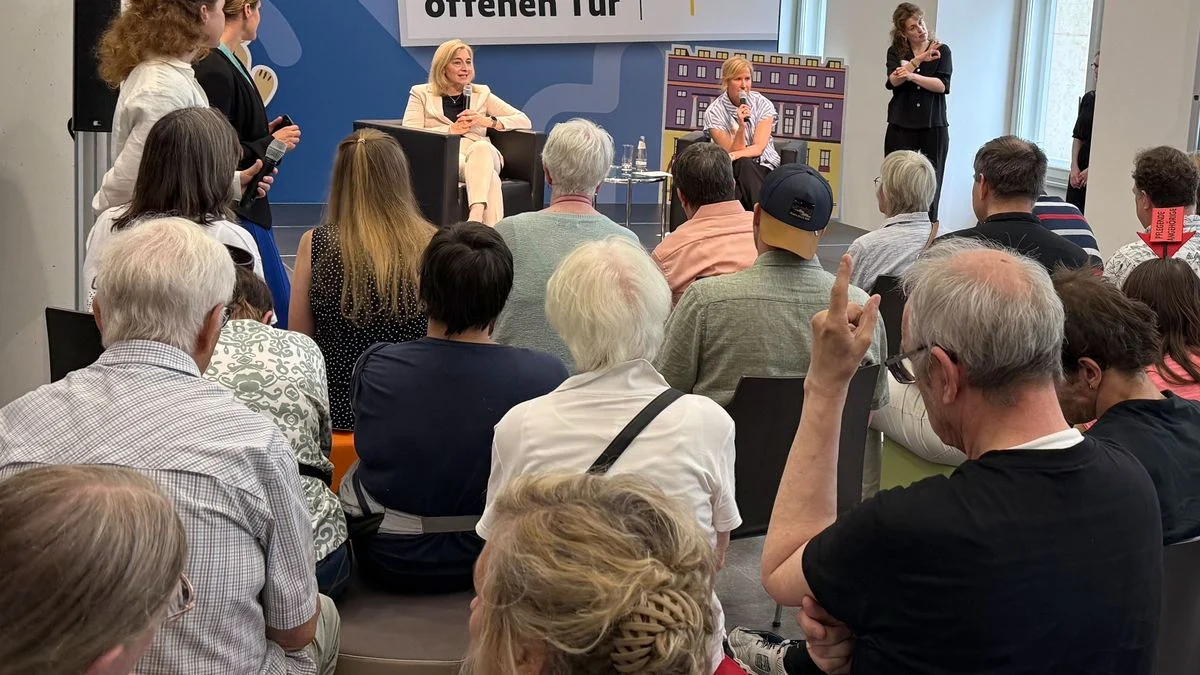
- The "Open House" Statement: On Sunday, during the Federal Ministry of Health’s annual Open House event in Berlin, Minister Nina Warken provided the most comprehensive governmental response to date, stating unequivocally that the existing framework for pharmaceutical pricing remains non-negotiable.
The German Position: Stability and Sovereignty
Minister Warken’s comments on Sunday served as a clear message to both the pharmaceutical industry and the US administration: the government will not be bullied into reversing its healthcare reform agenda.
"Within the realm of tariffs and existing international agreements, we are bound by established protocols," Warken stated. "However, regarding our national health reforms, I see very little room for concessions."
The core of the German government’s defense rests on the necessity of the GKV-Stabilization Act. As the nation faces an aging population and rising costs for advanced medical treatments, the government views the mandatory contribution of the pharmaceutical industry as a vital pillar of fiscal responsibility.
Transitioning to Fixed Discounts
One of the most significant developments in this ongoing saga is the government’s attempt to appease the industry without sacrificing its policy goals. Warken confirmed that the government is currently working to replace the "dynamically increasing" rebate system with a "fixed discount" structure.
The goal here is to provide the pharmaceutical industry with much-needed predictability. By moving away from a fluctuating scale that adjusts based on market variables, the government hopes to create a more stable investment environment. "We are working on this at the moment," Warken noted, suggesting that while the financial contribution is non-negotiable, the method of that contribution is open to administrative optimization.
Economic Implications: The "Innovation vs. Regulation" Tug-of-War
The threat of major pharmaceutical companies reducing their investment in Germany hangs over these negotiations like a shadow. Executives from global firms have hinted that if the GKV-Stabilization Act remains in force, they may shift research and development (R&D) hubs to markets with more favorable price-setting regimes, or to regions with lower operational costs, such as India or China.
The Value Proposition of the German Market
Minister Warken, however, remains confident in Germany’s intrinsic value as a pharmaceutical hub. She rejects the premise that Germany is merely a market to be exploited for price, emphasizing that the country offers infrastructure that cannot be easily replicated elsewhere:
- Academic Excellence: Germany’s network of world-class universities provides a constant pipeline of research talent.
- Clinical Infrastructure: The nation’s regulatory framework for clinical trials is among the most robust in the world, making it a prime location for the testing of next-generation therapies.
- Innovation Ecosystem: Warken pointed to the constant influx of new drugs and medical breakthroughs in Germany as proof that the industry is still thriving despite the regulatory environment.
"The industry faces global competition, particularly regarding the production of active ingredients, where countries like India and China offer lower costs," Warken admitted. "But Germany remains an incredibly interesting market for R&D and high-end manufacturing. We are innovative, and we are delivering the next generation of therapies."
The Geopolitical Context: A Strained Alliance
This pharmaceutical spat is occurring against a backdrop of broader geopolitical uncertainty. The relationship between Berlin and Washington is currently defined by a delicate balance of deep security cooperation and increasingly divergent economic interests.
The US administration’s willingness to use the threat of trade tariffs against an ally like Germany—particularly over a domestic health policy—signals a shift toward a more aggressive, transactional approach to trade. By framing healthcare pricing as a matter of "fair trade," the US is signaling that it is willing to challenge the internal policy sovereignty of its partners to protect its own economic interests.
Conversely, for Chancellor Merz’s government, caving to US pressure would be seen as a sign of weakness at a time when the German economy is struggling to maintain its industrial edge. The rejection of US demands is, therefore, as much about domestic political posturing as it is about healthcare economics.
Conclusion: The Path Forward
The coming months will likely see intense back-channel negotiations. While Minister Warken has ruled out fundamental changes to the GKV-Stabilization Act, the shift toward a fixed-discount model suggests that Berlin is willing to engage in technical adjustments to lower the friction for the pharmaceutical industry.
For the international community, this conflict serves as a case study in the tension between national welfare systems and globalized markets. As countries grapple with the skyrocketing costs of modern medicine, the pressure to control domestic prices will only increase. Whether the United States and Germany can find a diplomatic solution that respects both German health policy and US trade concerns remains to be seen. For now, Berlin is holding the line, prioritizing the stability of its social security system over the demands of its transatlantic partner.