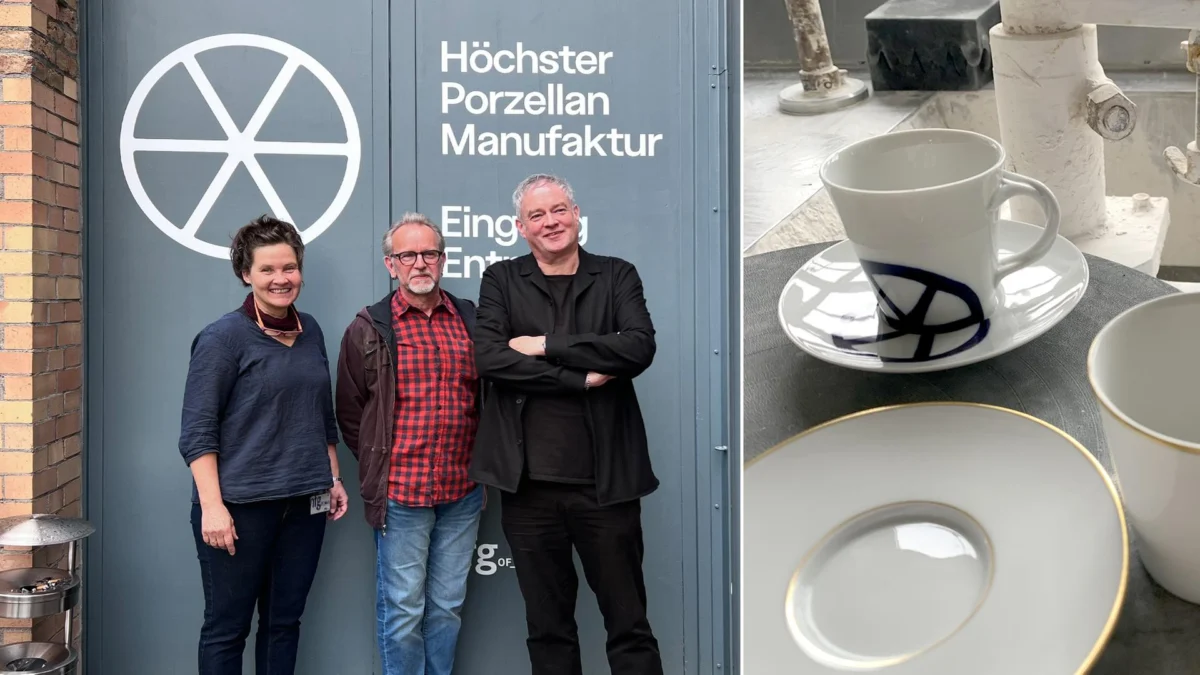
The Höchster Porzellan Manufaktur, a cornerstone of German ceramic history, recently marked its 280th anniversary. Far from being a mere relic of the 18th century, the institution has reinvented itself as a vibrant, experimental hub where centuries-old craftsmanship converges with the cutting-edge innovation of contemporary art and design students. By integrating into the academic structure of the Offenbach University of Art and Design (HfG), the factory has moved away from a purely commercial model to become a living laboratory for the next generation of creators.
The Essence of the Institution: A Chronicle of Resilience
Founded in 1746 under the patronage of the Elector of Mainz, Johann Friedrich Karl von Ostein, the Höchster Porzellan Manufaktur has navigated nearly three centuries of shifting economic landscapes. Its history is a mirror of European history itself—marked by periods of immense royal prestige, followed by the industrial revolutions of the 19th and 20th centuries, and the inevitable challenges of the modern global market.
The road to the present has been arduous. The institution has weathered two separate insolvencies, with the most recent crisis in 2022 threatening to shutter the historic site permanently. However, a significant intervention by the State of Hesse in 2023 salvaged the facility. By transitioning the factory’s management and integrating it into the HfG Offenbach, the state ensured that the "white gold"—the hallmark of Höchst porcelain—would continue to be molded, fired, and perfected, not merely as a product for sale, but as an essential cultural heritage.
The "Day of the Open Manufactory": Bridging Eras
The recent "Day of the Open Manufactory" offered a rare, unfiltered look into the factory’s internal operations. Attendees were treated to a 28-station tour documenting the intricate lifecycle of a porcelain piece, from raw clay to finished, delicate artwork.

Steffen Taubhorn, the artistic director of the manufactory, acted as a guide through this history. During the exhibition, Taubhorn highlighted the "Trembleuse," or "trembling cup," a quintessential piece of 18th-century design. "In the 18th century, it was common to have breakfast in bed," Taubhorn explained. "It was vital to have a deep, stabilized saucer to prevent the tea from spilling. It represents a level of domestic sophistication and functional design that we still analyze today."
The event underscored the continuity between historical artifacts and modern experimentation. While the Trembleuse represents the zenith of aristocratic leisure, the current work being done in the 2,000-square-meter facility explores the boundaries of the medium using digital fabrication and unconventional physical interaction.
Institutional Transformation: From Commerce to Pedagogy
The shift under the administration of the HfG Offenbach has redefined the factory’s mission. The facility is no longer primarily focused on commercial retail; instead, it has become an educational powerhouse. The focus has moved toward the transmission of "tacit knowledge"—the specialized, hand-based skills that cannot be learned from a textbook.
Students are now learning the traditional arts of porcelain casting in plaster molds and "bossing," which is the precise assembly of individual cast components. This pedagogical shift ensures that the endangered crafts of the 18th century survive by being taught to those who will define the aesthetics of the 21st century.

Inside the Ceramic Art Lab
The ground floor of the factory has been repurposed as the "Ceramic Art Lab," led by the Finnish artist Merja Herzog-Hellstén. This space serves as an incubator for students working in stoneware and porcelain. The atmosphere here is one of raw exploration.
During the open day, visitors witnessed a striking scene: ten students, dressed in rain gear, engaged in a collective physical process of preparing massive quantities of clay with their feet. "Today, we are testing what it feels like to use body parts other than our hands to form the material," Herzog-Hellstén explained. This exercise in sensory perception aims to break down the rigid, formal expectations of traditional pottery, encouraging students to engage with the material on a visceral level before bringing it into the kiln.
The Institute for Material Design: Where Algorithms Meet Earth
Complementing the manual techniques of the Art Lab is the Institute for Material Design, directed by Markus Holzbach. This department represents the "high-tech" pillar of the factory’s new identity. Here, 3D printers, robotic arms, and AI-driven design software sit side-by-side with antique kilns.
A standout project of the year is the work of student Simon Hanke, who presented a futuristic "Bembel"—the traditional Hessian cider jug—fabricated using AI-generated geometry and 3D printing. The result is a striking fusion of local cultural identity and advanced manufacturing technology. By using algorithms to calculate optimal structural integrity and material usage, Hanke and his colleagues are proving that porcelain is a material of the future as much as the past.

Implications for the Future of Craft
The integration of the Höchster Porzellan Manufaktur into an academic framework offers a blueprint for how cultural heritage sites can survive in an era of mass production. By shifting from a commercial model to a research and development model, the manufactory has successfully avoided the fate of becoming a "museum piece."
Key Takeaways from the Current Model:
- Skill Preservation: By prioritizing the training of students, the factory ensures the survival of specialized craftsmanship that might otherwise die out.
- Technological Synthesis: The inclusion of 3D printing and robotics allows for a dialogue between historical production methods and modern manufacturing potential.
- Cultural Relevance: By reinterpreting local icons like the Bembel through new technologies, the manufactory remains relevant to the local community and global design trends.
- Public Engagement: Periodic events like the "Day of the Open Manufactory" foster public appreciation for the effort behind artistic production, ensuring continued political and social support for the site.
Official Perspectives and Public Impact
The intervention by the State of Hesse has been widely viewed as a success, not just in economic terms, but in cultural preservation. For students like Amelie Paquin, who exhibited a self-portrait of her 14-year-old self at the open day, the factory provides more than just a workspace; it provides a professional runway. "I hope to make a living from this," she remarked. Her work, alongside those of her peers, demonstrates that the tactile nature of clay remains a vital form of expression in an increasingly digital world.
The transition has also allowed the staff, including veteran employees like Steffen Taubhorn, to pivot from being assembly-line experts to becoming mentors. This transition has mitigated the trauma of the previous insolvencies and provided the staff with a renewed sense of purpose.
Conclusion: A Living Legacy
As the Höchster Porzellan Manufaktur looks toward the next 280 years, it does so with a dual identity. It remains a guardian of the delicate, intricate beauty of 18th-century porcelain, but it is now also a daring innovator, unafraid to challenge the limits of what a kiln can produce.

The marriage of the "Zittertasse" and the "3D-printed Bembel" is not an aesthetic clash, but a testament to the versatility of the medium. Through the support of the HfG Offenbach and the creative spirit of its students, the Höchster Porzellan Manufaktur has successfully navigated its most precarious chapter, proving that true craftsmanship is not about preserving the past in amber, but about using the tools of the past to build the future.
The factory doors are open, and the message is clear: the history of porcelain is far from over—it is currently being rewritten in clay, code, and passion.