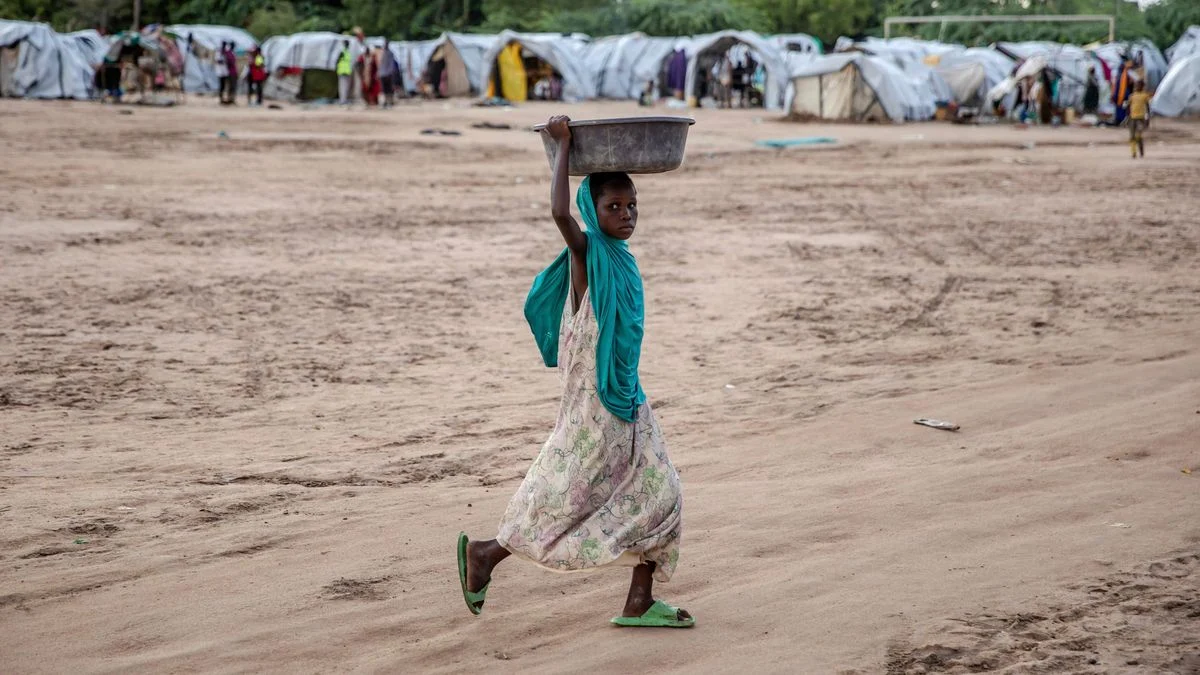
As extreme weather events become the new normal, a devastating secondary crisis is unfolding in the shadows: for millions of girls in the Global South, the climate emergency is not just a threat to their environment, but a direct assault on their fundamental rights, health, and bodily autonomy.
The latest "State of the World’s Girls" report, released this week by the international children’s rights organization Plan International, paints a harrowing picture of a generation being systematically pushed toward early marriage, forced pregnancy, and systemic violence. What was once discussed as a theoretical risk of climate change has solidified into a grim, daily reality for vulnerable populations across the globe.
The Intersection of Climate and Inequality
For decades, climate change has been framed largely through the lenses of economics, carbon emissions, and infrastructure. However, the report highlights a critical, often overlooked dimension: the disproportionate impact on girls. When heatwaves, prolonged droughts, or catastrophic floods strike, they do not impact all demographics equally. In many societies within the Global South, deep-seated gender norms mean that when resources become scarce, girls are the first to be sacrificed.
Justus Schneider, an expert on climate justice at Plan International Germany, emphasizes that the consequences for girls are not merely side effects—they are fundamental violations of human rights. "We are witnessing massive restrictions that fundamentally dictate the life paths of these girls," Schneider warns. "The climate crisis is effectively accelerating the loss of childhood."
Chronology of a Crisis: From Weather Event to Human Tragedy
To understand the mechanics of this phenomenon, one must look at the sequence of events that follow a climate disaster. The trajectory often follows a predictable and tragic pattern:

- The Immediate Shock: An extreme weather event occurs, destroying agricultural output, homes, or critical infrastructure such as water supply lines and clinics.
- Economic Destabilization: Families, particularly those reliant on subsistence farming, lose their primary income. The economic pressure mounts, forcing families to seek "coping mechanisms" to survive.
- The Withdrawal from Education: As household budgets collapse, school fees and supplies become unaffordable. Girls are frequently the first to be pulled from the classroom to assist with household labor or to care for younger siblings while parents search for work.
- The Erosion of Support Systems: With local clinics destroyed or understaffed, reproductive health services disappear. Girls lose access to essential hygiene products, contraceptives, and basic medical care.
- The Consequential Outcome: Without the "protective buffer" of education and with families under extreme financial duress, the risk of early marriage and forced pregnancy skyrockets. Data suggests that in these scenarios, the probability of child marriage effectively doubles.
Data and Evidence: The Global Scope
The findings from Plan International are based on an extensive survey of 5,000 girls and young women aged 15 to 24 from five diverse, high-risk countries: Bangladesh, Kenya, Peru, Senegal, and Zimbabwe. By augmenting these personal testimonies with climate and health data from 50 countries, the researchers have established a clear, quantifiable link between environmental volatility and social regression.
Perhaps most alarming is the data regarding healthcare access. Three-quarters of the girls surveyed reported that climate disasters had directly severed their access to menstrual health products and contraception. When clinics are washed away or shuttered due to a lack of power and resources, the most basic healthcare needs of adolescent girls are neglected, leaving them vulnerable to health complications and unwanted pregnancies.
"School is not a luxury; it is the most important lever for the protection of girls after weather extremes," says Schneider. When that lever is removed, the structural protections for girls vanish, making them targets for exploitation.
Official Responses and the Policy Vacuum
The report’s release comes at a critical juncture in international climate diplomacy. As the world gears up for the upcoming UN Climate Summit in Antalya, Turkey (November 9–20), the findings provide a stark reminder of what is at stake.
Currently, preliminary negotiations are underway on the Fiji Islands, where Pacific leaders are attempting to center the conversation on the existential threat of rising sea levels. However, the broader international community remains locked in a stalemate. Following the disappointing outcomes of the previous UN Climate Conference in Brazil, where nations failed to agree on a comprehensive roadmap for the phase-out of fossil fuels, progress on global climate policy has remained largely stagnant.

The recurring failure to reach a consensus on fossil fuel reduction is more than a diplomatic hurdle; it is a direct contributor to the humanitarian crises described in the report. As global temperatures rise, the frequency and intensity of the droughts that fuel child marriage in regions like the Sahel or the Horn of Africa will only increase.
Implications: A Call for Gender-Responsive Climate Action
The message from activists and humanitarian organizations is clear: global climate plans are currently "gender-blind." To address the specific needs of girls, policy must move beyond generic mitigation strategies.
1. Integrated Healthcare in Climate Planning: Climate resilience must include the fortification of health infrastructure. Reproductive health services, including menstrual and contraceptive support, must be treated as essential emergency aid, equal in importance to food and water distribution.
2. Protecting Education as a Strategic Priority: Governments and NGOs must develop "climate-proof" education systems. This includes financial support for families during extreme weather events to ensure that girls remain in school, thereby delaying marriage and increasing their future economic independence.
3. Gender-Inclusive Climate Funding: Currently, very little of the global climate adaptation fund is specifically earmarked for gender-related interventions. Organizations are calling for a fundamental shift in how climate finance is distributed, demanding that a significant percentage be directed toward protecting the most vulnerable demographic—girls.

Conclusion: The Path Forward
The narrative of the climate crisis must expand. While it is vital to discuss carbon budgets and technological transitions, the human cost—the girl in Kenya losing her education to a drought, or the adolescent in Bangladesh forced into a marriage to ensure her family’s survival—must be at the center of the debate.
As the international community prepares for the summit in Antalya, the burden of proof is on world leaders to demonstrate that their climate strategies are not just about protecting the planet, but about protecting the people living on it. Without explicit, funded, and legally binding commitments to safeguard the rights of girls, the climate crisis will continue to undo decades of progress in gender equality, leaving a permanent scar on the next generation.
The "bitter reality," as described by Plan International, is that the climate clock is ticking—and for millions of girls, time is running out. The solutions exist: they lie in a combination of resilient infrastructure, sustained education, and a political will that recognizes that true climate justice is impossible without gender justice.