For years, the villages surrounding the Garzweiler II open-pit mine in North Rhine-Westphalia were symbols of a losing battle. Lützerath, Keyenberg, Kuckum, Oberwestrich, Unterwestrich, and Berverath—these names became synonymous with the clash between industrial energy needs and the preservation of cultural heritage. Following years of protest, litigation, and political maneuvering, the decision was made: the "saved" villages would not be razed for lignite mining.
However, as the dust settles on the legal and environmental battles, a new, complex reality has emerged. For the residents who fought to remain, the victory is now being eclipsed by a staggering financial burden. The "saved" villages are facing an existential crisis of a different sort: the cost of reconstruction, infrastructure, and modernization has become a prohibitive barrier to a true homecoming.
The Chronology of a Contested Landscape
The conflict over the Erkelenz villages has been a defining feature of German environmental policy for over a decade.
- 2013–2016: Energy giant RWE consolidates its plans for the expansion of the Garzweiler II mine, marking several villages for demolition to access deep-lying coal seams.
- 2018–2020: As the climate movement gains momentum, the "saved" villages become a focal point for activists. Legal challenges from residents mount, arguing that the destruction is no longer necessary for Germany’s energy security.
- October 2022: The German government and the state of North Rhine-Westphalia reach a historic agreement with RWE. The coal phase-out is accelerated to 2030. Five villages—Keyenberg, Kuckum, Oberwestrich, Unterwestrich, and Berverath—are officially "rescued."
- 2023–2024: The aftermath begins. As initial euphoria fades, the practicalities of a town that has been "ghosted" for years become apparent. Property values have fluctuated wildly, infrastructure is dilapidated, and the population has dwindled, leaving a hollowed-out shell that requires massive investment to revive.
The Economics of Preservation: Why "Saving" Isn’t Free
The narrative of "saving" a village implies that the village remains intact. In reality, the Erkelenz settlements have been in a state of suspended animation for years. Many residents sold their properties to RWE under the expectation of relocation. Consequently, the village structures were neglected, businesses shuttered, and the sense of community—the social glue of a village—was largely dismantled.
The Infrastructure Gap
The municipalities are now tasked with upgrading streets, sewage systems, and digital infrastructure that were never intended to be maintained in a post-industrial era. Because the villages were slated for destruction, investment in basic public services was halted for over a decade. Reversing this decay requires millions of euros in public funding, a burden that is currently falling on local taxpayers and the regional government.
The Private Burden
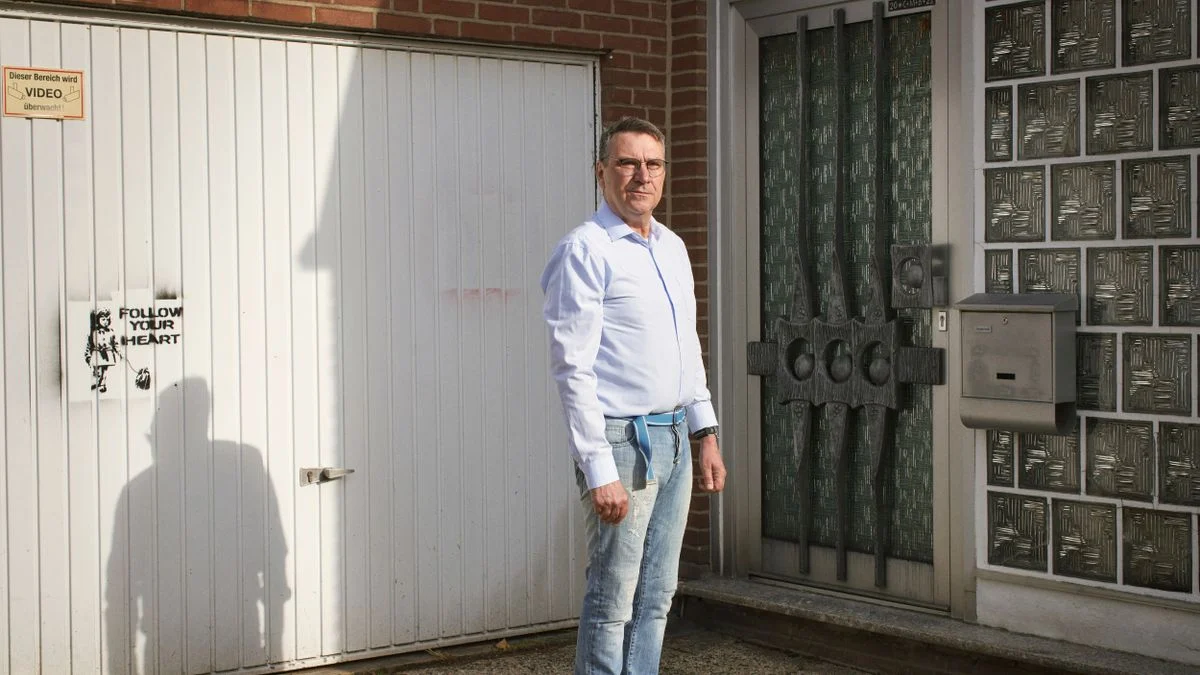
For individual homeowners who decided to stay, the costs are personal and punishing. To bring houses up to modern energy-efficiency standards—a requirement for any new construction or significant renovation in Germany—costs are often double or triple what they would be in a stable town. Furthermore, banks remain hesitant to provide mortgages in areas that were, until recently, legally defined as "doomed."
Supporting Data: The Cost of Urban Planning
Data from local planning authorities suggests that the per-capita cost of revitalizing these villages is significantly higher than developing new residential areas.
- Public Infrastructure: Estimates for the restoration of roads and communal spaces in the five villages total approximately €85 million over the next decade.
- Demographic Shift: The average age of the population in these villages has risen sharply. With younger families deterred by the uncertainty of the region’s future, the tax base required to support these massive infrastructure projects is shrinking.
- Property Value Volatility: In the immediate wake of the 2022 agreement, property values in the area saw a 30% increase in inquiries, yet actual transactions remain low. The "risk premium" associated with the mining legacy keeps market activity at a standstill.
Official Responses and Political Friction
The situation has triggered a heated debate between the state government of North Rhine-Westphalia, local municipalities, and RWE.
The Government Stance
The state government maintains that the decision to save the villages was a moral and environmental victory. Officials argue that the financial support provided thus far—including special grants for regional development—is sufficient to bridge the transition. "We are committed to the future of the Rhineland," a spokesperson for the Ministry of Economic Affairs stated. "However, the responsibility for development lies with the local authorities, who must now create a sustainable vision for their communities."
The Local Perspective
Local mayors and community representatives tell a different story. They argue that the state promised a "structural transformation" but failed to provide the necessary liquidity to make these villages livable. "We were saved from the shovels of the excavators, but we are being abandoned by the bureaucracy," says a representative of the Citizens’ Initiative. "A village without schools, shops, and reliable internet is not a home; it is a museum of a transition that failed to account for the people."
RWE’s Position
RWE has largely stepped back from the discourse, noting that they have fulfilled their contractual obligations regarding the purchase of properties and the subsequent divestment of lands. They argue that the transition of these assets back into the community is a matter for public administration.
Implications: A Lesson for Future Transitions
The plight of the Erkelenz villages offers a sobering lesson for Germany’s broader transition to renewable energy. The "Coal Phase-out" is often discussed in terms of terawatt-hours and CO2 emissions, but the human cost—the social and economic infrastructure of rural communities—is often treated as an afterthought.
The Risk of "Ghost Villages"
If the financial crisis is not resolved, these villages risk becoming "ghost villages" of a different kind. Instead of being buried by coal mines, they may be slowly hollowed out by economic stagnation. A village that is "saved" but unaffordable to live in is not a victory; it is a different form of loss.
A Blueprint for Rural Revival?
To succeed, the Erkelenz region requires more than just stop-gap funding. It needs:
- Special Economic Zones: Providing tax incentives for businesses to relocate to these villages, creating jobs that allow younger generations to return.
- State-Backed Mortgage Guarantees: Removing the "risk premium" from local properties so that homeowners can access capital for renovations.
- Integrated Planning: Moving away from the "mining vs. preservation" binary and toward a "sustainable living" model that includes public transport connectivity to nearby cities like Cologne and Düsseldorf.
Conclusion
The battle for the Erkelenz villages has ended in a courtroom and a political cabinet, but the battle for their survival is only just beginning. The residents have proven that they are resilient enough to stand up to the might of the energy industry. Now, they must navigate a financial landscape that is arguably more complex and less forgiving.
Whether these villages flourish as vibrant, modern communities or fade into the background as cautionary tales of administrative neglect will depend on the willingness of the state to invest not just in the environment, but in the people who define it. The true cost of saving these villages is not just the price of bricks and mortar; it is the cost of acknowledging that a sustainable future must also be a livable one.
As Germany continues its march toward a green economy, the Erkelenz experience stands as a vital reminder: the energy transition is not just about changing how we power our lives; it is about ensuring that the communities built on the foundations of the old world are not left behind in the ruins of the new one.