Executive Summary: Bridging the Technological Divide
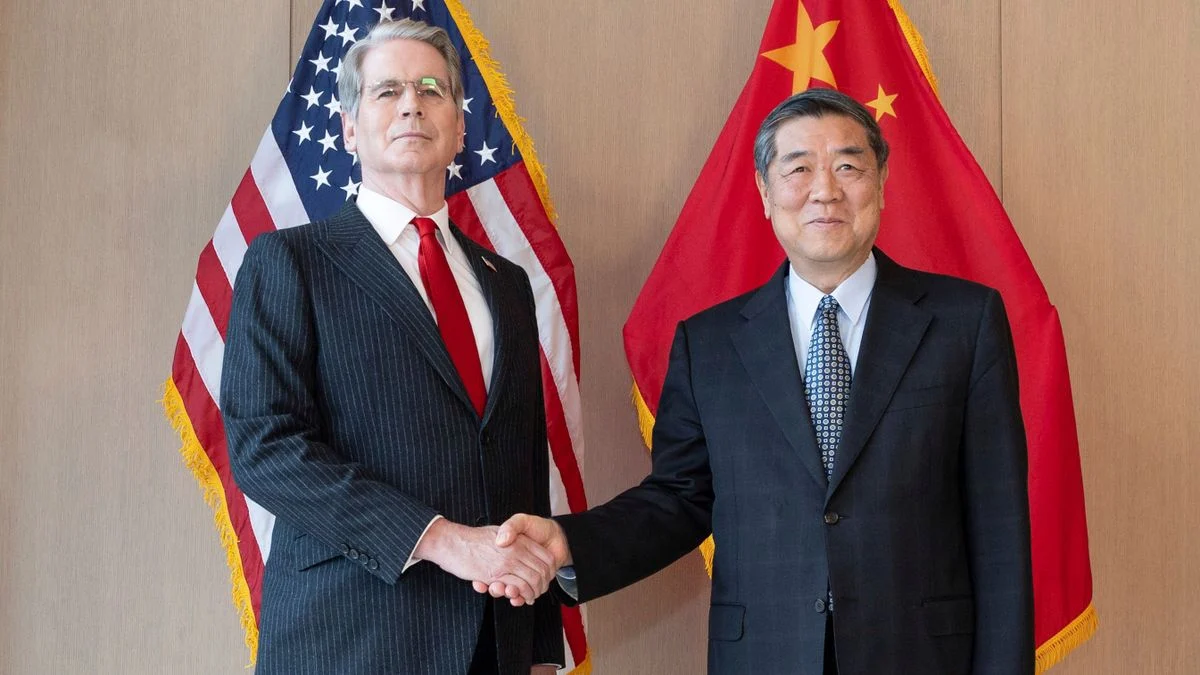
As the world’s two preeminent superpowers prepare for a landmark summit in Washington this coming Thursday, a critical precursor meeting in New York has signaled a potential shift in the volatile relationship between the United States and China. High-level delegations, led by U.S. Treasury Secretary Scott Bessent, U.S. Trade Representative Jamieson Greer, and Chinese Vice Premier He Lifeng, convened on Sunday to lay the groundwork for what both nations hope will be a stable framework for the future of artificial intelligence (AI) safety and economic cooperation.
The stakes could not be higher. With the global technological landscape defined by an intense race for AI supremacy, the meeting represents a rare moment of diplomatic alignment. The primary objective is to move from a state of mutual suspicion and "opaque" competition toward a collaborative vision that mitigates the existential risks posed by rapidly evolving AI systems.
The Chronology of Engagement
The road to the upcoming Washington summit has been paved with months of back-channel negotiations. The New York discussions serve as the final filter for the substantive agenda that Presidents Donald Trump and Xi Jinping will address later this week.
- Months Preceding: Diplomatic tensions regarding semiconductor export controls and data privacy regulations reached an all-time high, prompting a need for a dedicated channel to discuss AI-specific risks.
- Sunday’s New York Summit: Treasury Secretary Bessent and Vice Premier He Lifeng engaged in intensive talks aimed at formalizing a "reporting mechanism" for AI incidents that threaten national security.
- The Upcoming Washington Summit (Thursday): The formal meeting between Trump and Xi, which will include a high-profile state banquet featuring titans of the tech industry, is expected to synthesize the progress made in New York into actionable policy statements.
Core Pillars of the New York Discussions
The discussions in New York focused on three specific domains that define the modern US-China friction: artificial intelligence, trade tariffs, and the supply chain for critical minerals.
1. The AI Reporting Mechanism
The most significant outcome of the New York meeting was the U.S. proposal for a new, structured reporting mechanism for AI-related incidents. As Secretary Bessent noted, the goal is to shift the dynamic between the "number one and number two" AI powers from one of total secrecy to one of monitored transparency. By establishing a protocol for reporting potential security breaches or malfunctions, both nations hope to prevent accidental escalations—whether they be cyber-attacks or catastrophic software failures—that could destabilize the global order.
2. Economic and Trade Realignment
Beyond AI, the delegations addressed the persistent thorn of trade tariffs. For China, the U.S. restrictions on high-end chip access are viewed as an attempt to artificially stifle their growth and establish a Western monopoly on intelligence. Conversely, the U.S. views these restrictions as essential safeguards for national security. The constructive nature of the talks suggests a possible "cooling off" period where both sides may agree to calibrate trade restrictions in exchange for greater transparency in tech research.
Official Responses and Diplomatic Rhetoric
The public statements issued following the New York talks suggest a cautious optimism. The Chinese state news agency, Xinhua, described the sessions as "candid, detailed, and constructive," focusing on economic and trade issues. This choice of language is significant in the context of Chinese state media, which often reserves such descriptions for breakthroughs or successful confidence-building measures.
George Chen, a prominent digital expert at The Asia Group, emphasized the historical weight of these talks. "The fact that both sides have agreed to continue this dialogue is of great importance," Chen noted. He suggested that the agenda will likely expand in the coming months to include the military application of AI, the definition of global safety principles, the hardening of critical infrastructure against AI-driven cyberattacks, and the ethical governance of autonomous agents.
Implications: The Geopolitical AI Dilemma
The central challenge remains the "winner-takes-all" mentality that pervades both Washington and Beijing. President Trump has famously articulated the stakes: "Whoever wins in AI, wins." This sentiment is mirrored in Beijing, where the narrative suggests that the U.S. is weaponizing regulation to prevent China from achieving parity.
The Innovation Paradox
Both nations are caught in a classic "innovation paradox." They fear that excessive regulation to ensure safety will handicap their domestic firms, allowing the other side to leapfrog them in development. This creates a race to the bottom where safety might be sacrificed for speed. The challenge for the Trump-Xi summit is to prove that safety is not the enemy of innovation, but rather a prerequisite for long-term technological stability.
The Role of Corporate Diplomacy
A unique feature of the upcoming Washington summit is the presence of corporate leadership. According to Bloomberg, the guest list for the state banquet includes:
- Satya Nadella (Microsoft)
- Tim Cook (Apple)
- Jensen Huang (Nvidia)
- Sam Altman (OpenAI)
The inclusion of these CEOs is not merely ceremonial. It indicates that the future of AI governance will be co-authored by the state and the private sector. These leaders, whose firms hold the keys to the world’s most advanced models, are effectively being asked to act as "stakeholders" in the bilateral relationship between the U.S. and China.
Expert Perspectives: Moving Beyond Geopolitics
Sun Chenghao, a Senior Fellow at the Center for International Security and Strategy (CISS) at Tsinghua University, argues that it is a mistake to view the entire safety debate through the lens of geopolitics.
"China is increasingly attentive to the risks of loss of control, malicious use of AI, and cyber-threats," Sun stated. "There is significant room for cooperation on these issues." This perspective provides a blueprint for a "functionalist" approach to diplomacy—where the two countries treat AI safety as a global public good, similar to climate change or pandemic prevention, rather than a zero-sum competition.
Looking Ahead: What to Expect
As Thursday approaches, the global community will be watching for three specific deliverables:
- A Formal Joint Statement on AI Safety: A document that officially recognizes the mutual threat of unregulated AI.
- The Establishment of a Working Group: A permanent, expert-led committee tasked with monitoring AI incidents and sharing non-sensitive technical data.
- A Ceasefire in the "Chip War" Rhetoric: A possible announcement regarding a review of export controls that could provide the Chinese tech sector with a predictable path for acquiring essential hardware, provided they adhere to specific safety protocols.
While the rivalry between the United States and China is deeply entrenched, the New York meetings have provided a glimmer of hope. By decoupling "existential safety" from "economic competition," the two powers may finally be finding a way to ensure that the AI revolution benefits humanity rather than accelerating its potential demise. The success of the Washington summit will depend on whether the two leaders can translate this technical consensus into a lasting political commitment.