In a landmark discovery that has sent ripples through the ornithological community, an international team of researchers has formally identified a new penguin species, marking the first such taxonomic breakthrough in over a century. The study, published in the prestigious journal Communications Biology, fundamentally alters our understanding of the Gentoo penguin (Pygoscelis papua), revealing that what was once considered a single, widely distributed species is, in reality, a complex group of four distinct, genetically isolated lineages.
This taxonomic overhaul, spearheaded by a consortium of Chilean biologists and supported by experts from the University of California, Berkeley, highlights the power of modern genomic sequencing in uncovering biodiversity that has been hidden in plain sight.
Main Facts: A Taxonomic Reclassification
For decades, the Gentoo penguin was categorized as a single species with several subspecies scattered across the sub-Antarctic islands and the Antarctic Peninsula. However, the new research suggests that this broad categorization was a scientific oversight. By conducting rigorous genomic analyses of 64 individual penguins across ten distinct breeding colonies, the researchers discovered that the "Gentoo" identity actually encompasses four independent species.
The four species are now identified as:
- The Northern Gentoo
- The Southern Gentoo
- The Eastern Gentoo
- The Southeastern Gentoo (Pygoscelis kerguelensis)
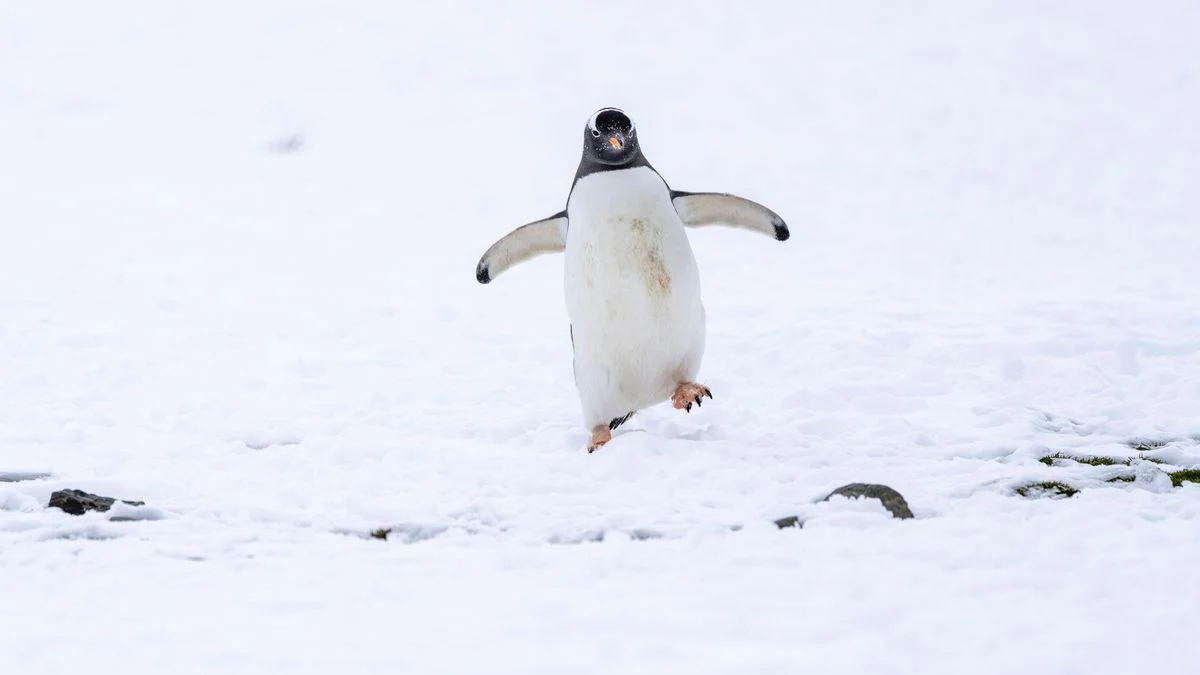
The most significant finding is the formal recognition of Pygoscelis kerguelensis. Previously, this population was conflated with other Gentoos due to their nearly identical morphology. All four species share the iconic white belly and black back that define the Gentoo penguin, yet beneath the surface, their genetic blueprints are markedly distinct. As the University of California reported, while they may look identical to the casual observer—save for minor variations in size and vocalizations—their genetic divergence is profound enough to warrant classification as separate evolutionary paths.
Chronology: From 2020 to the Global Consensus
The path to this discovery was not instantaneous. It represents the culmination of years of rigorous field collection and data synthesis.
The Foundation (2020)
The current study builds upon a critical 2020 paper that first suggested the existence of distinct genetic clusters within the Pygoscelis genus. That initial research hinted that the geographic isolation of various Gentoo colonies had led to significant genetic drift. However, the 2020 study was limited in scope, focusing primarily on preliminary DNA markers.
The Global Collaboration (2021–2025)
Following the 2020 publication, a diverse team of scientists from Chile, the United States, and other nations launched an expanded research initiative. They traveled to remote sub-Antarctic islands to collect blood and feather samples, ensuring the study was representative of the species’ entire range.
The Formal Identification (2026)
The publication in Communications Biology serves as the official "coming out" for the Southeastern Gentoo. The paper establishes Pygoscelis kerguelensis as a distinct species and formally reclassifies the northern, southern, and eastern populations as independent species rather than mere subspecies. This is not just a change in labeling; it is the establishment of a global scientific consensus, achieved by bringing together the world’s leading penguin experts to review the evidence.
Supporting Data: Why Genetics Tell a Different Story
The methodology employed by the team went far beyond simple visual inspection. To prove that these populations had diverged into separate species, the researchers analyzed several biological layers:
Genomic Integrity
The researchers sequenced the entire genomes of 64 birds. By looking at the "genomic landscape," they were able to identify regions of DNA that have been under strong selective pressure. This confirmed that the populations were not interbreeding, even when geographic barriers were permeable.
Morphological and Behavioral Analysis
Beyond genetics, the team analyzed a suite of physical and behavioral traits:
- Vocalizations: Differences in frequency and duration of calls suggest that mating signals have evolved to be specific to each group.
- Breeding Phenology: The timing of egg-laying and chick-rearing varies significantly across the four groups, likely adapted to local seasonal shifts in resource availability.
- Dietary Habits: Stable isotope analysis of feathers and blood revealed that each species utilizes different niches in the ocean, targeting specific prey species based on the productivity of their local waters.
Ecological Drivers
The divergence is largely attributed to the "site fidelity" of these birds. Gentoo penguins are notoriously home-bound, often returning to the same breeding site year after year. This isolation, combined with the extreme geographic distances between sub-Antarctic islands, prevented gene flow. Over millennia, the specific environmental pressures of each location—ranging from the harsh, icy fringes of the Antarctic to the more temperate sub-Antarctic islands—acted as a filter. Favorable traits were selected for in each population, and eventually, these adaptations became fixed across the entire genome.
Official Responses and Scientific Impact
The scientific community has largely embraced the study as a necessary correction to outdated taxonomy. Dr. Elena Rodriguez, a lead researcher on the team, noted in the press release: "We have spent over a century looking at these birds and assuming they were one and the same. Nature, however, is far more creative in its diversification than our early classification systems allowed."
The University of California noted that this study is a testament to the "power of international cooperation." By pooling resources and samples, the team was able to bypass the logistical nightmares of studying animals in some of the most remote, inhospitable environments on Earth.
The consensus among experts is that this reclassification will be crucial for conservation efforts. "You cannot protect a species if you don’t know it exists," stated one independent reviewer of the study. By recognizing P. kerguelensis as a unique entity, conservationists can now implement targeted management plans that address the specific threats faced by that population, rather than relying on generalized data that may not apply to their unique ecological circumstances.
Implications: The Future of Penguin Conservation
The discovery of the Southeastern Gentoo has significant implications for how we perceive and protect global biodiversity.
Reassessing Conservation Status
With the Gentoo now split into four distinct species, the conservation status of each must be re-evaluated. If one of these species is found to be in decline, it is no longer just a "sub-population" issue; it becomes a potential extinction event for a unique biological lineage. This necessitates a more granular approach to the International Union for Conservation of Nature (IUCN) Red List, where each of the four species will eventually require its own status assessment.
Understanding Evolutionary Adaptation
The study provides a roadmap for how species evolve in isolation. It demonstrates that even in the absence of massive physical barriers like mountain ranges, behavior—specifically the tendency to return to a natal colony—can be a powerful driver of speciation. This provides evolutionary biologists with a high-resolution case study on how selective pressure functions in real-time across diverse marine environments.
The "Hidden" Biodiversity Problem
This discovery raises a challenging question: How many other species are hiding in plain sight? If a bird as iconic and frequently studied as the Gentoo penguin has been misclassified for over 100 years, it suggests that our current biodiversity counts might be an underestimate. This is a call to action for the scientific community to re-examine other "monotypic" species—those that appear uniform—using the same high-resolution genomic tools that unmasked the Southeastern Gentoo.
The Role of Climate Change
Finally, the findings highlight the vulnerability of these newly defined species. As climate change continues to alter the ocean currents and temperatures around the sub-Antarctic islands, these species will be forced to adapt or migrate. Because they are now recognized as having fixed, specialized ecological niches, they may be less resilient to rapid environmental shifts than previously assumed.
In conclusion, the identification of the Southeastern Gentoo is more than just a taxonomic footnote; it is a profound reminder of the complexity of the natural world. It underscores the importance of ongoing field research and the necessity of applying modern molecular techniques to the foundational questions of biology. As we move forward, the "Gentoo Four" will stand as a benchmark for how we define, understand, and protect the unique life forms that share our planet.