By Financial News Analysis
The recent political turmoil in France has sent a seismic shockwave through the European financial markets, rekindling dark memories of the sovereign debt crisis that nearly dismantled the Eurozone fifteen years ago. As investors flee from the Euro, the core question haunting the corridors of Frankfurt, Brussels, and Paris is whether the structural reforms and safety nets established since 2012 are sufficient to withstand a fresh eruption of political volatility in one of the bloc’s most pivotal economies.

Main Facts: The Anatomy of the Current Turmoil
The current instability is rooted in a sudden, sharp rise in the yields of French government bonds (OATs). When yields rise, bond prices fall, signaling a loss of investor confidence in the creditworthiness or fiscal stability of the issuer. In this case, the market’s reaction stems from political uncertainty following recent electoral developments in France.
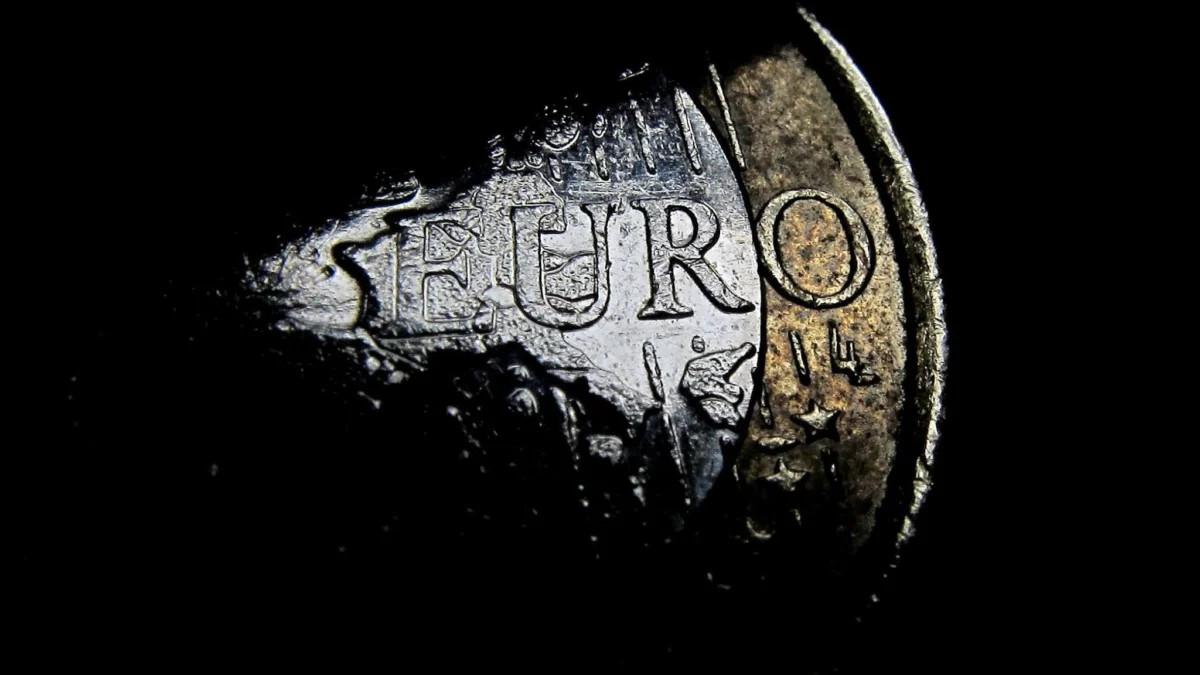
The Euro has suffered significantly, slipping against the U.S. dollar to its lowest level in over 17 months. This decline is not merely a reflection of a strong dollar; it is a direct result of capital flight as institutional investors rotate their portfolios away from Euro-denominated assets. The "France Shock" has effectively created a risk premium on European debt that has not been seen for years, forcing market participants to recalibrate their exposure to the region.

Chronology: A Return to 2011?
To understand the gravity of the current situation, one must look back to the dark days of 2011 and 2012. During that period, the Eurozone was caught in a doom loop: bank failures were tied to sovereign debt, and sovereign debt was threatened by stagnant growth and fiscal irresponsibility.
- 2011-2012 (The Original Crisis): The contagion began in Greece but quickly spread to Ireland, Portugal, Spain, and Italy. Yields on peripheral debt skyrocketed to levels that threatened the solvency of these nations.
- July 2012 (The Draghi Pivot): The crisis was effectively halted by a single, iconic promise. Mario Draghi, then President of the European Central Bank (ECB), declared that the bank would do "whatever it takes" to preserve the Euro. This commitment calmed the markets instantly.
- 2013-2023 (The Stability Era): The implementation of the European Stability Mechanism (ESM), the Banking Union, and the introduction of the Pandemic Emergency Purchase Programme (PEPP) created a sense of relative calm.
- June 2024 (The New Shock): The announcement of snap elections in France caught investors off guard. The potential for a radical shift in fiscal policy, regardless of the election outcome, has triggered a defensive sell-off, with market participants drawing direct parallels to the instability of 2012.
Supporting Data: Why Investors are Anxious
The data provides a compelling rationale for the current market anxiety. The spread between French 10-year bonds and German Bunds—the benchmark for safety in Europe—has widened considerably. A widening spread is the classic indicator of "re-fragmentation" risk within the Eurozone.
Furthermore, banking sector indices in Europe have faced renewed pressure. Because many French banks hold substantial amounts of their own government’s debt, a drop in bond prices hurts their balance sheets, creates liquidity constraints, and reduces their ability to lend. This creates a secondary, indirect risk: a credit crunch in the real economy.
Analysts at major investment firms have noted that liquidity in the secondary bond markets has thinned. When liquidity vanishes, small sell orders can have an outsized impact on prices, creating a "flash crash" environment that feeds on itself. For institutional investors, the primary concern is the fiscal trajectory of France—the Eurozone’s second-largest economy—which is already struggling to meet the EU’s budget deficit requirements.

The "Draghi Factor" and Institutional Preparedness
A critical point of debate among economists is whether the current institutional architecture is robust enough to handle a crisis without a singular, charismatic leader like Mario Draghi.
"Back then, the collapse of the single currency seemed like a genuine possibility," says Mark Dowding, Chief Investment Officer at RBC Bluebay. "Today, we are seeing a similar sense of crisis building up in the bond markets."

However, others argue that the ECB is no longer the same institution it was in 2012. It now possesses a sophisticated "Transmission Protection Instrument" (TPI), designed specifically to prevent unjustified, disorderly market dynamics from threatening the transmission of monetary policy across the bloc.
Eckhard Schulte, a strategist at Mainsky Asset Management, offers a more sobering view: "Today, there is no Mario Draghi." He argues that while the tools exist, the political will to use them—especially when the crisis is centered in a large, politically sensitive country like France—is far less certain. The ECB is caught between its mandate to control inflation and its role as the "lender of last resort" for the Eurozone.

Official Responses and Policy Implications
European policymakers are currently walking a tightrope. On one hand, they must avoid appearing panicked, as public statements of alarm could exacerbate the market rout. On the other, they must provide enough clarity to convince investors that the fiscal foundations of the Eurozone remain intact.
The Fiscal Discipline Argument
Proponents of strict fiscal oversight argue that the current market pressure is a "necessary correction." They suggest that the bond market is finally forcing France to confront its long-term debt sustainability. By driving up borrowing costs, the market is effectively imposing a market-based "discipline" that political processes have failed to deliver.

The Integration Argument
Conversely, advocates for further European integration argue that this crisis proves the Eurozone remains a "half-built house." Without a common fiscal budget and a truly integrated capital market, the Euro will always be susceptible to the political whims of its individual member states. They call for an acceleration of the Capital Markets Union to reduce reliance on bank lending and to create a more resilient financial structure.
The Road Ahead: What to Watch
As the situation unfolds, three key indicators will determine whether the "France Shock" remains a temporary correction or evolves into a structural crisis:

- Bond Spread Stabilization: If the spread between French and German bonds continues to widen without intervention, it will signal that the market no longer trusts the fiscal path of the French government.
- ECB Communication: Any hint of a "TPI-style" intervention or a softening of the ECB’s hawkish stance on interest rates would be interpreted by the markets as a sign that the central bank is ready to step in.
- Political Rhetoric in Paris: The tone of the debate in France will be crucial. If political leaders prioritize fiscal consolidation and reassure markets of their commitment to European obligations, the volatility may subside. If they embrace populism or ignore the fiscal warnings of the bond market, the risk of a full-blown crisis increases exponentially.
Conclusion
The "France Shock" serves as a stark reminder that the Eurozone is not a finished project. While the mechanisms for crisis management have improved significantly over the last decade, the fundamental vulnerability remains: the disconnect between a centralized monetary policy and decentralized fiscal policies.
For now, the markets are waiting. They are testing the resolve of European institutions and the fiscal sanity of the continent’s political leaders. Whether this ends in a controlled stabilization or a wider, systemic fracture remains one of the most significant questions for the global financial order in 2024. Investors are rightly cautious; the memory of 2012 is long, and the stakes for the Euro, and for Europe itself, have never been higher.