As the International Ski Federation (FIS) scrambles to reinvent one of winter sports’ oldest disciplines, a glimmer of hope emerges from France—even as powerhouses like Austria signal a looming withdrawal from funding. With the Nordic Combined community facing a potential permanent exclusion from the Olympic program, the race to innovate has become a desperate fight for survival.
1. The Crisis: An Olympic Program Without Tradition
For over a century, the Nordic Combined—the ultimate test of athletic versatility, demanding both the explosive power of the ski jump and the grueling endurance of cross-country skiing—has been a cornerstone of the Winter Olympic Games. Since the inaugural Winter Games in Chamonix in 1924, the discipline has defined the “King of the Skiers.”
However, that legacy is currently hanging by a thread. As it stands, the Nordic Combined is not on the program for the 2030 Winter Olympics in the French Alps. This omission is not merely a bureaucratic oversight; it is a profound existential threat. For athletes, coaches, and federations, the absence from the Olympic stage equates to a loss of visibility, funding, and ultimately, the ability to recruit the next generation of talent. The sport, long criticized for being too complex for the modern television viewer, is now being forced to confront its own obsolescence.
2. Chronology of a Disappearing Act
The decline did not happen overnight. The narrative of the Nordic Combined’s struggle can be traced through several critical junctures:
- The Early 2020s (The Signal): The International Olympic Committee (IOC) began signaling concerns regarding the gender balance and the broadcast appeal of the sport. Despite the introduction of women’s events, the growth was viewed as too slow.
- The 2026 Reality Check: As preparations for the 2030 Games in France accelerated, the Nordic Combined was excluded from the initial draft of the Olympic program.
- The 2026 Crisis Point: FIS, under pressure, ramped up efforts to propose revolutionary format changes.
- Late 2026 (The Current Standoff): With no official guarantee for 2030, nations like Austria have publicly set a "point of no return" for their financial support, casting a shadow over the sport’s immediate future.
3. Innovating for Survival: FIS’s Radical Reform Agenda
In a bid to satisfy the IOC’s demands for "compact, exciting, and TV-friendly" content, FIS Renndirektor Lasse Ottesen has outlined a radical overhaul of the competition structure. The goal is to strip away the perceived "dullness" of the traditional format, which has long been criticized for its lengthy gaps between the jumping and skiing portions.
The Proposed Formats:
- The Sprint Heat Format: Drawing inspiration from cross-country skiing’s successful sprint events, FIS is testing heat-based competition. This creates direct, head-to-head confrontations that are easier for casual viewers to follow and more thrilling to watch.
- The 45-Minute Prologue: Perhaps the most aggressive change is the "compact prologue." The vision is to condense the entire jumping and skiing performance into a window of 45 to 60 minutes. By tightening the schedule, FIS hopes to retain the audience’s attention span, which has been identified as a critical barrier to entry for the sport.
- Mixed Team Integration: Following the success of mixed events in other sports like biathlon, a new mixed-gender Nordic Combined competition is being heavily tested to showcase gender parity—a key requirement for inclusion in the Olympic Games.
4. The French Initiative: A Glimmer of Hope?
Despite the gloom, there is a strategic opening. A French-led initiative, spearheaded by Olympic legend Jason Lamy Chappuis, is lobbying for a "home-soil" inclusion. Because France is hosting the 2030 Games, they theoretically possess the right to propose an additional, optional event.
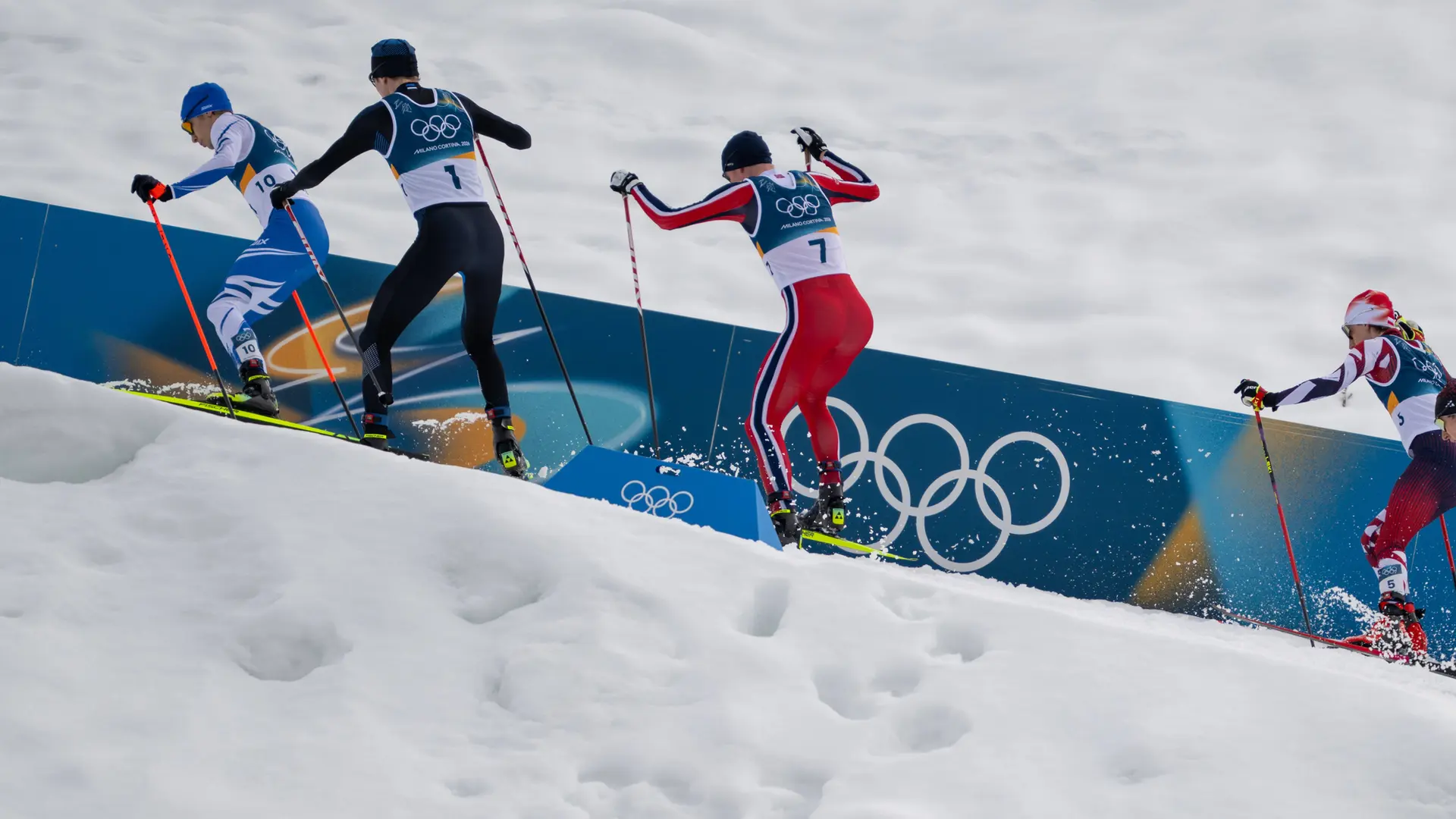
However, DSV (German Ski Association) Sport Director Horst Hüttel remains cautious. "It is a chance," he admitted in a recent interview, "but it is heavily rooted in the principle of hope." The challenge is that the IOC remains skeptical of the sport’s global reach and marketability. Even if France pushes for inclusion, the administrative hurdles within the IOC are immense.
5. The Economic Domino Effect: Signals from Austria
The most harrowing news for the sport comes from Austria. The Austrian Ski Federation (ÖSV), one of the traditional pillars of the discipline, has openly stated that it will only guarantee funding until the 2028/29 season.
Mario Stecher, the ÖSV Sports Director, provided a stark assessment to the Kurier: "Germany, Austria, and Norway are the three nations that can sustain the sport the longest. But if there is no commitment for 2034 by 2029, even we cannot justify the investment."
This creates a dangerous feedback loop. If the major nations pull funding, the sport loses its elite infrastructure. As training centers close and national teams shrink, the talent pipeline dries up. Young athletes are already defecting to more stable, Olympic-sanctioned sports like biathlon and traditional ski jumping. The "dark outlook" predicted by Stecher is already manifesting in the form of empty development squads and dwindling interest in grassroots programs.
6. The Human Toll: Voices from the Slopes
Behind the administrative meetings and board resolutions are the athletes whose lives and careers have been defined by the sport. The toll on the current generation is palpable.
Nathalie Armbruster, one of Germany’s most promising talents, expressed the collective exhaustion of the community: "At some point, you just want to cry." This sentiment is shared by Olympic champion Vinzenz Geiger, who has admitted to being "deeply worried" about the future.

For these athletes, the uncertainty is a daily weight. They are training for a future that might not exist, competing for medals in a discipline that may be erased from history books. Yet, the resolve remains strong in some quarters. Bundestrainer Eric Frenzel, a legend in his own right, has pledged to fight until the end. "As long as the Nordic Combined exists in Germany, I will be there for it. I stood for it as an athlete, and I will stand for it as a coach."
7. Implications: What Happens if the Sport Fades?
If the Nordic Combined fails to secure its Olympic future, the implications will ripple far beyond the professional circuit.
- Loss of Cultural Heritage: The sport represents a historical connection to the roots of winter sports in Scandinavia and Central Europe. Its disappearance would represent a significant cultural loss.
- Infrastructure Collapse: Many ski jumping hills and cross-country tracks were built with the dual-sport nature of the Nordic Combined in mind. Without the discipline, the financial viability of these venues will be called into question.
- A Precedent for Other Sports: If the IOC successfully removes a historic, long-standing sport like Nordic Combined, it sets a chilling precedent for other "niche" disciplines. It shifts the Olympic model away from tradition and toward purely commercial, high-viewership metrics.
8. Conclusion: The Final Run
The next three years are critical. The FIS has until the deadline for the 2034 Olympic program to prove that the "new" Nordic Combined is not just a survivalist experiment, but a legitimate, exciting, and sustainable product for the 21st-century audience.
The battle is being fought on two fronts: internally, through the radical modernization of the sport’s mechanics, and externally, through intense political lobbying with the IOC. Whether this is the final, desperate act of a dying tradition or the necessary birth pains of a revitalized, modern spectacle remains to be seen. One thing is certain: the world of winter sports is watching, and for the athletes currently standing at the top of the jump, the stakes could not be higher. They are not just jumping for distance or speed—they are jumping for the very survival of their sport.