
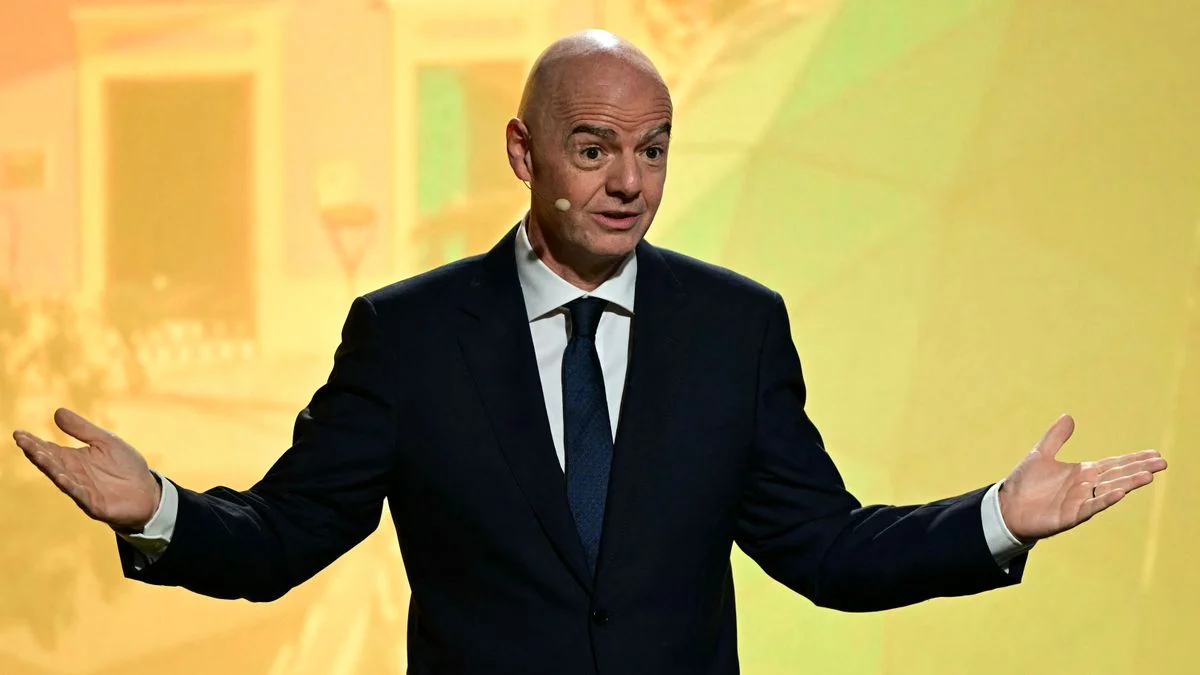
The global football community is currently engulfed in a profound governance crisis. FIFA President Gianni Infantino, once seen as a reformist successor to the scandal-plagued Sepp Blatter, finds his leadership under intense scrutiny following the abrupt collapse of a controversial plan to sell lucrative commercial rights to private equity investors. The failed initiative, which sought to monetize major tournaments including the Men’s and Women’s World Cups and the Club World Cup, has acted as a catalyst for a broader rebellion among major football stakeholders.
As criticism mounts, the question is no longer just about a singular failed project; it is about the fundamental integrity, transparency, and future direction of the world’s most popular sport.
The Genesis of the Crisis: A Secretive Financial Gambit
The controversy stems from Infantino’s attempt to push through a massive privatization of FIFA’s most valuable assets. Without prior consultation with the continental confederations or major national associations, the FIFA administration proposed a deal that would have effectively outsourced the commercial future of international football to private equity firms.
The proposal was met with immediate, visceral opposition. Critics viewed the move not merely as a financial misstep, but as a symptom of a deeply entrenched "top-down" management style that has increasingly characterized the Infantino era. By attempting to bypass the checks and balances inherent in football’s democratic structures, the FIFA administration inadvertently exposed the fragility of its own internal governance.
Chronology of the Discontent
- Initial Proposal: FIFA leadership floated the idea of bringing in private equity to handle the commercial rights of marquee global tournaments.
- The Backlash Begins: Within days of the plan’s emergence, major European leagues and the UEFA hierarchy expressed shock at the lack of transparency.
- Widespread Condemnation: National associations, including the German Football Association (DFB), publicly labeled the move as "irresponsible."
- The Capitulation: Facing a wall of institutional opposition and the threat of a full-scale revolt, Infantino was forced to officially withdraw the proposal.
- The Aftermath: Despite the withdrawal, critics, including La Liga President Javier Tebas and the CONCACAF leadership, have argued that the reversal is merely "the tip of the iceberg."
Voices of Dissent: A Call for Institutional Reform
The pushback has been unprecedented in its intensity. Javier Tebas, the influential President of Spain’s La Liga, has become the de facto voice of the opposition. In a series of pointed social media statements, Tebas argued that the Swiss administrator is no longer a viable leader for the sport.
"World football needs new leadership that modernizes the association’s structures, restores institutional credibility, and develops future decisions in collaboration with the stakeholders involved," Tebas stated. He further emphasized that the problem was never just this single proposal, but a "leadership model that concentrates power, weakens control mechanisms, and marginalizes those affected."
The CONCACAF Denunciation
Perhaps the most damaging critique came from CONCACAF, the confederation representing North and Central America and the Caribbean. In a scathing official statement, the body described the planned deal as an "outrageous act" and a symptom of a leadership that has "ceased to put football first."
The statement continued: "This recent unilateral and outrageous action, which is a testament to poor governance and weak leadership, is just one in a series of missteps and similar behaviors. A comprehensive review of this presidency is essential."
The German and European Front
In Germany, the DFB was joined by prominent club figures in their condemnation. Herbert Hainer, President of FC Bayern Munich, expressed his disbelief regarding the lack of communication from FIFA. "It is a stroke of luck that this haunting episode has passed as quickly as it came," Hainer remarked. "The fact that nobody from the associations was informed beforehand, and that it appeared on the table overnight, is truly incredible."
Supporting Data: Why the Deal Was Viewed as Toxic
The economic rationale behind the deal—securing short-term capital injections—was fundamentally undermined by the long-term risks identified by financial analysts and legal experts.
- Loss of Sovereignty: By selling commercial rights, FIFA risked ceding control over the scheduling and structure of the World Cup to entities whose primary objective is profit maximization, potentially at the expense of player welfare and sporting integrity.
- Conflict of Interest: The involvement of private equity often mandates aggressive growth strategies. In the context of football, this could have necessitated an even further expansion of tournament calendars, which are already criticized for pushing players to the brink of physical exhaustion.
- Governance Deficit: Financial experts have noted that FIFA’s existing governance framework lacks the transparency required to manage such a complex financial partnership. Without a radical overhaul of the decision-making process, any such deal would have been susceptible to corruption or mismanagement.
Implications: A Presidency on the Edge
Gianni Infantino, who is currently positioning himself for re-election in Rabat next March, finds himself in a precarious position. While the European and North American blocs have largely turned against him, he maintains a base of support in other regions.
The Egyptian Football Association and representatives from Morocco have publicly reaffirmed their "full confidence" in Infantino’s leadership. This geographic divide suggests that the coming months will be defined by intense political maneuvering as the President attempts to solidify his support base against a growing movement for structural reform.
The Looming Question of Governance
The "investor deal" saga has become a lightning rod for broader complaints about the FIFA President’s tenure. Critics point to the expansion of the Club World Cup, the controversial hosting of the 2022 World Cup in Qatar, and the proposed biennial World Cup cycle as evidence of a pattern: a leader who operates in a vacuum, ignoring the expertise of confederations and the concerns of players and fans alike.
If Infantino is to retain his position, he will likely be forced to move beyond his current rhetoric and provide tangible evidence of reform. This would require:
- Transparency Mandates: Implementing a requirement that all major financial proposals be vetted by an independent committee before reaching the FIFA Council.
- Stakeholder Integration: Ensuring that players’ unions, leagues, and clubs have a binding vote on matters affecting the global match calendar.
- Cultural Shift: Moving away from the centralized decision-making that has alienated the most powerful national associations in the world.
Conclusion: A Turning Point for Global Football
The failure of the investor deal is not just a tactical defeat for Gianni Infantino; it is a signal that the status quo in world football is no longer sustainable. The level of institutional resistance—from UEFA to CONCACAF to the most powerful domestic leagues in the world—suggests that the appetite for reform is at an all-time high.
As the sport looks toward the upcoming FIFA Congress, the focus will remain on whether Infantino can repair the fractures in his presidency or whether the "tip of the iceberg" will finally lead to a collapse of his current leadership model. For the billions of fans who follow the game, the stakes could not be higher: the question is whether football will remain a sport governed by its own traditions and values, or whether it will be fully subordinated to the demands of private capital.
The silence that followed the withdrawal of the proposal is, for now, a temporary reprieve. But the underlying demands for a more accountable, transparent, and democratic FIFA are louder than ever. The clock is ticking on the current administration, and the next chapter of this crisis will likely determine the future of international football for the next generation.