
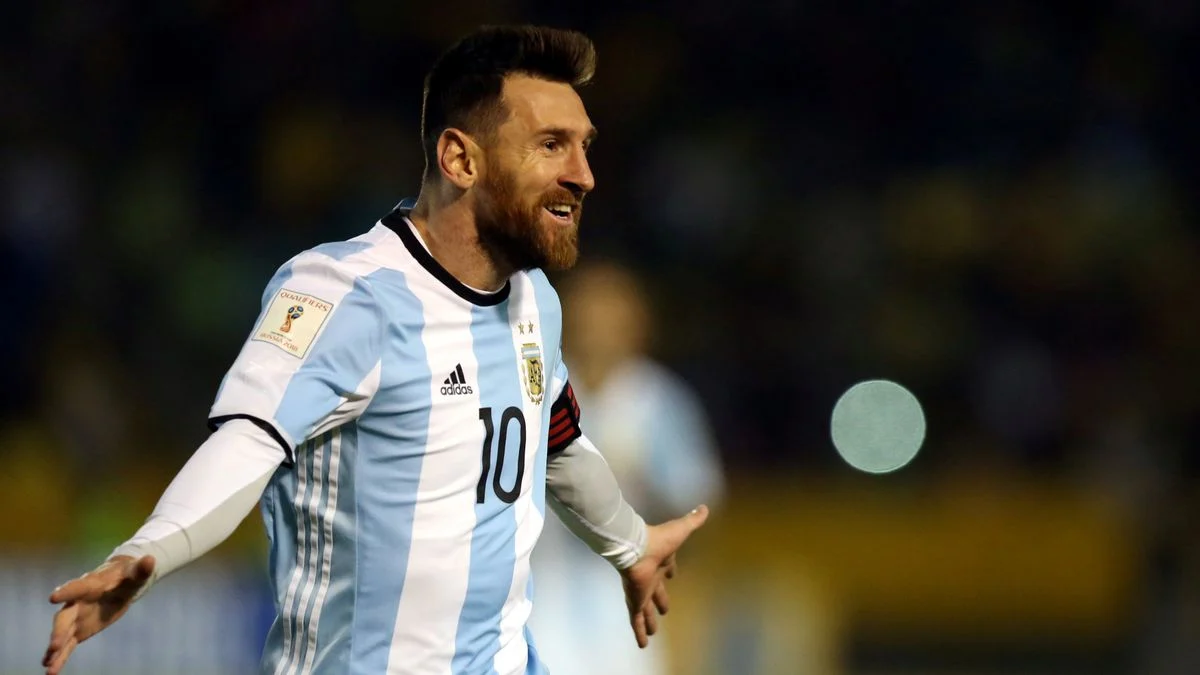
The era of Lionel Messi in the Albiceleste shirt is officially coming to a close—but not before one final, ceremonial act of gratitude. Following his surprise retirement from international football in late August, the Argentine Football Association (AFA) has announced that the eight-time Ballon d’Or winner will return to the pitch for a special farewell appearance.
The event is scheduled for October 6 at the Estadio Monumental in Buenos Aires. The legendary forward is set to lead Argentina against Benin in a match designed not as a competitive fixture, but as a national tribute to the most decorated player in the country’s history.
The Chronology of a Career: From Prodigy to National Icon
To understand the weight of this farewell, one must look at the 21-year odyssey that preceded it. Messi’s journey with the national team has been a complex tapestry of heartbreak and unparalleled glory.
The Early Years and Growing Pains
Emerging from the youth ranks, Messi carried the weight of a nation’s expectations from his debut. His career was defined by an unrelenting pursuit of a major trophy, a quest that was often marked by near-misses. The 2014 World Cup final in Brazil, where Argentina fell to Germany, remains one of the most poignant chapters of his career—a moment of profound sorrow that solidified his status as a tragic hero in the eyes of his compatriots.
The Turning Point: Success and Redemption
The narrative shifted in 2021 when Messi finally secured the Copa América title, ending a long drought for Argentina. This momentum propelled the squad toward the 2022 World Cup in Qatar. In a historic final against France, Messi cemented his legacy by lifting the golden trophy, achieving the only milestone that had eluded him. He subsequently led the team to another Copa América victory in 2024, proving that his impact remained undiminished even as he neared his fourth decade.
The Decision to Step Down
Following the conclusion of the 2024 international cycle, Messi announced his retirement from the national team in August. The decision followed a period of intense reflection, marking the end of a 21-year tenure that saw him become the face of Argentine sports globally.
The Farewell Window: A Series of Tests
While the highlight of the upcoming international break is the October 6 match against Benin, the Argentine national team will participate in a trio of friendlies to prepare for the post-Messi era under head coach Lionel Scaloni.
- September 30: Argentina vs. Bolivia (Córdoba): This match serves as the curtain-raiser for the break, offering a glimpse into how Scaloni intends to restructure the midfield and attack without the constant presence of the captain.
- October 3: Argentina vs. Burkina Faso (Buenos Aires): A secondary warm-up fixture allowing for squad rotation.
- October 6: The Farewell – Argentina vs. Benin (Estadio Monumental): The centerpiece event. The AFA has confirmed that Messi will participate in this match specifically to receive a proper send-off from the home crowd.
Official Responses and Emotional Significance
AFA President Claudio Tapia, speaking through a heartfelt video message posted to X (formerly Twitter), underscored the necessity of this event. "Lionel Messi deserves a goodbye that matches the scale of his contribution," Tapia stated. "He deserves to have that final moment with the fans here in Argentina, where it all began."
The sentiment is echoed by the coaching staff and the millions of fans who have watched Messi’s evolution from a shy teenager from Rosario to a global icon. For many, this match is more than a football game; it is a cultural event, a final chance to witness the "Atomic Flea" in the iconic blue-and-white stripes on home soil.
Implications for the Scaloni Era
The upcoming friendlies are not merely ceremonial; they represent a tactical pivot for Lionel Scaloni. With Messi’s departure, the team must address a massive vacuum in leadership and creative output.
The Challenge of Squad Depth
The transition is complicated by disciplinary issues stemming from the recent, high-intensity match against Spain. The aftermath of that game resulted in severe suspensions that have left the squad depth thin for the upcoming October window:
- Leandro Paredes: The midfield engine will miss ten matches, creating a massive void in the center of the park.
- Nahuel Molina: The reliable fullback is sidelined for seven matches, forcing Scaloni to test younger prospects in the defensive line.
- Thiago Almada: Suspended for one match, limiting options for late-game tactical adjustments.
These absences mean that the matches against Bolivia and Burkina Faso will be grueling trials for the younger generation of players, who must now prove they can sustain the standard set by the outgoing veterans.
Tactical Reconfiguration
Scaloni faces the task of transitioning from a "Messi-centric" system to a more distributive attacking model. The focus will likely shift to the collective pressing and transitional play that defined Argentina’s success in the 2024 Copa América. The manager has emphasized that while no one can replace Messi, the team’s identity remains rooted in the values of "grit, unity, and tactical intelligence" that he instilled during his tenure.
Supporting Data: The Magnitude of a Legend
To comprehend why the AFA is dedicating such resources to a friendly against Benin, one must look at the numbers. Over 21 years, Messi’s impact has been statistical, emotional, and economic.
| Milestone | Achievement |
|---|---|
| Total International Tenure | 21 Years |
| World Cup Titles | 1 (2022) |
| Copa América Titles | 2 (2021, 2024) |
| Ballon d’Ors Won | 8 |
| Total International Appearances | 180+ (approx.) |
His retirement signifies the end of a golden generation. The Estadio Monumental, the largest football stadium in Latin America, is expected to be filled to its 84,000-seat capacity, with tickets already being touted as some of the most sought-after items in the history of the sport.
Looking Ahead: Life After Messi
As the dust settles on the October friendlies, the Argentine Football Association will begin the process of rebranding its international program. The "Post-Messi" era brings a mix of apprehension and excitement. There is a palpable fear that the team will lose its "X-factor," the ability to conjure a goal out of nothing in the 90th minute. However, there is also an optimism surrounding the depth of talent currently emerging from the Argentine youth system.
Players like Enzo Fernández and Julián Álvarez are seen as the pillars of the future, tasked with carrying the torch. The matches against Bolivia and Burkina Faso will serve as the first real test of their leadership capabilities in the absence of the primary focal point.
For the fans, the October 6 match will be a bittersweet symphony. It is a celebration of a man who brought more joy to a nation than perhaps any other individual in its history. As the final whistle blows at the Monumental, it will signal not just the end of a match, but the closing of a chapter that spanned two decades and defined the modern era of world football.
Lionel Messi’s return is a gesture of loyalty—to the fans, to the jersey, and to the history of Argentine football. As he steps onto the pitch for the final time, the world will watch, acknowledging that they have witnessed greatness that may never be replicated. The era of Messi ends with one last embrace, ensuring that the legend leaves on his own terms: surrounded by his countrymen, in the heart of Buenos Aires, beneath the lights of the Monumental.