

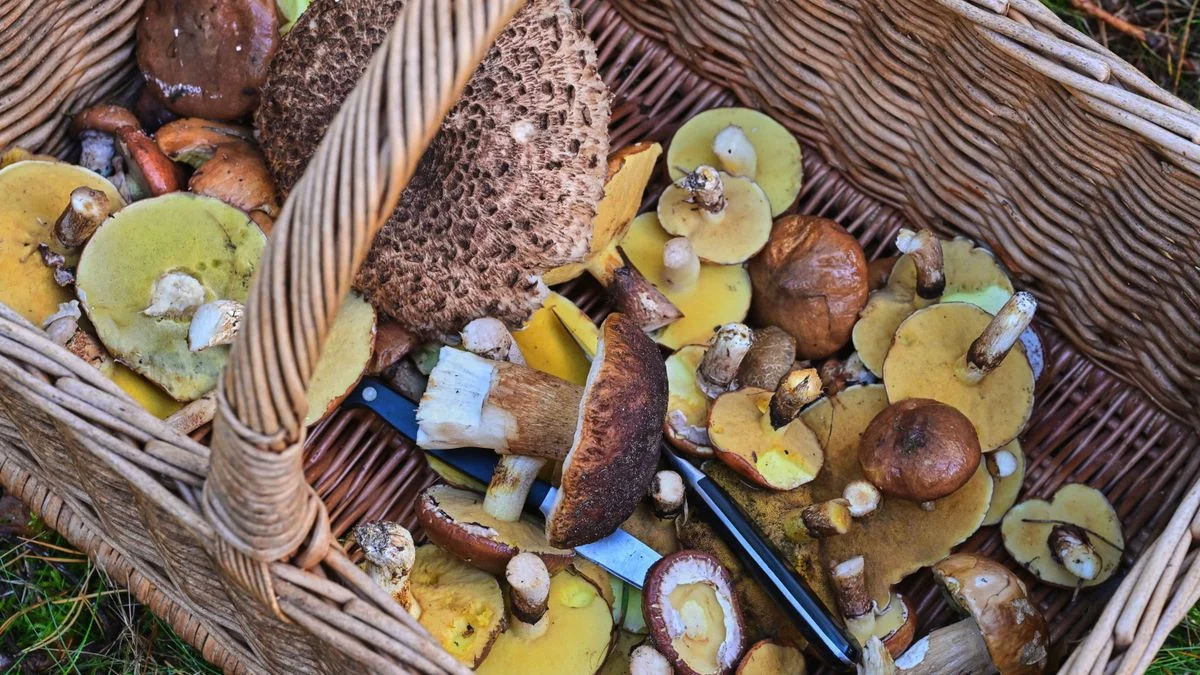
As the crisp air of autumn settles across Germany, signaling the traditional start of the mushroom foraging season, enthusiasts are heading into the forests with baskets in hand. However, for many, the annual ritual is proving to be a sobering experience. Following a summer characterized by prolonged drought and record-breaking heat, large swathes of the German countryside—particularly in the south, including Hesse, Baden-Württemberg, Bavaria, and Rhineland-Palatinate—are suffering from a severe lack of moisture. Experts are warning that the 2024 harvest will likely be one of the poorest in recent memory, as the delicate subterranean networks that produce our favorite culinary fungi struggle to survive.
Main Facts: A Season of Scarcity
The fundamental requirement for a successful mushroom season is moisture. While the surface of the forest floor may appear deceptively normal, the deep-soil moisture levels remain critically low in many regions. Mushroom experts—known as Pilzsachverständige—are sounding the alarm. Thomas Lehr, a prominent expert from Hofheim am Taunus, describes the situation in the Rhine-Main area as "bone-dry," noting that only the highest altitudes offer any respite from the arid conditions.
"My pessimism remains high," Lehr states, reflecting on what should be the peak harvest month of October. The combination of parched earth and unseasonably warm temperatures—expected to hover around 25 degrees Celsius in the coming days—creates a hostile environment for fruiting bodies. While local variations exist where rain has fallen, the overarching trend is one of significant disappointment for both hobbyists and commercial foragers alike.
Chronology of the Crisis
The current scarcity is not an isolated event but rather the latest chapter in a long-term shift in weather patterns.
- The Summer Drought: The early and mid-summer months were marked by intense heatwaves and a lack of significant precipitation, which baked the forest floors, turning them into hard, unresponsive crusts.
- The False Hope of Autumn: Hopes were pinned on early September rains, which brought temporary, localized relief. However, in many areas, this moisture failed to penetrate deep enough to stimulate the mycelium—the root-like network of fungi—into producing mushrooms.
- The Current Outlook: As we move into mid-October, the window for a recovery is closing rapidly. In higher elevations, such as the Bavarian Forest and the Alps, the threat of the first ground frosts looms, which would effectively signal the end of the growth season for many species.
Supporting Data: Understanding the Mycelium
To understand why the harvest is failing, one must look below the surface. The mushrooms we pick are merely the "fruit" of a much larger organism, the mycelium, which resides deep within the soil or decaying wood.
Data from the Bavarian Mycological Society (BMG) and the University of Bayreuth highlights a critical biological bottleneck: when the soil remains too dry for too long, the mycelium enters a state of dormancy to conserve energy. It is not necessarily "dead," but it lacks the resources to push up the energy-intensive fruiting bodies required for reproduction and spore dispersal.
Experts like Lotte Krüger from the Bavarian Association for the Protection of Nature (LBV) emphasize that the absence of mushrooms does not mean the species have vanished from the ecosystem. "The actual fungal network lives hidden in the soil and can survive there until conditions become more favorable again," she explains. The hope remains that the season is merely delayed, though time is quickly running out before the winter freeze settles in.
Official Responses and Ecological Implications
The recurring nature of these droughts has led to a broader discussion about the impact of the climate crisis on forest health. Christoph Hahn, Chairman of the BMG, notes that while fungi are resilient and can withstand isolated years of drought, the frequency of these events is the primary cause for concern.
"The problem arises when drought years occur with increasing frequency and the recovery phases in between are lost," says Hahn. This "drought stress" not only impacts the mushroom harvest but also fundamentally alters forest biodiversity.

The struggle of the fungi is inextricably linked to the health of the trees. In South Hesse, for example, the widespread death of pine forests is being observed. While this is a tragedy for forestry, it creates a niche for specific types of fungi, such as the "Hen of the Woods" (Krause Glucke), which thrives on dying wood. Experts are now advising foragers to pivot their search strategies, looking toward decaying trees or stumps where moisture levels may be higher than in the open, desiccated soil.
Expert Strategies for the Modern Forager
Despite the gloomy outlook, the experts suggest that a successful forage is still possible for those who know where to look and how to interpret environmental data.
1. Follow the Data, Not Just the Map
Thomas Lehr recommends that foragers move beyond mere intuition. By consulting the German Weather Service (DWD) data on soil moisture, evaporation rates, and available ground water, enthusiasts can identify regions that have retained enough moisture to support fungal growth.
2. Seek Out Micro-Climates
If the general area is dry, focus on the "micro-climates" of the forest:
- The North Face: The northern slopes of hills or mountains receive less direct sunlight, keeping the soil significantly cooler and more humid than the southern exposures.
- Wetlands and Moores: Areas near water bodies, peatlands, or naturally marshy depressions remain the most reliable locations for finding fungi even in dry years.
- Decaying Wood: As mentioned, trees that are struggling or have recently died provide a secondary habitat for species like the Oyster mushroom or the Sulfur Polypore.
3. Quality Over Quantity
With the supply of prized edible mushrooms like the Porcini (Steinpilz) expected to be exceptionally low, foragers are reminded of the importance of ethics and safety. Alex Maier, a mushroom expert from Fulda, offers a strict rule of thumb: "Only take the mushrooms that you would be willing to buy at a market."
Over-aged, mushy, or exceptionally large specimens should be left in the forest. Not only are they often past their prime in terms of flavor and texture, but they may also have begun to decay, posing a health risk. Furthermore, leaving them behind allows the mushroom to complete its cycle and release its spores, potentially helping the forest to recover in future seasons.
The Future of Foraging in a Changing Climate
The 2024 season serves as a stark reminder that our relationship with nature must adapt to a rapidly changing climate. The "classic" mushroom season, once a predictable autumn certainty, is becoming an increasingly variable and fragile occurrence.
For the modern forager, the shift is clear: the focus must move from a "bounty-hunting" mindset to one of ecological stewardship. As we observe the forests, we are witnessing a system under pressure. The lack of mushrooms is a bellwether for the health of our woodlands, reflecting the stress placed on trees, soil bacteria, and the intricate web of life that sustains our forests.
As the season winds down in early November, the message from the experts is unanimous: be patient, be observant, and, above all, be responsible. Whether the basket is full or empty, the act of walking through the forest with a keen eye remains a valuable way to connect with the changing landscape—even if that landscape is currently pleading for a steady, soaking rain.























