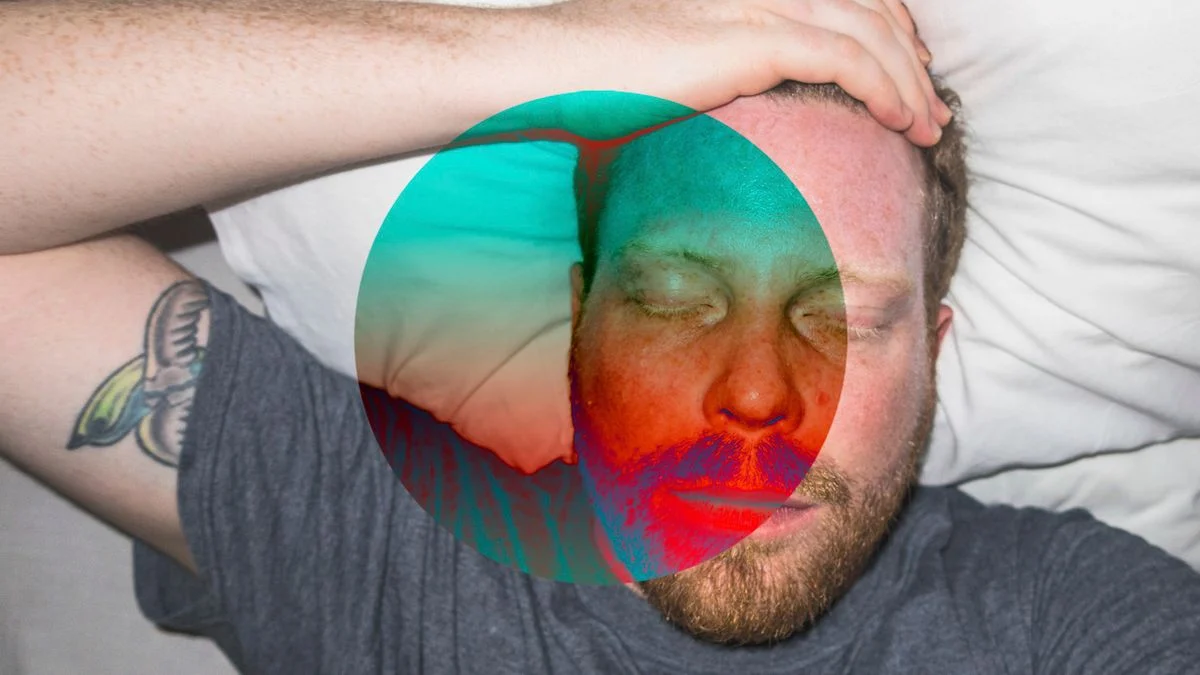
In the quiet corridors of clinical medicine, few symptoms are as deceptively simple—and as profoundly debilitating—as chronic fatigue. It is a state of being that defies the boundaries of "tiredness," transcending the need for a good night’s sleep and venturing into a physiological stalemate where the body’s internal engine seems to have stalled.
Recently, a medical case study has surfaced that serves as a modern-day detective story. It involves a patient whose symptoms were so pervasive and mysterious that they baffled specialists for months, highlighting the limitations of diagnostic medicine when faced with complex, multi-systemic conditions. This report reconstructs the journey of this patient, examining the diagnostic hurdles, the intersection of lifestyle and pathology, and the implications for the future of internal medicine.
Main Facts: When "Tired" Is Not Just Tired
The patient, a 42-year-old male with no prior history of chronic illness, presented to his primary care physician with a singular, escalating complaint: an overwhelming, persistent exhaustion that he described as "living underwater." Unlike transient fatigue brought on by stress or overexertion, this state was immutable.
The primary facts of the case were as follows:
- Duration: Symptoms had persisted for 14 consecutive weeks.
- Clinical Presentation: The patient exhibited no fever, weight loss, or lymphadenopathy, ruling out the most common acute infectious agents.
- Baseline Labs: Standard metabolic panels, thyroid function tests, and complete blood counts returned results well within the normal range.
- Psychological Status: While the patient reported secondary anxiety stemming from his inability to function at work, initial psychiatric evaluations suggested the fatigue was the driver of the distress, not a symptom of an underlying mood disorder.
This case is emblematic of the "diagnostic grey zone." In modern medicine, we are adept at identifying pathology that shows up on a screen—a tumor on an MRI or an elevated marker in a blood panel. But when the body is failing to signal its distress through traditional pathways, the physician is forced to become a sleuth, parsing through the minutiae of the patient’s life.
Chronology of a Diagnostic Odyssey
The investigation into the patient’s condition followed a rigorous, albeit exhausting, timeline.
Phase I: The Ruling Out (Weeks 1–4)
In the first month, the medical team operated on the assumption of common, reversible causes. They scrutinized the patient’s diet, sleep hygiene, and work-life balance. They treated for potential vitamin deficiencies—specifically B12 and D—and adjusted the patient’s sleep schedule. When these interventions failed to move the needle, the focus shifted from lifestyle to internal pathology.
Phase II: The Specialist Carousel (Weeks 5–10)
By the second month, the patient was referred to a cardiologist, a neurologist, and an endocrinologist. The cardiologist performed a series of stress tests and echocardiograms to rule out silent cardiac issues. The neurologist looked for signs of autoimmune or neurodegenerative conditions, performing lumbar punctures and advanced imaging. All tests returned negative. It was during this phase that the patient began to feel the psychological burden of being a "medical mystery"—a phenomenon known as "medical gaslighting," where the lack of a diagnosis leads to the invalidation of the patient’s lived experience.
Phase III: The Hidden Variable (Weeks 11–14)
The breakthrough occurred not in a high-tech lab, but through an exhaustive re-examination of the patient’s environment and subtle biochemical fluctuations that fell just below the threshold of "abnormal." By tracking the patient’s cortisol levels across a 24-hour cycle rather than a single morning draw, clinicians identified a disruption in the circadian rhythm that hinted at a deeper regulatory failure in the hypothalamus-pituitary-adrenal (HPA) axis.
Supporting Data: The Science of Fatigue
To understand the severity of this case, one must look at the data surrounding chronic fatigue and "unexplained" medical conditions. According to recent epidemiological studies, approximately 20% of all primary care visits are driven by fatigue. Of those, nearly 30% remain undiagnosed after the first three visits.
The data suggests several critical factors:
- Systemic Inflammation: Low-grade, systemic inflammation, which is often not detected by standard C-reactive protein (CRP) tests, has been linked to persistent fatigue in nearly 15% of patients with chronic complaints.
- Mitochondrial Dysfunction: Emerging research into cellular energy production indicates that in cases of extreme fatigue, the mitochondria—the "powerhouses" of the cells—may be underperforming, a condition that is currently difficult to test for in a clinical setting.
- The Gut-Brain Axis: New studies have shown that dysbiosis, or an imbalance in the gut microbiome, can have a profound impact on energy regulation and neurochemistry.
In the case of our patient, once the focus shifted to these nuanced, systemic factors, a tailored regimen of targeted nutritional support and neuro-modulatory therapy began to yield results.
Official Responses and Clinical Commentary
The medical community remains divided on how to approach such cases. Dr. Helena V., a specialist in internal medicine who reviewed the case, noted: "We are often trained to look for the ‘zebra’ when we hear hoofbeats, but we are also trained to ignore the ‘horse’ if it isn’t standing in the middle of the room. In this case, the ‘horse’ was a complex interplay of environmental stress and subtle metabolic shifting. We need to move toward a model of integrative diagnostics that accounts for these invisible variables."
Critics of the current system point to the "time-pressure" factor. Physicians are often allocated only 15 minutes per patient, making it nearly impossible to conduct the deep-dive history-taking required to solve cases that don’t present with clear physical markers. "When you are forced to choose between the clock and the patient’s narrative, the narrative often suffers," says Dr. V.
Implications: The Future of Medicine
The story of the exhausted patient is a cautionary tale and a blueprint for the future. As we enter an era of personalized medicine, several implications become clear:
1. The Need for Longitudinal Data
The standard "snapshot" approach to testing is insufficient for chronic, non-acute conditions. Moving forward, the integration of wearable technology and continuous monitoring (like continuous glucose monitoring or smart-ring sleep tracking) could provide physicians with the data density required to identify trends that would otherwise remain hidden.
2. A Holistic Approach to Diagnostics
The division between psychiatry and internal medicine remains a significant barrier. True health is a spectrum where the physical and the psychological are inextricably linked. Diagnostic frameworks must evolve to treat the patient as a biological system rather than a collection of organ-specific departments.
3. Patient Advocacy and Self-Reporting
This case reinforces the importance of patient agency. The patient’s persistence in documenting his symptoms, even when specialists suggested he was "fine," was instrumental in eventually finding the right medical path. Future diagnostic tools should prioritize patient-reported outcomes (PROs) as core data points rather than anecdotal afterthoughts.
4. Re-evaluating "Normal"
Finally, there is a growing call to re-evaluate what we define as a "normal" range in clinical labs. If a patient is suffering, the fact that their results fall within the statistical average for the general population does not mean they are healthy. Clinicians must be encouraged to look for the patient’s personal baseline, not just the population average.
Conclusion
The mystery of the exhausted patient is far from unique, yet it remains one of the most challenging puzzles in contemporary healthcare. It serves as a reminder that the human body is an incredibly complex system, and that our current tools for measuring its health are still in their infancy.
As we look toward the future, the integration of technology, a more patient-centered diagnostic process, and a shift in how we define "illness" will be essential. Until then, the case stands as a testament to the fact that when medicine reaches its limits, the most powerful tool a doctor has is their ability to listen—really listen—to the patient, and to follow the thread of their story until the truth of their condition finally comes to light.
For the patient in this report, the journey toward recovery is ongoing, but the path is now clear. He is no longer living underwater; he is once again finding the rhythm of his own life, a small but significant victory in the vast, often quiet, war against unexplained suffering.