

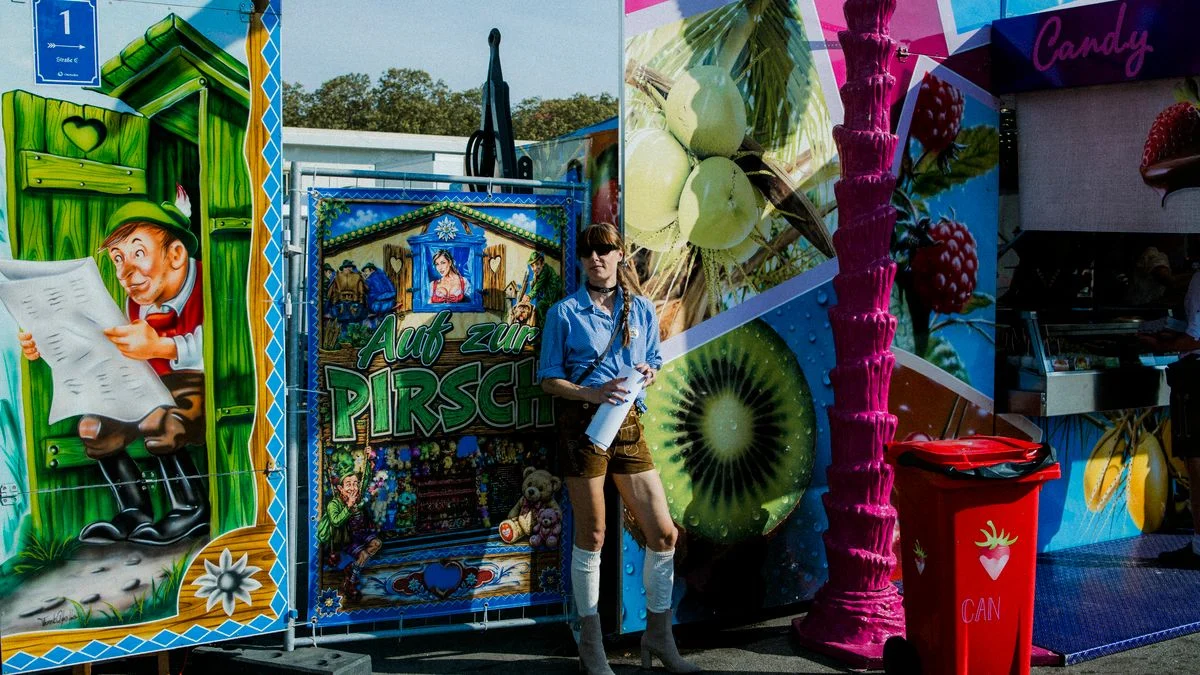
The Oktoberfest, or "Wiesn," as it is affectionately known to locals, has long been the pinnacle of Bavarian tradition. For over two centuries, the festival has stood as a bastion of cultural identity, defined by its specific rhythms: the clinking of heavy glass steins, the brass-heavy oompah music, and the unmistakable scent of roasted almonds and grilled chicken. However, as the digital age collides with this historic celebration, a new, artificial phenomenon is threatening to dilute the authenticity of the world’s largest folk festival.
Critics, cultural historians, and long-time attendees are increasingly concerned about the proliferation of "AI slop"—a derogatory term used to describe low-effort, algorithmically generated content—flooding social media and travel blogs in the lead-up to the festivities. From distorted, hyper-saturated images of non-existent beer tents to AI-generated "guides" that misinterpret local customs, the digital representation of the Wiesn is becoming increasingly detached from reality.
The Main Facts: The Rise of the Synthetic Wiesn
The core issue lies in the accessibility of generative AI tools. In recent months, travel influencers and content farms have turned to platforms like Midjourney, DALL-E, and ChatGPT to churn out "Oktoberfest content" at an industrial scale. The objective is simple: to capture search engine traffic and social media engagement with minimal effort.
The result is a digital landscape saturated with uncanny imagery. These AI-generated graphics often feature "dirndls" that merge into the wearer’s skin, pretzels the size of small cars, and beer steins that appear to defy the laws of physics. More concerning are the AI-written travel guides. These texts frequently invent traditions—such as claiming that visitors must drink their beer with a spoon or that the festival is held in a different city—creating a "hallucinated" version of Munich that misleads international tourists and devalues the authentic cultural experience.
Chronology: From Tradition to Transformation
To understand the scale of this shift, one must look at the recent timeline of the Wiesn’s digital footprint:
- Pre-2020: The Era of Organic Documentation. Oktoberfest imagery was defined by amateur photography and professional journalism. The focus was on personal storytelling and cultural documentation.
- 2022-2023: The Advent of Generative Tools. As image generators became publicly available, "nostalgic" and "idealized" AI art began appearing on platforms like Pinterest and Instagram. Initially, this was viewed as a harmless curiosity.
- Summer 2024: The "Slop" Influx. With the optimization of SEO strategies, travel sites began replacing human-written content with bulk-generated AI text. The sheer volume of this content began to bury authentic accounts, travel logs, and official festival news in search engine results.
- September 2024: The Backlash. Local Munich journalists and digital activists began documenting the absurdity of the generated content, leading to a public debate about the commodification and degradation of the festival’s image.
Supporting Data: The Scale of the Digital Distortion
While quantifying "slop" is difficult, internal analysis of search trends and platform engagement reveals a significant trend. Between June and August 2024, the volume of articles indexed under "Oktoberfest Travel Tips" saw a 400% increase compared to the same period in 2023. However, data analytics firms estimate that nearly 60% of this new content was produced with minimal or no human editorial oversight.
Furthermore, engagement metrics suggest a paradox. While "slop" content initially attracts clicks due to vibrant, oversaturated colors, the "dwell time"—the amount of time a user spends on a page—is significantly lower than that of human-written, verified articles. Users are clicking on the digital equivalent of "fast food" content, only to leave disappointed by the lack of depth and factual inaccuracy.
Official Responses: The Guardians of Tradition
The organizers of the Oktoberfest, alongside the City of Munich, have expressed growing concern regarding the misinformation being spread online. While they acknowledge that technology has its place in marketing the festival, they emphasize that the "Wiesn" is not a product to be simulated.
"The Oktoberfest is a living, breathing tradition," a spokesperson for the festival committee noted. "It is rooted in the history of our city, the dedication of our brewers, and the participation of our people. An AI cannot understand the social fabric of a beer tent, nor can it replicate the feeling of community that defines our festival. When algorithms dictate how the world sees our culture, we lose a piece of our soul."
The Munich Tourism Board has stepped up its efforts to provide verified, high-quality digital content, hoping to steer visitors toward official portals where they can find accurate information regarding seat reservations, dress codes, and cultural etiquette, rather than relying on AI-generated "hacks."
Implications: The Erosion of Cultural Authenticity
The implications of this trend extend far beyond a few distorted images. There are three primary concerns for the future of the Oktoberfest:
1. The Death of the "Genuine" Experience
When tourists arrive at the Theresienwiese expecting the hyper-saturated, surreal fantasy they saw on Instagram, they are often met with the reality of long lines, crowded tents, and the nuances of Bavarian hospitality. The gap between expectation and reality can lead to frustration and a lack of appreciation for the actual festival experience.
2. The SEO "Race to the Bottom"
By prioritizing high-volume, low-effort content, search engines are inadvertently rewarding the degradation of information. Authentic, long-form journalism that covers the history, economics, and sociology of the Oktoberfest is being pushed to the second or third page of search results, replaced by generic, hallucination-prone articles that add no value to the public discourse.
3. The Commodification of Identity
The most existential threat is the homogenization of culture. If the digital representation of the Oktoberfest becomes indistinguishable from any other "beer festival" generated by an algorithm, the specific, unique identity of the Bavarian tradition risks being flattened. If we allow the "slop" to define the narrative, we surrender our cultural heritage to the cold efficiency of a language model.
Conclusion: Reclaiming the Wiesn
The fight against AI-generated slop is not a Luddite crusade against technology. Rather, it is a call for digital integrity. As we look toward the future of global events, it is clear that the role of human curation has never been more vital.
To preserve the essence of the Oktoberfest, we must demand transparency in content creation. Readers should look for bylines, verifiable sources, and deep, context-rich reporting that reflects the human experience. We must value the "imperfect" but authentic photograph over the "perfect" but synthetic illustration.
The Oktoberfest has survived wars, economic depressions, and societal shifts for over two centuries. It remains a testament to the resilience of tradition. However, its survival in the digital age depends on our ability to distinguish the genuine article from the artificial imitation. As the saying goes in Munich, "O’zapft is"—it is tapped. Let us ensure that what we are consuming is the real brew, not a synthetic substitute.
By supporting high-quality, human-centric journalism, we can ensure that the spirit of the Wiesn remains untarnished by the silicon tide, proving that some things—the most important things—are simply too human for an algorithm to replicate.





















