In the landscape of modern alternative health, few movements have sparked as much controversy and alarm as the "Germanic New Medicine" (GNM). Originally branded as a revolutionary approach to curing chronic illnesses—including cancer—by identifying "emotional conflicts," the movement has evolved into something far more sinister. Beneath its veneer of holistic wellness lies a toxic ideology that intersects with antisemitic conspiracy theories, the "Reichsbürger" (Reich Citizens) movement, and a fundamental rejection of the democratic order.
What began as a pseudo-scientific medical claim has morphed into a radicalization pipeline, leading followers away from evidence-based medicine and into the arms of extremist groups that reject the legitimacy of the modern German state.
The Origins: Ryke Geerd Hamer and the Birth of a Pseudo-Science
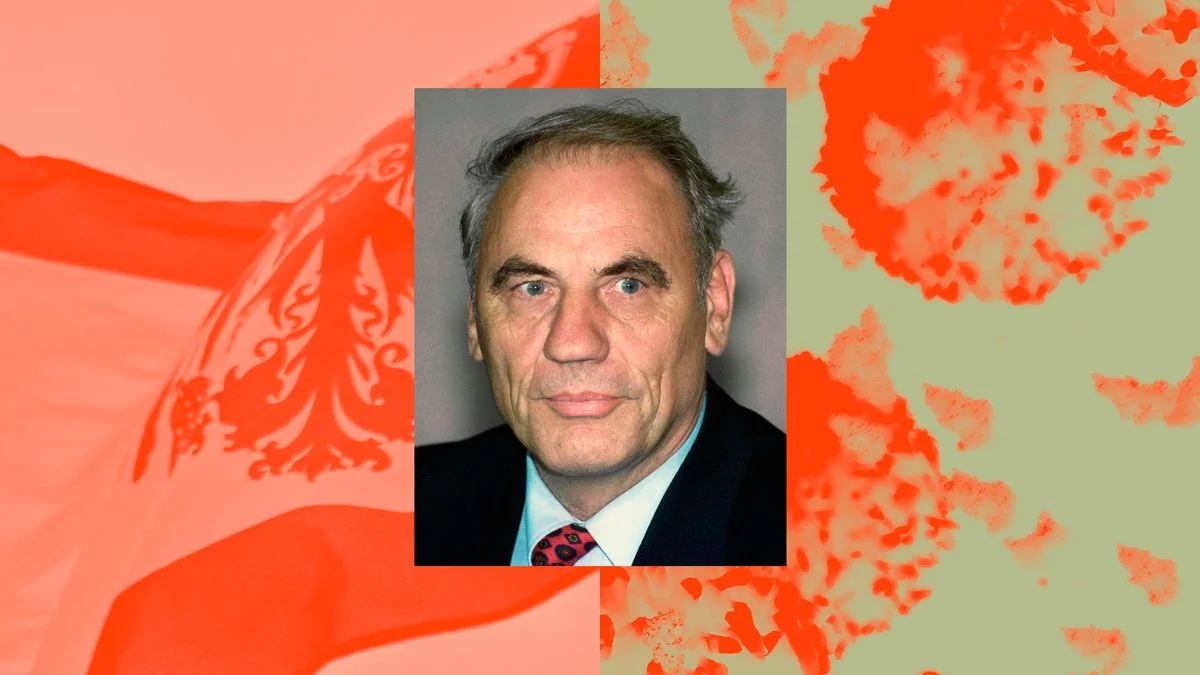
The story of the Germanic New Medicine begins in the early 1980s with Ryke Geerd Hamer, a former German physician whose license was revoked in 1986. Following the tragic death of his son, Dirk Hamer, in 1978, the elder Hamer developed a personal theory he called the "Iron Rule of Cancer."
Hamer posited that cancer and other "serious" diseases are not the result of biological malfunctions, genetic predispositions, or environmental factors, but rather the physical manifestation of a "Biological Conflict Shock" (DHS). According to Hamer, if a person experiences a sudden, traumatic emotional event, the brain sends a signal to a specific organ, causing a tumor to grow.
The Pseudo-Scientific Architecture
GNM practitioners claim that conventional medicine—often referred to by them as "orthodox medicine"—is part of a global conspiracy designed to kill patients. By rejecting chemotherapy, radiation, and surgery, Hamer argued that patients could heal themselves by resolving their internal conflicts. He claimed a success rate of over 90 percent for cancer patients, a figure that has been thoroughly debunked by every major medical institution globally.
Chronology of Radicalization: From Wellness to Conspiracy
To understand how GNM became a gateway to extremist ideology, one must look at the trajectory of the movement over the last four decades.
- 1981–1986: Hamer presents his thesis at the University of Tübingen. It is rejected by the faculty. Hamer begins practicing privately, eventually losing his medical license due to his refusal to stop treating patients with his unproven methods.
- 1990s: GNM gains a cult-like following in Germany, Austria, and Switzerland. Hamer’s rhetoric shifts; he begins to claim that the medical establishment is controlled by a "Jewish clique" seeking to destroy the "Germanic" people.
- 2000s: Hamer faces multiple legal battles and imprisonment in France and Germany for practicing medicine without a license and for incitement to hatred. He eventually flees to Spain and later Norway.
- 2010s–Present: With the rise of social media, GNM theories find a new home in wellness communities, yoga circles, and anti-vaccination groups. During the COVID-19 pandemic, the overlap between GNM proponents and the "Querdenker" (lateral thinkers) movement becomes absolute.
Supporting Data: The Cost of Denial
The impact of GNM is not merely ideological; it is measured in lives lost. Medical researchers and oncologists have documented numerous cases where patients, following the advice of GNM practitioners, abandoned life-saving conventional treatment in favor of "conflict resolution."
The Survival Gap
Data from oncology departments across Europe indicates a stark disparity in survival rates between those who utilize evidence-based medicine and those who follow alternative "biological" therapies. While conventional medicine has seen a steady increase in five-year survival rates for most cancers (often exceeding 60–80% depending on the stage and type), patients who subscribe to the GNM model often arrive at hospitals only when their condition has reached an advanced, often terminal, state.
Furthermore, a 2023 report by the Federal Office for the Protection of the Constitution (BfV) in Germany highlighted that "health-related esoteric groups" are increasingly being used as entry points for radicalization. These groups use the fear of illness to undermine trust in state institutions, public health officials, and the scientific community—a core pillar of the Reichsbürger ideology.
Official Responses: The Battle for Public Health
The German medical and legal establishments have fought a long, uphill battle against GNM.
Legal Interventions
The German legal system has repeatedly ruled that GNM is not only scientifically baseless but dangerous. Courts have convicted several "GNM-consultants" for involuntary manslaughter after patients died under their care. However, the decentralized nature of the movement makes it difficult to eradicate. Many practitioners operate online, using encrypted messaging services like Telegram to spread their message, bypassing traditional regulatory oversight.
The Role of the Medical Association
The German Medical Association (Bundesärztekammer) has issued multiple warnings, urging citizens to treat GNM with extreme caution. They emphasize that the movement is not a form of "alternative medicine" in the sense of acupuncture or herbal remedies, but rather a "danger to public health." They have called for more robust education for primary care physicians to help them identify patients who may be falling under the influence of such ideologies.
Implications: The Intersection with the Reichsbürger Ideology
Why does a health movement gravitate toward the Reichsbürger ideology—a group that claims the German Empire still exists and that the Federal Republic of Germany is a "company" or illegitimate entity?
The Common Denominator: Distrust of the System
The intersection is rooted in a fundamental distrust of the state. Both GNM followers and Reichsbürger believe that the "official" narrative—be it in medicine, history, or law—is a lie orchestrated by a shadowy elite. By convincing a person that the government is lying about how to cure cancer, it is only a small step to convince them that the government is lying about the country’s sovereignty or the legitimacy of the tax system.
Antisemitism as the Glue
Central to Hamer’s later teachings was the assertion that "orthodox medicine" was a Jewish invention intended to harm non-Jewish populations. This antisemitic core makes GNM a natural fit for far-right extremist groups. It provides a moral framework for their worldview: if the state is evil and the state is controlled by a hostile group, then the "health-conscious" patriot has a duty to reject everything the state mandates.
Conclusion: The Path Forward
The "Germanic New Medicine" is a poignant example of how misinformation, when left unchecked, can evolve into a significant threat to national stability. It exploits the most vulnerable—those facing terminal diagnoses or health anxieties—and weaponizes their fear against the pillars of democratic society.
Addressing this phenomenon requires more than just medical warnings. It requires a multi-faceted approach that combines:
- Digital Literacy: Educating the public on how to identify medical misinformation online.
- Psychological Support: Providing resources for people whose family members have become radicalized through wellness-to-extremism pipelines.
- Institutional Transparency: Strengthening the public’s trust in scientific and state institutions through transparent, empathetic communication.
As long as the fear of illness exists, there will be those who seek to exploit it for political gain. Recognizing the GNM for what it is—not a medical treatment, but a radicalization tool—is the first step in protecting both the individual patient and the broader social fabric. The cost of failing to act is not just the loss of trust in medicine, but the erosion of the shared reality upon which our democratic society depends.