

As the global football community turns its eyes toward London this Monday, the prestigious Ballon d’Or ceremony—organized by France Football in collaboration with UEFA—finds itself embroiled in a familiar cycle of excitement, skepticism, and high-stakes drama. While the ceremony remains the industry’s most coveted individual accolade, it has increasingly become a lightning rod for criticism, with voices from within the game questioning whether individual honors have any place in a sport defined by collective success.
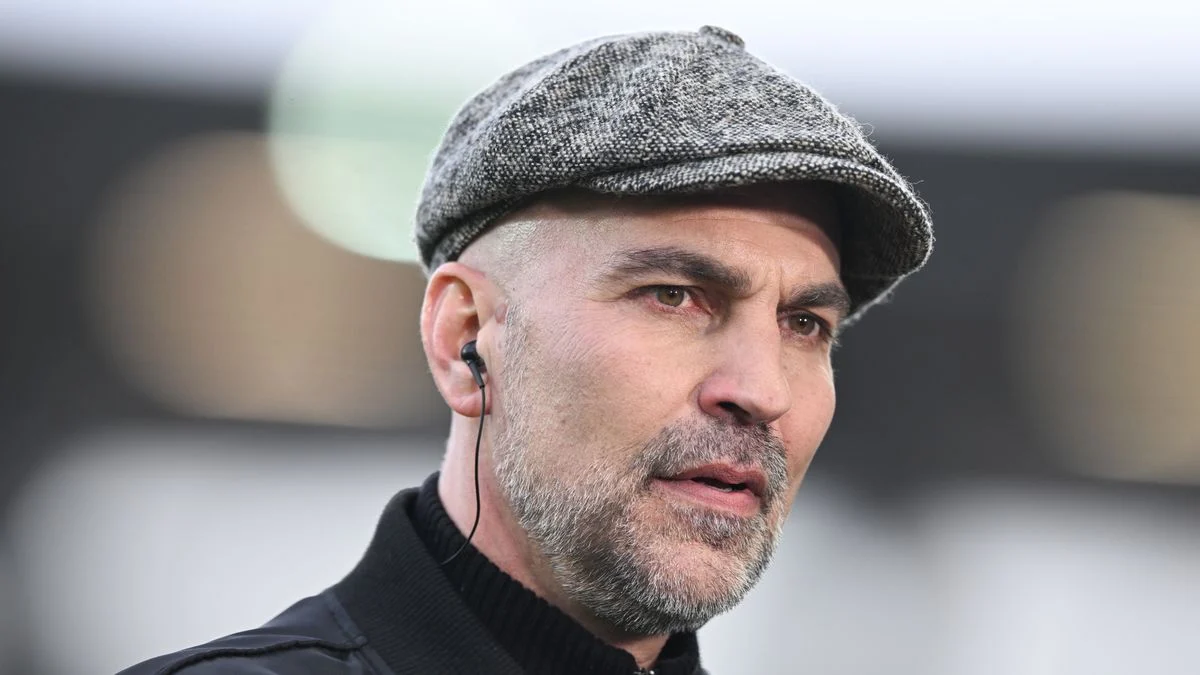
Among the most vocal critics is former German international Markus Babbel, who recently dismissed the gala as "the biggest clown competition in the world." His harsh critique highlights a growing sentiment among traditionalists who view the pursuit of individual glory as fundamentally incompatible with the ethos of professional team sports.
The Case Against Individual Glory: Why Critics Cry Foul
For Markus Babbel, the absurdity of the Ballon d’Or lies not just in the subjective nature of the voting, but in the emotional fallout that follows the results. "I would fundamentally abolish such a personal choice in a team sport like football," Babbel remarked during an appearance on the sports program ran.
Babbel’s frustration is rooted in the theater that surrounds the announcement. He points to the public displays of indignation from clubs and players who feel slighted by the rankings. "I laugh my head off every time at how people or even entire clubs are offended when their players aren’t chosen. I find that ridiculous," he added.
This criticism taps into a deeper philosophical debate: In a game where success is contingent upon the synergy of eleven players, a coach’s tactical discipline, and the support of an entire organization, is it possible—or even ethical—to distill excellence into a single name? Critics argue that these awards prioritize marketing appeal and media narratives over the nuanced reality of on-pitch contributions.
A Chronology of Conflict: The Real Madrid Standoff
The skepticism expressed by figures like Babbel is bolstered by the increasingly political nature of the ceremony. The Ballon d’Or has, in recent years, morphed from a celebration of talent into a high-stakes arena of club diplomacy and brand management.
The most notable example of this friction occurred in 2024, when the Spanish powerhouse Real Madrid staged a high-profile protest against the results. After star attacker Vinícius Júnior finished in second place, the club famously boycotted the ceremony, signaling their dissatisfaction with the voting process. This move sent shockwaves through the footballing world, transforming what is intended to be a black-tie gala into a battlefield for institutional prestige.
The ripple effects of that boycott are still being felt today. However, the dynamics of the 2025 edition suggest a shift in strategy. With Kylian Mbappé—now a central figure at the Santiago Bernabéu—emerging as a top contender, reports indicate that a delegation from Madrid has signaled its intention to attend. The "Real Madrid Factor" remains a defining element of the ceremony, illustrating how the award is inextricably linked to the commercial and political interests of the world’s elite clubs.
Anatomy of an Award: How the Ballon d’Or is Decided
To understand why the award generates such intense debate, one must look at the mechanics of the selection process. The voting system is designed to provide a veneer of journalistic objectivity, yet it remains susceptible to the biases inherent in subjective evaluation.
- The Jury: The panel is composed of sports journalists from the top 100 nations for the men’s award and the top 50 for the women’s award.
- The Scoring: Each juror selects 10 players from a shortlist of 30. Points are assigned on a sliding scale, with the top choice receiving 15 points and the tenth receiving one.
- The Criteria: Voters are ostensibly asked to consider individual performance, collective trophies, and a player’s overall impact on the game. However, "impact" remains a nebulous term that often favors attacking players—forwards and playmakers—over the defensive stalwarts who are often the true architects of a team’s success.
This year’s betting favorites underscore this bias. Harry Kane (Bayern Munich), Lamine Yamal (FC Barcelona), and Kylian Mbappé (Real Madrid) dominate the conversation, reflecting a clear preference for the creators and finishers of the game.
Women’s Football: A New Era of Dominance
While the men’s game grapples with political friction, the women’s award presents a different narrative: the absolute dominance of FC Barcelona. The last five years have seen the trophy travel almost exclusively to Catalonia, with Alexia Putellas (2021, 2022) and Aitana Bonmatí (2023, 2024, 2025) sharing the honors.
This year’s landscape, however, is shifting. With Bonmatí absent due to a long-term injury, the field is wide open for a new chapter. Alexia Putellas, who transitioned to the London City Lionesses over the summer, stands as the heavy favorite to reclaim the throne.
From a German perspective, the representation is sparse, with Klara Bühl of FC Bayern Munich standing as the sole German candidate. Her inclusion highlights the ongoing struggle for international recognition in a field currently dominated by the Spanish juggernauts.
The Implications of the "Clown Show" Label
Does the criticism from individuals like Markus Babbel threaten the longevity of the Ballon d’Or? Probably not, but it does highlight a widening chasm between the traditional values of the sport and the "celebrity-industrial complex" of modern football.
1. The Erosion of Credibility
When major clubs feel empowered to boycott the event, the award loses its status as an objective arbiter of talent. If the outcome is perceived as a matter of lobbying and public relations rather than merit, the prestige of the Golden Ball inevitably diminishes.
2. The Weight of Expectations
For the players, the award carries immense personal and financial weight. Many top-tier contracts include clauses linked to individual accolades, meaning that the voting process has tangible, real-world consequences for the athletes involved. This pressure can distort the game, encouraging players to prioritize personal highlight reels over team-oriented tactical roles.
3. The Future of the Ceremony
The collaboration between France Football and UEFA was intended to stabilize the brand and elevate its global standing. Yet, the persistent controversies suggest that the structural problems—the subjectivity of the jury, the inherent bias toward attackers, and the intrusion of club politics—remain unsolved.
Conclusion: A Necessary Evil?
Whether one views the Ballon d’Or as a prestigious celebration of greatness or a "clown show" designed to drive headlines, its influence on the footballing ecosystem is undeniable. It creates a narrative arc for the season, drives engagement, and provides a platform for players to be recognized on a global stage.
However, as the game evolves, the organizers may need to address the growing disillusionment among veteran players and fans. If the award is to remain relevant in the coming decades, it must strike a balance between its glitzy, commercial appeal and a more transparent, meritocratic process.
For now, the world will watch as another winner is crowned in London. Some will cheer, some will complain, and figures like Markus Babbel will likely continue to look on with a cynical, if weary, amusement. In the world of elite football, the Ballon d’Or is both a dream and a grievance—a testament to the fact that while football is indeed a team sport, the human hunger for individual validation remains insatiable.







