As the 2026 FIFA World Cup progresses through its intense group stage, the narrative of the tournament has begun to solidify. From the cultural phenomenon of "statue-fans" to the geopolitical friction surrounding team travel and the lingering debate over pitch quality, the tournament in North America is proving to be a complex, multi-layered spectacle.
With the competition now in full swing, we take a deep dive into the latest developments, the controversies, and the human stories defining this global celebration of football.
The Human Element: Folklore and Fandom
The "Lumumba Fan": A Symbol of Resilience
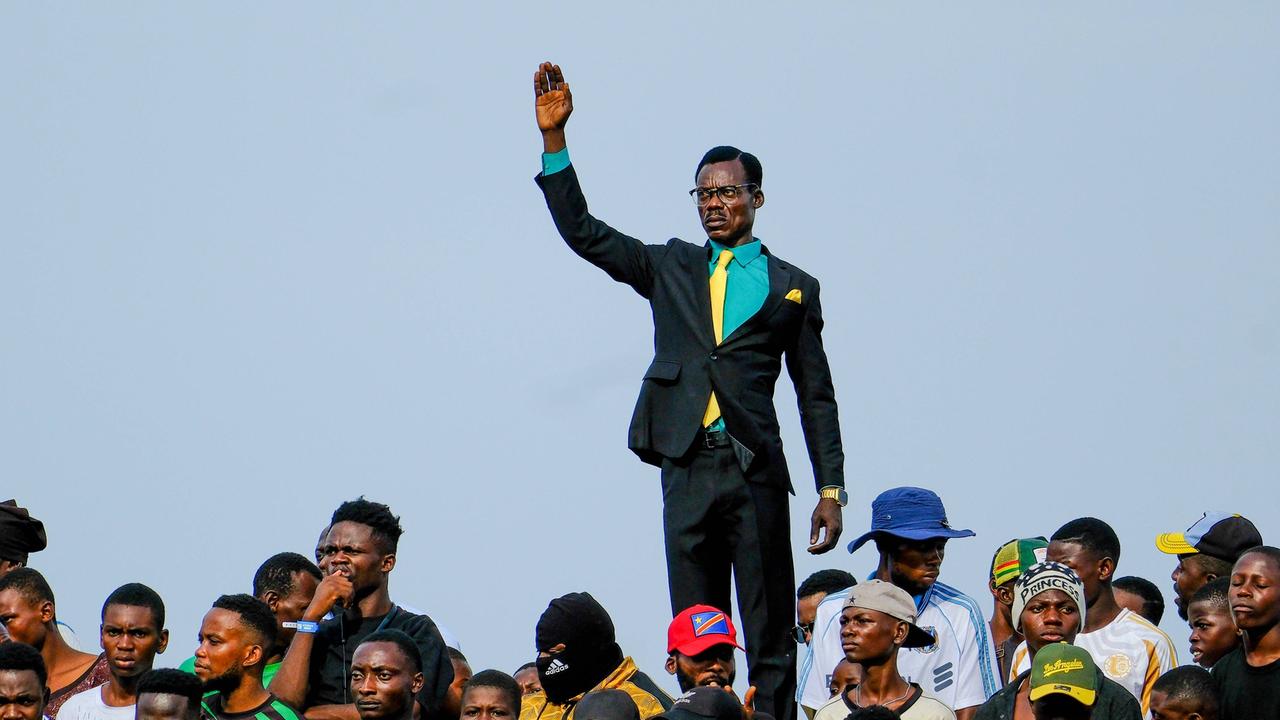
Perhaps the most peculiar and touching story of the tournament involves the Democratic Republic of the Congo’s superfan, Michel Nkuka Mboladinga. A 49-year-old cultural icon in his home country, Mboladinga has captured the world’s attention by standing motionless on the terraces, arm outstretched, perfectly imitating a statue of Patrice Lumumba—the DRC’s first prime minister and a martyr of African independence.
Mboladinga was not initially expected to be at the tournament due to strict isolation measures surrounding a regional Ebola outbreak. However, recognizing his role as a living piece of national history, Prime Minister Félix Tshisekedi intervened, including Mboladinga in the official state delegation. As the DRC prepares for their high-stakes clash against Colombia in Guadalajara, the nation waits with bated breath to see if their "statue" will be allowed his place on the sidelines, serving as both a supporter and a solemn reminder of a national hero.
The Scottish Invasion of Boston
In New England, the "Tartan Army" has made its presence felt in unprecedented ways. With an estimated 50,000 Scottish fans descending upon Boston, the city is experiencing a culture shift. The local enthusiasm has reached such heights that Boston Mayor Michelle Wu has formally moved to establish a sister-city partnership with Glasgow. The atmosphere is electric, though local pub owners are reporting an unforeseen "beer emergency" as the influx of fans outpaces supply. The fans have even adopted a new chant, "No Wu, No Party," solidifying a bond between the host city and the traveling supporters.
Chronology of Key Events: Tensions and Triumphs
June 22: Diplomacy and Discontent
- 12:10 PM: All eyes are on the DRC as they hope for the arrival of Mboladinga in Guadalajara.
- 08:45 AM: Criticism continues to mount regarding the quality of the pitch at the New York/New Jersey final stadium. Stars like Vinícius Júnior and France’s Didier Deschamps have voiced concerns, with some describing the surface as "slower" and feeling more like artificial turf than a championship-grade grass pitch.
June 21: Protests and Performance
- 07:11 AM: Austrian coach Ralf Rangnick, ever the tactician, made headlines by comparing Spanish prodigy Lamine Yamal to a young Lionel Messi, setting the stage for a potential high-profile knockout clash.
- 04:33 AM: An emotional look back at a 2016 Facebook post by Enzo Fernández, who once begged Lionel Messi to reconsider his international retirement, highlights the profound influence the Argentine captain has on his teammates.
- 01:06 AM: A massive, 26-meter-tall statue of Messi was unveiled in his Argentine hometown, Cutral Có, as a measure to boost local tourism, proving that the cult of personality surrounding the 2022 winner remains unmatched.
Geopolitical Friction: The Iran-USA Situation
The participation of the Iranian national team has been one of the most volatile storylines of the 2026 tournament. Following a 0-0 draw with Belgium in Los Angeles, the team left a handwritten note in their locker room expressing gratitude for the city’s hospitality. However, this message of peace stands in stark contrast to the climate outside the stadium.
The matches involving Iran have become a focal point for massive protests against the Tehran regime. Spectators have repeatedly brandished the pre-1979 revolutionary flag, and security incidents have occurred, including one individual who attempted to storm the pitch wearing a shirt displaying the banned flag.
Official Responses and Logistics
The Iranian Football Federation has formally complained to FIFA regarding travel logistics. Because the team has been subjected to strict travel restrictions, they are often unable to arrive at match venues until the day before the game. The federation argues that this creates an unfair competitive disadvantage and violates the principle of equal treatment for all participating nations. FIFA has yet to provide a definitive response to these claims, leaving the tension simmering as the team prepares for further group-stage matches.
The Technical Arena: Rules, Pitches, and Performance
The "Rotten" Grass Debate
The debate over the playing surface at the New York/New Jersey arena has become a point of contention. While FIFA maintains that the surface meets all tournament standards, players are pushing back. The transition to a "slower" surface has prompted tactical shifts among the tournament favorites, with coaches expressing concern that the ball’s bounce is unpredictable. As the German national team prepares for their upcoming match against Ecuador at the same venue, the world will be watching closely to see if the pitch becomes a factor in the outcome.
New Rules and VAR Intervention
The tournament has also seen the introduction of stricter enforcement regarding player behavior. A notable incident occurred during the Turkey vs. Paraguay match, where a new, strictly enforced rule led to a straight red card. A player was sent off for "covering their mouth" while speaking to an opponent—a measure intended to prevent unsporting conduct and verbal abuse. This has sparked a broader debate about how much transparency is required on the pitch and whether these rules are enhancing or hindering the "flow" of the game.
Statistical Overview: The Goal Rush
Despite the controversies, the football itself has been prolific. With an average of 3.18 goals per game, the 2026 tournament is currently on track to be the highest-scoring World Cup since 1958.
The Germany-Brazil Rivalry
One of the most engaging subplots of the tournament is the "eternal goal tally" between Brazil and Germany. Germany entered the tournament with 232 goals, while Brazil led with 237. Following Germany’s 7-1 thrashing of Curaçao, the DFB team briefly surged into the lead. Brazil, however, responded with a dominant 3-0 victory over Haiti, reclaiming their two-goal cushion at the top of the all-time list. Argentina sits in third place with 155 goals, a gap that suggests the two titans will continue their battle for supremacy for the remainder of the tournament.
Implications: Looking Toward the Knockout Stages
As we approach the halfway point of the group stage, the implications for the future of the tournament are clear:
- Host Nation Euphoria: Canada, the USA, and Mexico are riding a wave of unprecedented domestic support. If these teams continue to progress, the economic and cultural impact of the tournament will be solidified for decades to come.
- Player Welfare: The focus on injuries, such as the tragic case of Canada’s Ismaël Koné, is leading to renewed calls for extended squad sizes and improved medical protocols at future FIFA events.
- Commercial Dominance: The "klebeband" (tape) phenomenon, where players and stadiums must cover non-sponsored logos to protect FIFA’s exclusive partnerships, highlights the immense commercial pressure surrounding the tournament. This balance between corporate sponsorship and the "purity" of the sport will remain a key challenge for FIFA.
Final Thoughts
The 2026 World Cup is more than just a series of matches; it is a complex tapestry of human endurance, political tension, and sporting excellence. As teams like Argentina, Germany, and the host nations fight for their places in the knockout stages, the tournament continues to deliver on its promise of being one of the most memorable in the modern era. Whether through the silent, statue-like dedication of a Congolese fan or the roar of a stadium in Vancouver, the pulse of the tournament is stronger than ever.
As we look toward the final in New Jersey, the question remains: who will etch their name into history? With the quality of football currently on display, the path to the trophy will surely be as arduous as it is glorious.