Main Facts: A Landmark Partnership
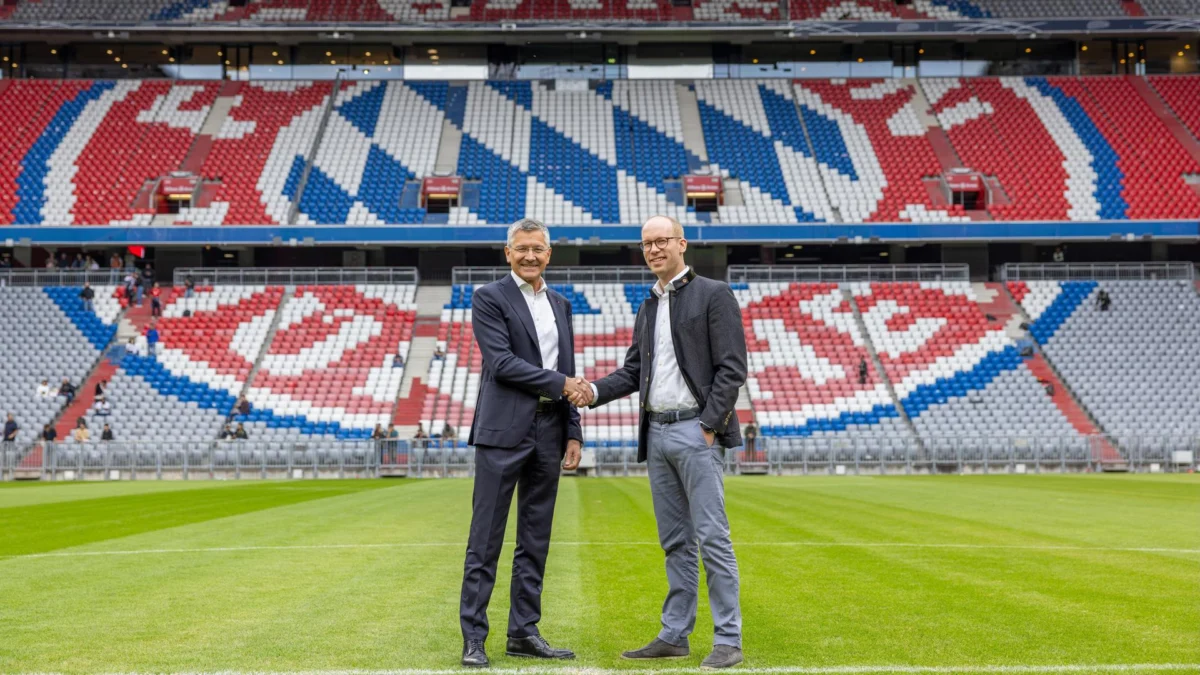
In a significant development for the European sports and industrial sectors, the Viessmann Generations Group, the renowned heating and climate technology powerhouse based in Battenberg, North Hesse, has officially become a shareholder in the FC Bayern München AG. This move marks the integration of a traditional German industrial leader into the ownership structure of the nation’s most successful football club.
Viessmann joins a prestigious and exclusive circle of corporate shareholders. Before this deal, the FC Bayern München AG’s shareholding structure was comprised of the parent club, FC Bayern e.V., alongside three industry titans: Allianz, Audi, and Adidas. While the parent club, FC Bayern e.V., retains its mandate to hold at least 70 percent of the shares—preserving the "50+1" spirit that defines German football governance—Viessmann has secured a stake that underscores its long-term commitment to the club.
While official figures regarding the purchase price remain confidential, industry insiders and financial analysts familiar with the transaction estimate the valuation of the deal to be in the region of 250 million euros. The investment structure is unique; it involves a capital increase that grants Viessmann a final calculated stake of approximately 6.7 percent in the AG. As part of the agreement, Max Viessmann, the CEO of the Viessmann Group and a vocal supporter of the club, will join the FC Bayern supervisory board. This expansion of the board from nine to ten members signals the high level of trust and strategic integration expected from this partnership.
Chronology: From Industrial Roots to the Allianz Arena
The journey toward this partnership is rooted in decades of growth and brand evolution for both organizations.
- 1917–2000s: The Rise of Viessmann: Founded in 1917, Viessmann grew from a small workshop in Battenberg into a global leader in climate solutions. Over the decades, the company established itself as a synonym for German engineering excellence, expanding its footprint into over 40 countries.
- 2002–2014: The Establishment of the "Big Three": FC Bayern München AG’s shareholding model was built over years. Adidas joined in 2002, followed by Audi in 2010 and Allianz in 2014. These partnerships were not merely financial; they were strategic, providing the club with the capital to remain globally competitive without selling out its institutional identity.
- 2015–2023: The Modernization Phase: Under the leadership of Max Viessmann, who joined the family business in 2015 and took over as CEO in 2017, the company underwent a radical digital transformation. During this time, Max Viessmann began his engagement with the football club, eventually serving on the club’s administrative advisory board.
- 2024: The Formalization: After months of confidential negotiations, the official announcement of the shareholding partnership was made in early 2024. The deal represents the culmination of a shared vision for growth, sustainability, and global brand positioning.
Supporting Data: The Anatomy of the Investment
To understand the significance of this 6.7 percent stake, one must look at the financial and operational health of both entities.
Viessmann, despite its global reach, maintains its industrial core in North Hesse, employing approximately 6,000 people in its primary operations. However, the company’s strategic shift is evidenced by the location of its operational headquarters in Munich—a geographic alignment that mirrors its new commitment to the Bavarian capital’s football flagship.
For FC Bayern, the capital injection comes at a pivotal time in professional football. With rising costs in player acquisition, infrastructure development, and the global push for carbon neutrality in stadiums, the funds provided by Viessmann are earmarked for more than just traditional spending. The capital increase ensures that FC Bayern remains economically independent, a core tenet of the club’s philosophy, while providing a cushion against the volatility of international transfer markets.
The decision to expand the supervisory board to accommodate Max Viessmann is a rare structural change. The board, chaired by Herbert Hainer and featuring legends like Uli Hoeneß and Karl-Heinz Rummenigge, represents the institutional memory and strategic direction of the club. Including an industrialist who has successfully navigated the "energy transition" (Energiewende) in Germany provides the club with a unique perspective on managing large-scale, sustainable transformations.
Official Responses and Strategic Vision
The language used by both parties underscores a shared cultural philosophy: the German "Mittelstand" values of long-term stability combined with the forward-thinking ambition of global sports entertainment.

Max Viessmann’s official statement reflected this synergy: "As a fourth-generation family business, we want to contribute not only capital but also our entrepreneurial experience to this collaboration. We are committed to the FC Bayern identity—a club that is economically independent and sustainably successful."
The collaboration is not intended to be a passive investment. According to both entities, the partnership will focus on three key pillars:
- Sustainability: Leveraging Viessmann’s expertise in heat pumps and energy management systems to optimize the environmental footprint of the Allianz Arena and the club’s training facilities at Säbener Straße.
- Internationalization: Combining the global reach of the FC Bayern brand with Viessmann’s extensive network in 40+ countries to foster cross-market growth.
- Digitalization: Applying the lessons learned from Viessmann’s internal digital transformation to enhance the fan experience and digital infrastructure of the club.
Implications: A Model for Modern Football
The partnership between Viessmann and FC Bayern Munich carries profound implications for the future of football management.
1. The "German Way" of Funding
In an era where state-backed clubs and private equity groups often dominate the narrative, FC Bayern’s model of bringing in "strategic industrial partners" remains distinct. By choosing partners like Audi, Adidas, Allianz, and now Viessmann, the club reinforces its image as a destination for top-tier German companies that share a long-term view. This protects the club from the "boom-and-bust" cycles often associated with external, speculative capital.
2. Sustainability as a Competitive Edge
Football clubs are under increasing pressure to demonstrate environmental stewardship. By partnering with a world-class expert in climate solutions, FC Bayern is positioning itself to be a leader in "Green Stadium" technology. This is not just a branding exercise; it is a long-term cost-saving strategy that addresses the rising energy costs of managing massive sports complexes.
3. Integration of Industrial and Sporting DNA
The appointment of Max Viessmann to the supervisory board is a move that blurs the lines between industrial management and sports administration. As football clubs become increasingly complex, data-driven, and energy-intensive organizations, the presence of leaders with deep industrial experience will likely become a competitive advantage.
4. Regional Impact and Economic Stability
For the region of North Hesse, the involvement of a local firm in such a high-profile, global venture is a source of pride and economic validation. It demonstrates that regional companies can evolve into global players capable of holding their own on the biggest stages of world sports.
Conclusion
The entry of the Viessmann Generations Group into the shareholding structure of FC Bayern Munich is more than a financial transaction; it is a strategic marriage of two German institutions that value longevity, technological innovation, and a clear sense of identity. As the football world grapples with the demands of the 21st century, the partnership provides a blueprint for how traditional industrial strength can support the sustainable growth of modern sporting empires. With the expertise of the Viessmann team now directly contributing to the board-level decision-making at Bayern, the club is well-positioned to maintain its status as a paragon of both sporting success and economic, sustainable stability.