


The French Ligue 1 faces unprecedented disruption as widespread civil unrest forces the postponement of high-profile fixtures. Authorities struggle to balance the demands of public order with the logistics of professional sport.
The Core Situation: A League in Limbo
The French professional football landscape has been thrown into turmoil following an official announcement by the Ligue de Football Professionnel (LFP) on October 23, 2026. The marquee Ligue 1 clash between current Champions League holders Paris Saint-Germain (PSG) and their long-standing rivals, Olympique Lyon, has been officially rescheduled. Originally slated for Sunday evening at the Parc des Princes, the match will now take place on Monday at 20:30 CET.
This decision, while seemingly logistical, underscores a profound security crisis currently gripping the French Republic. As major demonstrations are anticipated across Paris and several other metropolitan hubs this coming weekend, the Parisian police prefecture deemed it impossible to guarantee the safety of spectators, players, and staff if the match were to proceed on its original date.
Chronology of the Escalating Unrest
To understand the gravity of the situation, one must look at the timeline of the current social climate in France.
- October 15-18: Initial localized protests erupted following controversial legislative proposals, leading to skirmishes between demonstrators and law enforcement in the French capital.
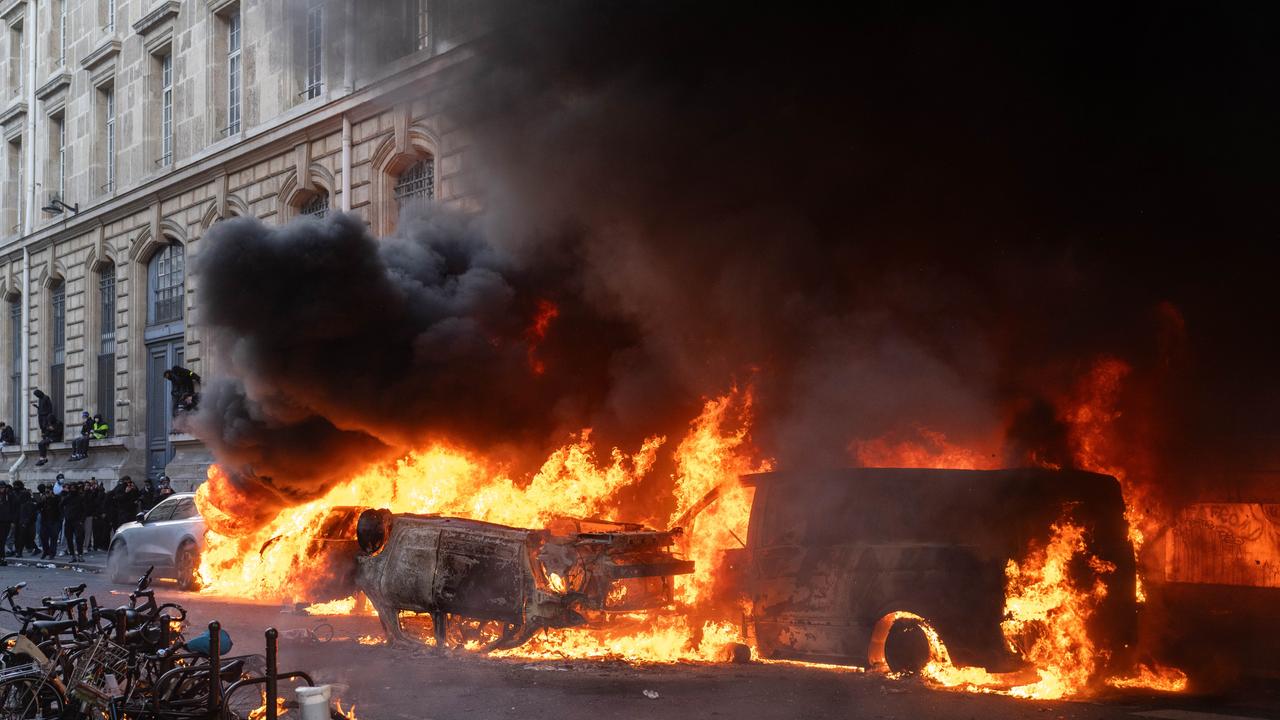
- October 19-20 (Last Weekend): The unrest reached a boiling point. What began as organized protest actions devolved into widespread rioting, characterized by arson, vandalism, and clashes with security forces. Images of burning vehicles and destroyed property across Paris dominated global news cycles.
- October 21: The French Interior Ministry issued a warning regarding the "high probability" of renewed violence for the upcoming weekend.
- October 22: Local authorities began reviewing the security logistics for all major public events scheduled for the weekend.
- October 23: The LFP confirmed that the PSG vs. Lyon match, along with three other fixtures across Ligue 1 and Ligue 2, would be moved to ensure the deployment of adequate police resources.
The Strain on Public Resources
The decision to postpone the match is not merely about the stadium itself; it is about the broader distribution of state security assets. The Parc des Princes, located in the 16th arrondissement of Paris, requires a significant police presence under normal circumstances. However, in light of the predicted mass demonstrations, the French Ministry of the Interior has redirected thousands of riot police and gendarmes to high-risk zones, urban centers, and public transport hubs.
The LFP’s statement was concise, reflecting the gravity of the situation: "Following the instructions of the Prefecture of Police, the match between Paris Saint-Germain and Olympique Lyon, initially scheduled for Sunday, October 25, is postponed to Monday, October 26, at 20:30."
This marks the fourth game across the top two tiers of French football to be affected this weekend, highlighting the systemic nature of the disruption. The football calendar, usually a source of national cohesion, has become a casualty of the ongoing socioeconomic and political tensions.
Official Responses and Governance
The governing bodies of French football find themselves in a precarious position. The LFP is tasked with maintaining the integrity of the league competition, but they are ultimately subordinate to the directives of the Ministry of the Interior and local police prefectures.
"The safety of our fans and the security of the events are our absolute priority," an LFP spokesperson noted. "While we regret the inconvenience caused to broadcasters, ticket holders, and the clubs, the current security climate leaves us with no alternative."
Meanwhile, representatives from both PSG and Lyon have issued statements of cooperation. Paris Saint-Germain, having recently achieved European glory, had hoped to use the weekend match as a celebration of their current form. Instead, the club is now focused on the complex logistical challenge of rescheduling a major security operation for a Monday night kickoff, which presents its own set of crowd-control difficulties.
The Broader Implications: Football as a Mirror of Society
The suspension of sporting events is a rare but potent indicator of a nation’s stability. In France, where football is deeply embedded in the cultural fabric, these postponements serve as a visual and social barometer of the current civil discontent.
1. Economic Consequences
The economic impact on the clubs is significant. Monday night games generally attract lower viewership numbers than prime-time Sunday slots, impacting broadcasting revenue. Furthermore, local businesses around the Parc des Princes, which typically rely on the influx of thousands of fans for their weekend revenue, face a severe downturn as the crowds stay home.
2. The Erosion of Normalcy
Beyond the financials, there is a psychological toll. The postponement signifies the erosion of "normalcy" for the average citizen. When a football match—a pillar of weekly social routine—is forced to move due to fear of violence, it serves as a stark reminder of the fragile nature of public order.
3. Security Precedents
Security experts suggest that this incident may set a precedent for the remainder of the season. If the protests continue to gain momentum, the LFP may be forced to implement a "closed-door" policy or further postpone matches indefinitely. The challenge for the government is to allow the democratic right to protest while preventing the total paralysis of public life.
Analysis of the Security Climate
The current unrest is not isolated to one specific issue but appears to be a confluence of economic grievances, frustration with government policy, and a breakdown in public trust. Intelligence reports suggest that agitators are using the chaos of the protests to target critical infrastructure.
For the police, the difficulty lies in the sheer scale of the demonstrations. With protesters mobilizing across multiple districts, the ability to "ring-fence" a stadium becomes an impossibility. The decision to move the match to Monday is a strategic retreat—by spreading out the major events over more days, the police can rotate their exhausted personnel more effectively.
Looking Ahead: The Monday Night Challenge
As Paris prepares for the rescheduled match, the focus remains on whether the postponement will be enough to mitigate risk. Monday presents its own logistical hurdles, including the need to secure the stadium during a workday, which places additional strain on public transport and civilian movement.
PSG’s squad, led by their star-studded lineup, now faces a condensed schedule. The ripple effect of this postponement could impact their training cycles and their preparation for upcoming European fixtures. However, as the club stated, "The safety of the community comes before the game."
Conclusion: A Nation at a Crossroads
The postponement of the PSG vs. Lyon match is more than just a footnote in a sports column; it is a manifestation of a nation struggling to balance civil liberties with public safety. As the streets of Paris remain tense, the football community watches alongside the rest of the world, waiting to see if the roar of the crowd can return to the stadium without the shadow of civil strife looming over the pitch.
For now, the Parc des Princes stands quiet, a silent monument to a weekend where the sport was forced to step aside, reflecting the profound unrest that continues to reshape the French social landscape in late 2026. The coming days will be critical, not just for the outcome of the match, but for the future of civil order in one of Europe’s most important nations.







