

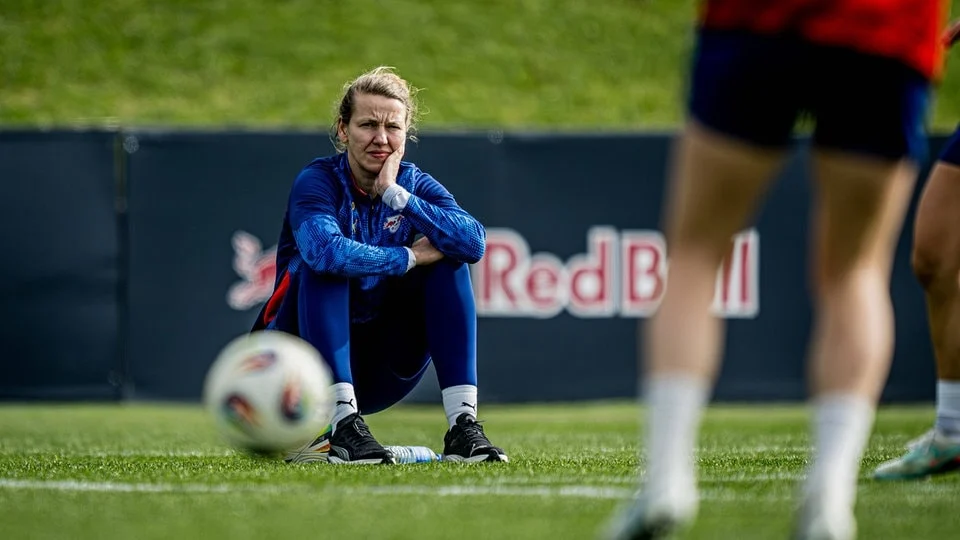
The Crossroads of Leipzig: A Squad in Transition
The landscape of RB Leipzig’s women’s football team is undergoing a profound metamorphosis. As the summer transfer window gathers momentum, the club has signaled its intent to pivot from a developmental phase toward a more seasoned, competitive structure. With seven departures confirmed and a clear mandate from the hierarchy to infuse the squad with experience, the Bundesliga side finds itself at a defining moment. This transition is not merely about personnel; it is a calculated effort to bridge the gap between mid-table sustainability and the elite ambitions that characterize the RB brand.
The Departures: A Clean Slate
The announcement that seven players—Giovanna Hoffmann, Luca Graf, Lina von Schrader, Kyra Spitzner, Rudy Grunenberg, Victoria Krug, and Marlene Müller—would be departing the club sent a clear message to the fanbase and the league. This is a significant cull, representing a substantial portion of the squad that has navigated the challenges of the top flight over the past year.
For these players, the move marks the end of a chapter in Leipzig’s relatively young history in the Women’s Bundesliga. For the club, it is a surgical operation designed to clear space for a specific profile of athlete: one who possesses the tactical maturity that was glaringly absent during the previous campaign.
Chronology: The Road to the Summer Shake-up
The path to this summer overhaul was paved by the performance metrics of the past season.
- Autumn 2023: The team struggled with consistency. While flashes of brilliance were evident, the squad frequently succumbed to late-game pressure, a hallmark of an inexperienced side.
- Winter Break: Internal reviews highlighted that while the physical profile of the squad was strong, the "game management" component was lacking.
- Spring 2024: As the season reached its climax, the leadership team, headed by Viola Odebrecht, began the process of evaluating contracts. It became clear that to elevate the team’s floor, a shift in roster composition was necessary.
- Post-Season: The official parting of ways with seven players marked the beginning of the recruitment phase, setting the stage for what will be a high-stakes summer for the sporting management.
Supporting Data: The Experience Gap
In modern women’s football, the correlation between experience and points-per-game is statistically significant. Leipzig’s analysis suggests that they dropped crucial points in the final third of matches due to poor decision-making—a factor that can only be mitigated by players who have "been there before."
The club’s internal data highlights a lack of "Champions League-level experience" in the dressing room. In a league that is rapidly becoming one of the most competitive in Europe, having a squad that lacks players who have navigated high-pressure environments (such as European qualifiers or deep cup runs) creates a psychological barrier. The goal for the coming season is to increase the average "Bundesliga/International appearances" per player, shifting the demographic from a purely developmental hub to a results-driven powerhouse.
Official Responses: Odebrecht’s Vision
Viola Odebrecht, in her role as the architect of the squad, has been transparent about the club’s predicament. Addressing the press, she did not mince words regarding the recruitment challenges.
"We are missing experience in one or two areas," Odebrecht admitted. "That is the challenge we face. The players we are targeting have the ambition to play in the Champions League. Convincing them to join a project that is still building its European pedigree is the primary hurdle for our recruitment department."
This admission is as refreshing as it is risky. By acknowledging the gap between Leipzig’s current status and the elite desires of top-tier talent, Odebrecht is setting the stage for a recruitment strategy based on long-term vision rather than short-term promises. She is selling a project, a facility, and a philosophy—the pillars of the RB model.
The Case of Delice Boboy: A Blueprint for Development
Despite the desire for experience, the club remains committed to its core philosophy of developing elite talent. The trajectory of striker Delice Boboy serves as the perfect case study for this balancing act.
In the first half of the season, Boboy struggled to convert high-value chances. The pressure of the Bundesliga was evident, and at times, her lack of ruthlessness in front of goal was a source of frustration for the coaching staff. However, the club’s refusal to abandon her was vindicated in the second half of the season.
"She left many chances on the table in the first half of the season," Odebrecht noted. "But with growing confidence, she improved significantly and scored many goals in the second half."
Boboy’s rise is proof that the "RB system"—which prioritizes patience and intensive training—can yield results. The hope is that by surrounding talents like Boboy with veteran players, the transition from "promising youngster" to "proven goalscorer" can be accelerated.
Stability at the Helm: Jonas Stephan
While the squad undergoes a radical transformation, the technical leadership remains untouched. Jonas Stephan, the head coach, has received a firm vote of confidence from the management. Despite the fluctuations in form during the past season, Odebrecht expressed total satisfaction with Stephan’s work.
Stability in the coaching staff is vital when the personnel on the pitch is shifting. By keeping Stephan, the club ensures that the tactical identity of the team remains intact. His ability to foster the development of young players like Boboy has been key to his retention. The front office believes that with the right infusion of experienced recruits, Stephan’s tactical framework will finally be able to withstand the rigors of a full 22-match Bundesliga campaign.
Implications: The Strategic Future
The implications of this summer are far-reaching.
- Recruitment Difficulty: Leipzig is entering a competitive market where the lure of European football is the primary currency. Without that, they must rely on competitive salaries, world-class infrastructure, and the promise of a starting role in a high-intensity environment.
- Cultural Shift: The departure of seven players changes the social fabric of the dressing room. The incoming recruits will need to integrate quickly, as the club’s leadership has made it clear that they are moving away from the "learning on the job" phase.
- Pressure on Results: By explicitly stating that the squad needed more experience, the club has raised expectations. The fans, the media, and the board will expect a more disciplined, clinical, and consistent team. Anything less than a climb up the table will be viewed as a failure of this summer’s strategy.
Conclusion: A Delicate Balance
RB Leipzig Women are attempting to walk a tightrope. On one side, they must maintain the developmental identity that has defined the club’s success. On the other, they must aggressively pursue the "grind-it-out" experience required to compete at the top of the German game.
The strategy is clear: keep the coach, refine the squad, and trust the process. However, in the high-stakes world of the Bundesliga, time is a luxury. As the club navigates this summer of upheaval, the eyes of the footballing world will be on Leipzig. Can they convince top-tier talent to help them build their European dream from the ground up, or will the lack of immediate continental competition hinder their ascent?
The answers will reveal themselves when the whistle blows for the start of the new season. Until then, the offices in Leipzig will remain a hive of activity, as the club works to turn its ambitions into a tangible, winning reality.






Leave a Reply