Commuters and freight operators traversing the critical rail corridor between Leipzig and Zwickau are bracing for a prolonged period of instability. As part of a massive, multi-year modernization effort, the German railway operator, Deutsche Bahn, has announced a series of comprehensive track closures that will fundamentally reshape travel in the region. From August 17 to December 12, 2026, passengers must prepare for significant service interruptions, bus replacement services, and extended travel times as the infrastructure undergoes a total reconstruction.
The Scope of the Disruption
The current phase of construction centers on the crucial rail hubs of Gößnitz in East Thuringia and Werdau. These sites are not merely local stations; they are vital arteries for the Saxony-Franconia Magistrale (Sachsen-Franken-Magistrale), a primary transit route connecting major industrial and residential centers.
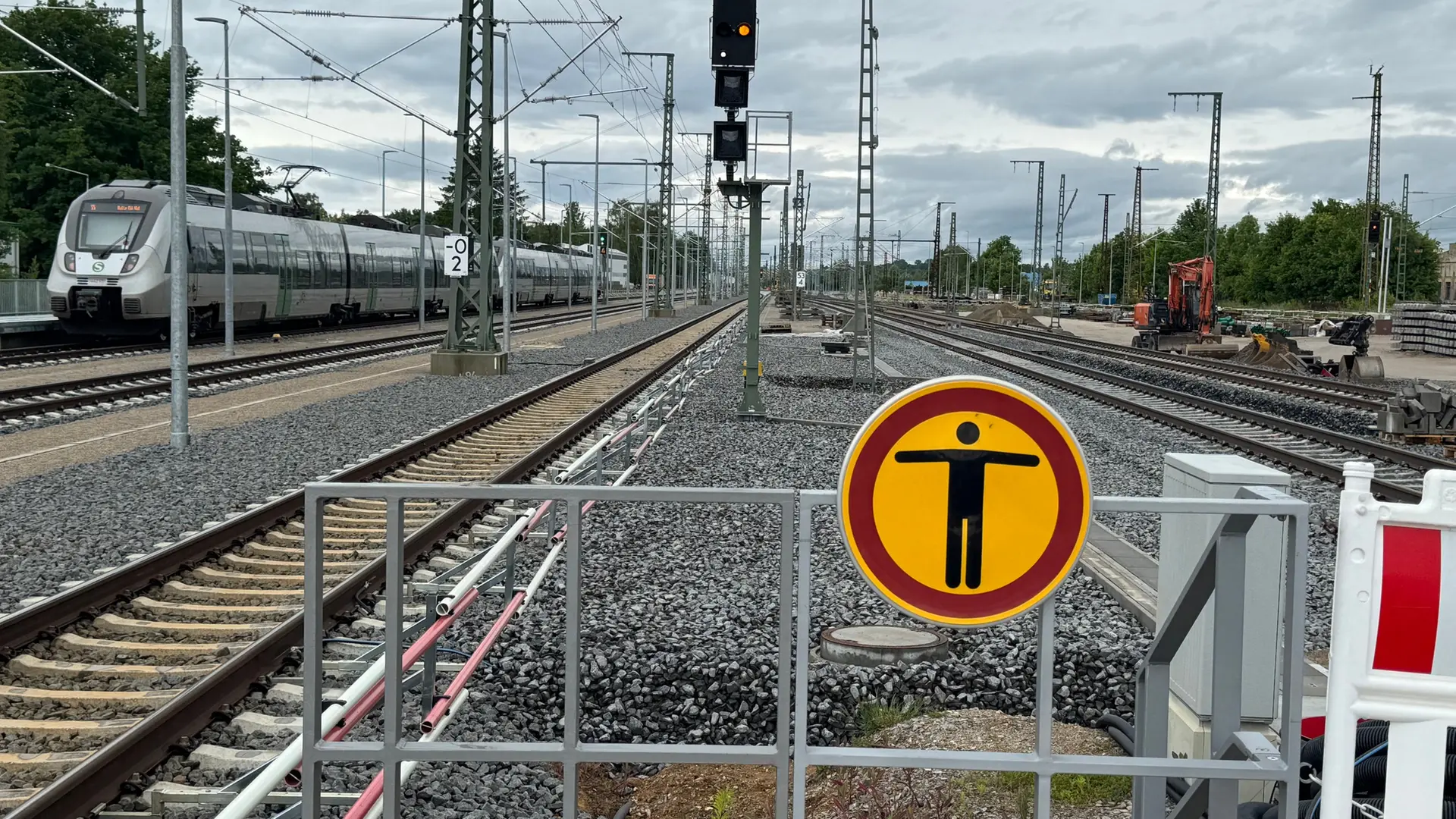
The scope of the work is extensive. In the section spanning from Altenburg to Werdau, the railway infrastructure is being "reimagined" from the ground up. This involves the systematic replacement of aging tracks, high-precision turnout installations, and the modernization of overhead power lines. Furthermore, the project includes complex civil engineering feats, such as the insertion of a new railway bridge in Ponitz and two additional bridges in Crimmitschau.
For the daily commuter, the reality is stark. Journeys that are typically seamless and efficient will now be fragmented by mandatory transfers to bus replacement services. According to current projections, the travel time between Altenburg and Zwickau could double during the peak of these construction activities compared to the standard S-Bahn connection.

Chronology of the Transformation
The decision to bundle these construction projects into a single, intense window—from late August through mid-December—is a strategic move by Deutsche Bahn to minimize the long-term impact on the network. However, the timeline of this massive upgrade has been plagued by delays.
Initially, the modernization of the Saxony-Franconia Magistrale was scheduled for completion by October 2026. This goal has now been pushed back by a full year, with the final phase of the project now expected to conclude in late 2027. The delay is attributed to a "perfect storm" of logistical challenges: a severe shortage of specialized personnel, global supply chain bottlenecks for critical construction materials, and unforeseen geological complications discovered during the excavation of the rail sub-base.
Supporting Data: Why the Overhaul is Necessary
Despite the immediate frustration caused by the closures, officials argue that the long-term benefits are essential for the region’s economic and mobility future. The primary objectives of the reconstruction are twofold: increasing the speed of passenger transport and significantly boosting the capacity for freight logistics.
Enhancing Passenger Efficiency
Currently, the transit time for a journey from Zwickau to Leipzig is hampered by outdated track geometry and legacy signaling systems. Upon completion, the upgrades will allow trains to operate at speeds of up to 160 km/h, a substantial increase from the current limit of 120 km/h. This improvement is expected to slash travel times by approximately 20 minutes, bringing a typical trip down to under an hour.
Strategic Freight Upgrades
The inclusion of two new 750-meter-long passing loops in Werdau is a vital component of the project. These loops will allow heavy, slow-moving freight trains to be shunted aside, permitting high-speed passenger trains to pass unimpeded. This is part of a broader national strategy to shift more logistics traffic from road to rail, specifically targeting the connection between Northern German seaports and the industrial heartlands of Southern Germany.
The Evolution of the Gößnitz-Werdau Hubs
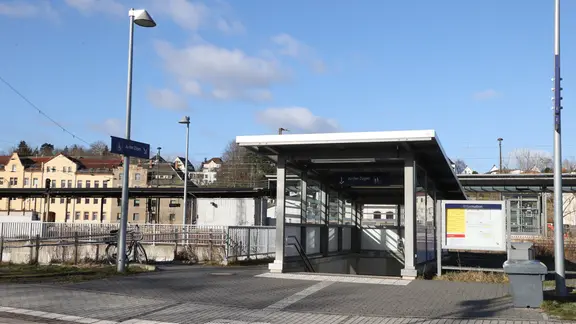
The history of the Gößnitz station is particularly significant. Once famous for hosting the longest platform in Germany—a design marvel that allowed two long-distance express trains to dock end-to-end—it served as a vital junction for regional connections between the Plauen/Zwickau lines and the Erfurt/Chemnitz routes.
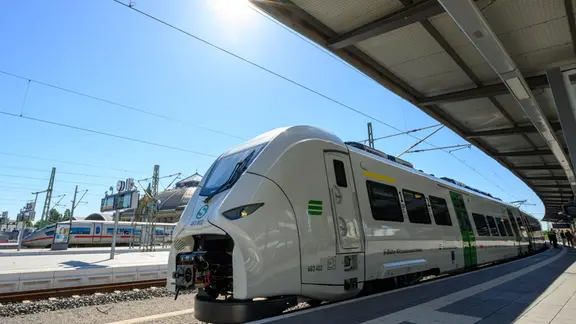
As the industry moved toward modern S-Bahn operations, the station’s layout became a bottleneck. The current renovation is sweeping away these historical remnants to create a more functional, modern transit node. In a significant transition of operators, December 2026 marks the end of an era for the Deutsche Bahn-operated S-Bahn services on this route. The "Länderbahn" will take over the S5 and S5X lines, introducing a fleet of new, state-of-the-art "Mireo" trains. These trains, which have been undergoing a phased introduction on individual segments for weeks, are designed to provide greater reliability and passenger comfort.
Official Responses and Strategic Implications
The scale of this project reflects the ongoing struggle to modernize Germany’s aging rail infrastructure. For the state of Saxony and the surrounding regions, the Magistrale represents the backbone of regional connectivity.
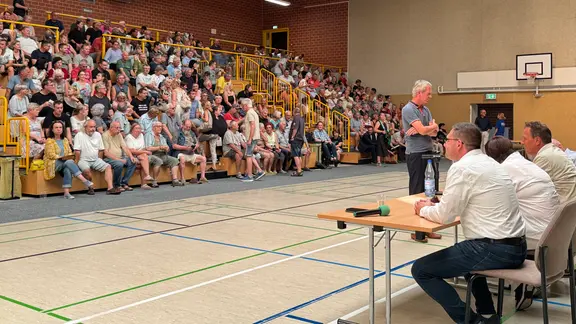
"We are dealing with a decades-old infrastructure that was not designed for the volume of traffic we see today," a spokesperson for the infrastructure planning department noted. "The challenges we face with the subsoil and the requirement for specialized labor are indicative of the broader national struggle to rebuild while keeping the economy moving."
Beyond the technical upgrades, the project has significant social and economic implications. The rail corridor is a lifeline for workers in Zwickau, Chemnitz, and Leipzig. The prolonged construction period is causing concern among local businesses that rely on the punctuality of the workforce and the delivery of goods.

Furthermore, the delay in the completion date has sparked a debate about the reliability of infrastructure planning. Critics argue that the original timeline was overly ambitious, failing to account for the volatility of the construction market in the post-pandemic era.
Broader Context: The "Mitte-Deutschland" Connection
The work at Gößnitz is inextricably linked to the "Mitte-Deutschland-Verbindung" (Aachen-Chemnitz), a long-distance project that has faced similar funding and planning hurdles. The current construction is essentially an attempt to unify these regional nodes into a more cohesive, high-performance network.

However, the "last mile" problem remains a topic of contention. While the track upgrades and speed improvements are welcome, the fact that the overhead catenary system currently ends in Hof—a remnant of the era when the north-south divide was defined by the inner-German border—remains a major point of criticism for those calling for full electrification of the entire corridor.
Looking Ahead: A Future-Proof Network
As travelers prepare for the bus replacement services that will dominate the landscape through the end of 2026, the sentiment among local authorities is one of "cautious patience." The promise is that by 2027, the Saxony-Franconia Magistrale will no longer be a legacy system struggling to keep pace, but a high-capacity link capable of handling the demands of 21st-century mobility.

For the residents of towns like Crimmitschau, Werdau, and Ponitz, the next four months will be characterized by the sound of heavy machinery, the sight of temporary bus stops, and the logistical challenge of planning their daily lives around a construction site. Yet, the long-term vision—a faster, more frequent, and more reliable rail service—remains the driving force behind this painful, yet necessary, disruption.
In conclusion, the project serves as a microcosm of the wider German rail strategy: a necessary, costly, and time-consuming effort to reclaim a competitive advantage in European transit. Whether these upgrades will successfully meet the future demands of freight and passenger traffic remains to be seen, but for now, the path forward is marked by detours and the promise of a modernized, high-speed future.