In a tense encounter at the Olympiastadion, Hertha BSC secured a hard-fought 1-0 victory over Arminia Bielefeld. A dramatic penalty in the third minute of injury time propelled the Berliners further ahead in the 2. Bundesliga standings, cementing their status as the league’s most consistent side this season.
Main Facts: A Statement of Intent
On the evening of October 24, 2026, Hertha BSC demonstrated the trademark resilience that has defined their current campaign. Facing an organized and stubborn Arminia Bielefeld side, the home team struggled for long periods to find a breakthrough. However, Josip Brekalo’s composure from the spot in the 90+3rd minute ensured all three points remained in the capital.
With this result, Hertha has now amassed an impressive 25 points from their opening nine matches. Their unbeaten streak remains intact, a testament to the tactical discipline instilled by head coach Stefan Leitl. The victory is significant not only for the points gained but for the distance created between the leaders and the chasing pack; Hertha now holds a nine-point advantage over third-placed VfL Wolfsburg, effectively asserting their dominance over the promotion race early in the season. For Bielefeld, the result is a bitter pill to swallow, leaving them in eighth place with 11 points.
Chronology: A Game of Patience and Frustration
The match began with an immediate sense of urgency from the hosts. Haunted by the memory of a humiliating 1-6 defeat against Bielefeld on "the Alm" back in May, Hertha looked to exorcise those ghosts from the opening whistle.
Within the first two minutes, the tone was set. Mads Pedersen exploited the left flank, delivering a teasing cross into the heart of the Bielefeld box. Sebastian Grønning, hungry for a goal, connected with the ball but was denied by a sharp reaction save from Arminia goalkeeper Jonas Kersken.
The theme of missed opportunities continued for Grønning. A catastrophic error by Bielefeld’s Felix Hagmann, who misjudged a long ball, gifted the Danish forward a golden opportunity. Grønning attempted a delicate chip over the onrushing Kersken, but defender Maximilian Großer produced a heroic goal-line clearance to keep the score level.
As the first half progressed, Bielefeld’s defensive structure proved robust. They maintained their shape, shifted effectively, and frustrated the Berliners’ attempts to penetrate the final third. While Hertha controlled the majority of possession, their creative output remained stagnant. A late-half chance fell to Oluwaseun Adewumi, who found himself unmarked following a Jon Dagur Thorsteinsson cross, but Kersken was again the hero, pulling off a world-class reflex save to send the teams into the tunnel at 0-0.
The second half mirrored the first. The match turned into a grueling game of attrition. Hertha coach Stefan Leitl opted for tactical tweaks to break the deadlock, but the goal remained elusive. The turning point nearly arrived in the 66th minute when Kevin Sessa unleashed a ferocious free-kick from 18 meters out, only to see it rattle the crossbar. Sessa missed another golden opportunity in the 75th minute, pushing a shot wide from close range.
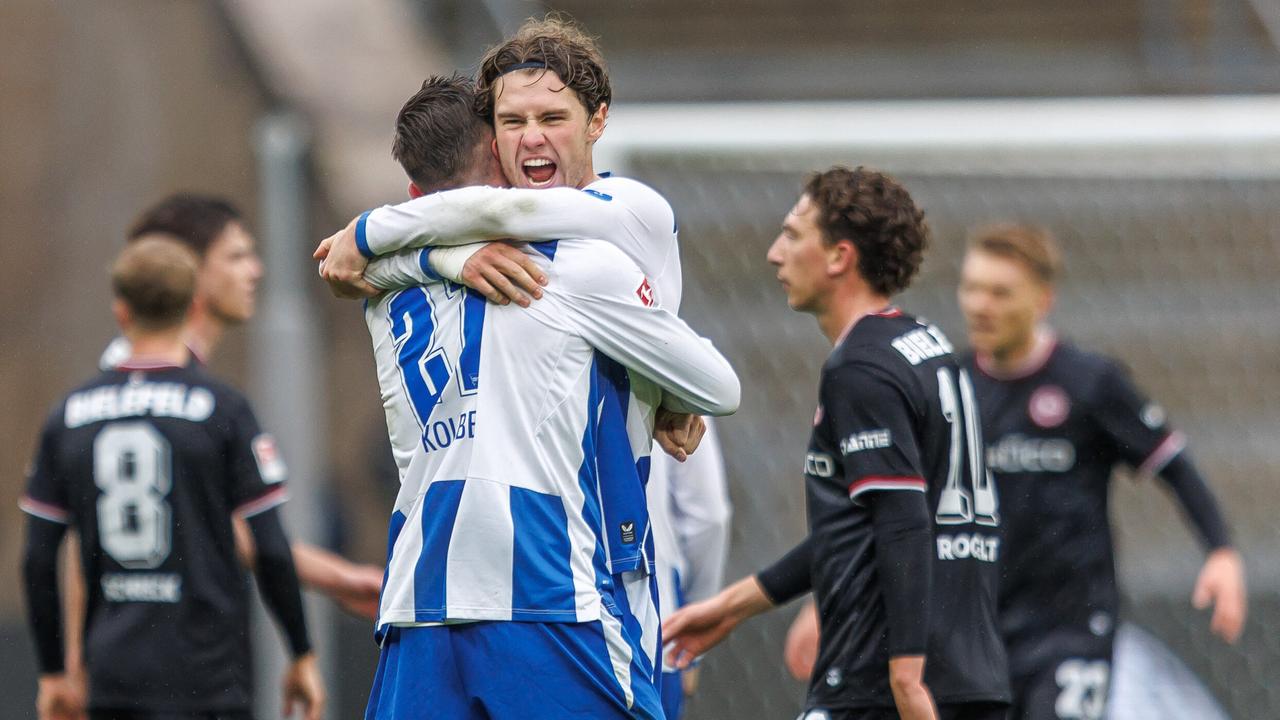
In the 85th minute, the stadium erupted as the ball found the back of the net, but the celebrations were cut short by referee Cristian Ballweg, who correctly signaled a handball in the build-up. It appeared destined to end in a stalemate until the dying moments, when a corner kick resulted in a handball by Bielefeld’s Großer. Brekalo stepped up to the spot and calmly converted, sealing a 1-0 win.
Supporting Data: The Statistical Narrative
The match statistics highlight the overwhelming pressure exerted by the home side, though they also underline the effectiveness of Bielefeld’s defensive plan:
- Ball Possession: Hertha BSC held 64% of the ball compared to Bielefeld’s 36%.
- Shot Efficiency: Despite the high volume of attacks, Hertha struggled with clinical finishing, managing only three shots on target from 14 attempts.
- League Position: With 25 points, Hertha sits firmly in the driver’s seat. Their goal difference and point accumulation suggest they are currently operating at a level above their 2. Bundesliga counterparts.
- Defensive Stability: Bielefeld’s performance was statistically impressive until the final moment, with the visitors blocking five shots and clearing the ball from danger on 22 separate occasions.
Official Responses: Contrasting Emotions
The post-match atmosphere at the Olympiastadion reflected the starkly different fortunes of the two clubs.
Stefan Leitl, Hertha BSC Manager:
"The belief was always there. Even when the clock was ticking down, you could see the hunger in the players’ eyes. Then, the handball situation presented itself. It is sensational for the boys because they simply rewarded themselves for their persistence. They did many things correctly today against an incredibly unpleasant and well-organized opponent. This is the mentality we need to maintain."
Oliver Kirch, Arminia Bielefeld Manager:
"I think that we deserved a point today. We executed our game plan perfectly for 90 minutes. To lose in the third minute of injury time—it hurts, it hurts immensely. The boys left everything they had on that pitch. When you play with such commitment and come away with nothing, it is difficult to digest. We have to pick ourselves up and look toward the next challenge."
Implications: The Road Ahead
For Hertha BSC, this victory serves as a crucial psychological hurdle. Winning games when playing poorly—or when facing a stubborn "low block"—is often the hallmark of a promotion-winning side. The nine-point cushion provides a comfortable buffer as they enter a demanding phase of the schedule. Their next test is a trip to the Fritz-Walter-Stadion to face 1. FC Kaiserslautern on Saturday. It will be a litmus test of their away form and their ability to handle the hostile environment of the Betzenberg.
For Arminia Bielefeld, the focus must shift immediately to defensive consistency. While their performance in Berlin was defensively commendable, their lack of an attacking threat remains a concern. With a Friday night home fixture against Eintracht Braunschweig on the horizon, the pressure is on manager Oliver Kirch to ensure that his team’s disappointment does not translate into a dip in form.
The 2. Bundesliga remains a marathon, not a sprint, but after nine matchdays, the trajectory is clear: Hertha BSC is the team to beat, and their rivals are running out of time to bridge the gap.