

Introduction: A Nation at the Edge of Power Failure
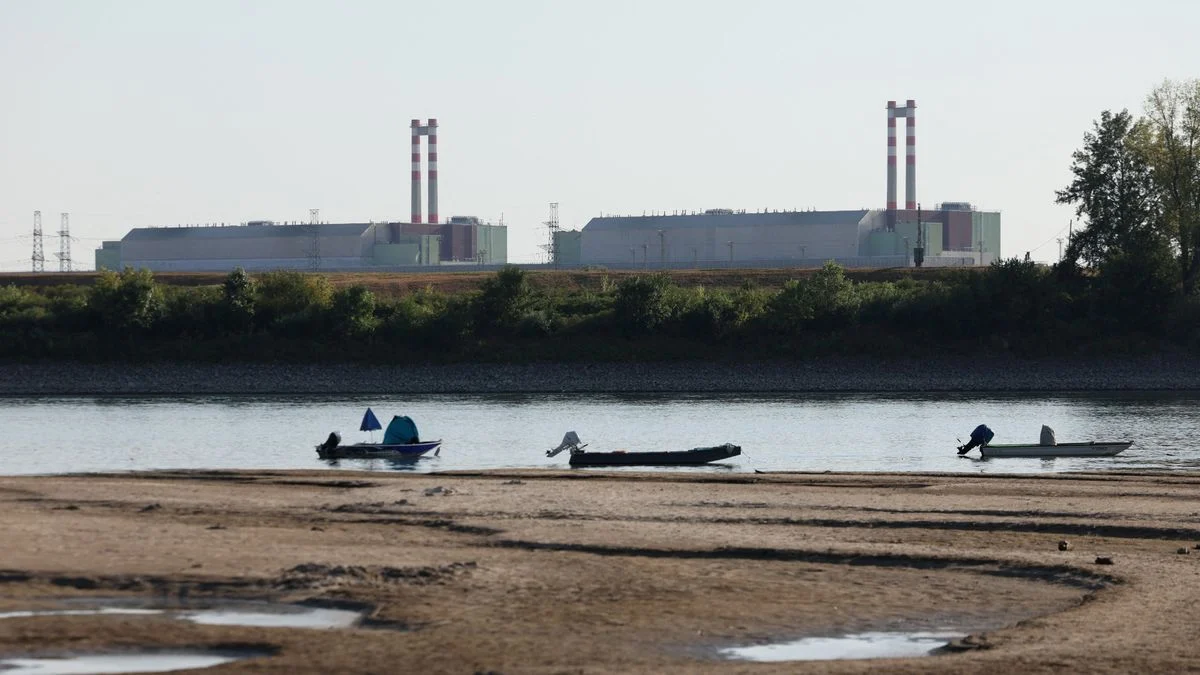
Hungary is facing a critical energy emergency that threatens to paralyze its industrial heart and disrupt daily life across the country. As a result of a prolonged, historic drought that has pushed the Danube River to record-low levels, the Hungarian government is preparing to execute a complete shutdown of its only nuclear power plant, Paks. The facility, which provides approximately 40 percent of the nation’s electricity, is struggling to source the cooling water necessary for safe operations.
Prime Minister Péter Magyar has signaled that the situation is deteriorating rapidly. While initial estimates suggested a potential shutdown early next week, the accelerating decline of the Danube’s water levels has forced engineers to throttle production overnight. This emergency measure, unprecedented in the 44-year history of the Paks plant, represents a profound challenge to Hungary’s national security and economic stability.
Chronology of the Crisis: From Warning to Imminent Shutdown
The crisis did not emerge overnight; it is the culmination of months of severe meteorological drought that has decimated water levels across Central Europe.
- Mid-Week Indicators: Engineers at the Paks facility reported that cooling water intake temperatures and levels were reaching critical thresholds.
- Friday Press Conference: Prime Minister Magyar held a briefing at the Paks site, warning the public that a full shutdown might be necessary by the coming Tuesday or Wednesday.
- Saturday Escalation: In a direct address via social media, Magyar revealed that the situation had worsened faster than anticipated. "The water level of the Danube has continued to fall," he stated, confirming that the plant’s output had been slashed to just 25 percent of its two-gigawatt capacity.
- The Weekend Emergency: As of Saturday, the government is bracing for a total cessation of nuclear energy production by the end of the weekend, effectively removing a massive block of base-load power from the national grid.
Supporting Data: The Anatomy of a Power Vacuum
The scale of the disruption cannot be overstated. The Paks nuclear plant, located approximately 130 kilometers south of Budapest, is the backbone of the Hungarian energy sector. Its four Soviet-era reactors are designed to operate under specific thermodynamic conditions that rely heavily on the constant flow of the Danube.
Current data highlights a "perfect storm" of energy insecurity:
- Nuclear Capacity Loss: The plant is currently operating at only 500 megawatts—a quarter of its 2,000-megawatt nameplate capacity.
- Concurrent Infrastructure Failure: Compounding the nuclear crisis, the country’s largest gas-fired power plant in Százhalombatta has suffered a technical failure, resulting in the loss of an additional 400 megawatts.
- Economic Impact: Mark Radnai, vice-chairman of the Tisza Party, has estimated that the energy crisis could cost the Hungarian economy between 100 and 200 billion forints (roughly 275 to 550 million euros). This figure accounts for the exorbitant cost of importing emergency electricity from neighboring markets that are themselves feeling the strain of the regional heatwave.
Official Responses: Government Mandates and Mitigation Strategies
In response to the looming blackout, the government has moved to implement a series of draconian energy-saving measures designed to prevent a total grid collapse. Prime Minister Magyar has emphasized that while the situation is dire, the government intends to protect the average citizen as long as possible.
The "Last Link" Strategy
"Private households will be the last link in the chain of restrictions," Magyar stated, seeking to reassure a nervous public. However, the burden of the crisis is being shifted squarely onto the industrial and public sectors.
Key measures include:
- Industrial Consumption Curbs: The government is preparing a decree that mandates significant energy reduction for large industrial enterprises. This is in addition to a previously requested 240-megawatt voluntary reduction.
- Sanctions for Non-Compliance: Failure to meet government-mandated energy targets will result in direct financial sanctions. If necessary, grid operators have been authorized to physically disconnect large-scale consumers from the national power supply to protect the system’s overall frequency.
- Public Sector Austerity: Starting Monday, public service employees are required to work from home for the first three days of the week. Companies are strongly encouraged to follow suit.
- Transportation Restrictions: To manage the peak-load demand, freight rail traffic will be suspended for five hours every afternoon.
- Urban "Blackouts": Decorative lighting on public buildings and all non-essential municipal illumination will be deactivated to conserve wattage.
Broader Implications: A Regional Struggle
The drought is not a localized Hungarian phenomenon; it is a systemic threat to the entire Danube basin. Neighboring countries, including Romania, have reported similar challenges, with some power plants forced to reduce output or cease operations entirely. The interdependence of the European electricity grid means that when one nation faces a shortfall, the price of energy imports rises across the continent, creating a ripple effect that touches every consumer.
The Water-Energy Nexus
The crisis has reignited a fierce debate about the sustainability of current energy infrastructure in a changing climate. The reliance on river water for thermal and nuclear power cooling is increasingly being viewed as a strategic vulnerability.
"Every drop of water counts," Magyar reminded the public, extending the conservation call to include residential water usage in drought-stricken regions. The government’s call for extreme frugality is as much a message of desperation as it is one of necessary policy.
The Outlook: How Long Will the Darkness Last?
The most alarming aspect of the current situation is the lack of a clear timeline for a return to normalcy. Prime Minister Magyar has warned that the Paks plant could potentially remain offline for weeks. Meteorological forecasts offer little hope for immediate relief, with no significant rainfall predicted for the Danube’s catchment areas in the near term.
The government’s primary goal is now the stabilization of the national grid. By forcing industries to shutter and restricting the public sector, the state hopes to avoid the one scenario it fears most: a nationwide, rolling blackout that could cause irreparable damage to critical infrastructure.
As Hungary navigates this unprecedented crisis, the Paks shutdown serves as a stark reminder of the limits of modern industrial planning. When the environment—the very source of the water required to cool the reactors—shifts outside of historical norms, the technological safeguards of the 20th century find themselves pushed to the point of failure.
For the Hungarian people, the coming week will be a test of endurance. With the government’s emergency decrees taking effect on Monday, the nation will effectively enter a period of "soft rationing." Whether these measures will be sufficient to navigate the next few weeks depends entirely on the resilience of the grid, the compliance of industrial sectors, and, perhaps most importantly, the mercy of the weather.
The situation remains fluid. Citizens are advised to monitor government channels for daily updates as the administration balances the cold arithmetic of electricity supply against the essential needs of a functioning modern society. The crisis is not merely a matter of power; it is a test of national resolve in an era of climatic volatility.