By Sports Editorial Staff
October 10, 2026
In a display of defensive resilience and clinical counter-attacking, the Augsburger Panther secured a convincing 3-0 victory over the Fischtown Pinguins on Thursday night. The encounter, which remained deadlocked for over 40 minutes, ultimately swung in favor of the hosts as they capitalized on a lapse in the Bremerhaven defense and exploited the Pinguins’ desperate late-game gamble. For the Pinguins, the result serves as a stark reminder of the unforgiving nature of the DEL (Deutsche Eishockey Liga) as they pivot their focus toward a daunting weekend fixture against the Eisbären Berlin.
Main Facts: A Night of Frustration for the Pinguins
The match held at the Curt-Frenzel-Stadion was characterized by a chess-like battle between two disciplined defensive units. For the first two periods, neither side could find the back of the net, thanks largely to exceptional goaltending at both ends of the rink.
The turning point occurred at the 43:00 mark, when D.J. Busdeker broke the stalemate, providing the spark the Panthers needed to gain momentum. As the clock ticked down and the Pinguins threw their full offensive weight forward in a bid for an equalizer, the structure of the visitors began to fray. Augsburg capitalized on this vulnerability, adding two late goals in the final minute to seal a victory that, while appearing lopsided on the scoreboard, was a hard-fought contest for the majority of the evening.
Chronological Analysis of the Match
The Stalemate: A Goaltending Clinic (Periods 1 & 2)
From the opening puck drop, the game was defined by high-intensity neutral zone play. The Fischtown Pinguins, known for their aggressive forechecking, found themselves stifled by a well-organized Augsburg defensive shell.
Early in the first period, the Pinguins were forced onto their heels. In the 4th minute, goalkeeper Kristers Gudlevskis was called into immediate action, executing a spectacular save against Fabrizio Pilu to keep the scoreline level. The pressure remained constant; in the 15th minute, Gudlevskis was again forced to intervene, this time using his mask to deflect a dangerous shot from Moritz Elias.
Despite the defensive stability provided by Gudlevskis, the Pinguins struggled to generate high-danger scoring chances. Their offensive transitions were frequently disrupted by the Panthers’ disciplined back-checking. By the end of the first period, the score remained 0-0—a testament to the effectiveness of both defensive systems rather than a lack of offensive ambition.
The second period followed a similar narrative. The Pinguins attempted to elevate their tempo, leading to a golden opportunity in the 32nd minute when Max Görtz found himself in a prime position. However, Augsburg netminder Tobias Ancicka proved equal to the task, denying Görtz at point-blank range and maintaining the deadlock.
The Breakthrough: Busdeker Shifts the Momentum
The rhythm of the game shifted drastically just three minutes into the final frame. D.J. Busdeker, finding space in the offensive zone, unleashed a shot that managed to bypass Gudlevskis. While the shot was well-placed, it was a moment the usually reliable Latvian goaltender would likely want back, as it squeezed through his defenses to give Augsburg the 1-0 lead.
The goal forced the Pinguins to abandon their conservative posture. They began pinching their defensemen deeper into the zone, desperate to regain parity. However, this shift in tactics left them exposed to the quick-strike capabilities of the Panthers’ forward line.
The Final Collapse: Empty Net Disasters
With time winding down, the Pinguins’ coaching staff made the high-risk decision to pull Gudlevskis for an extra attacker. The move, intended to force an equalizer, proved fatal.
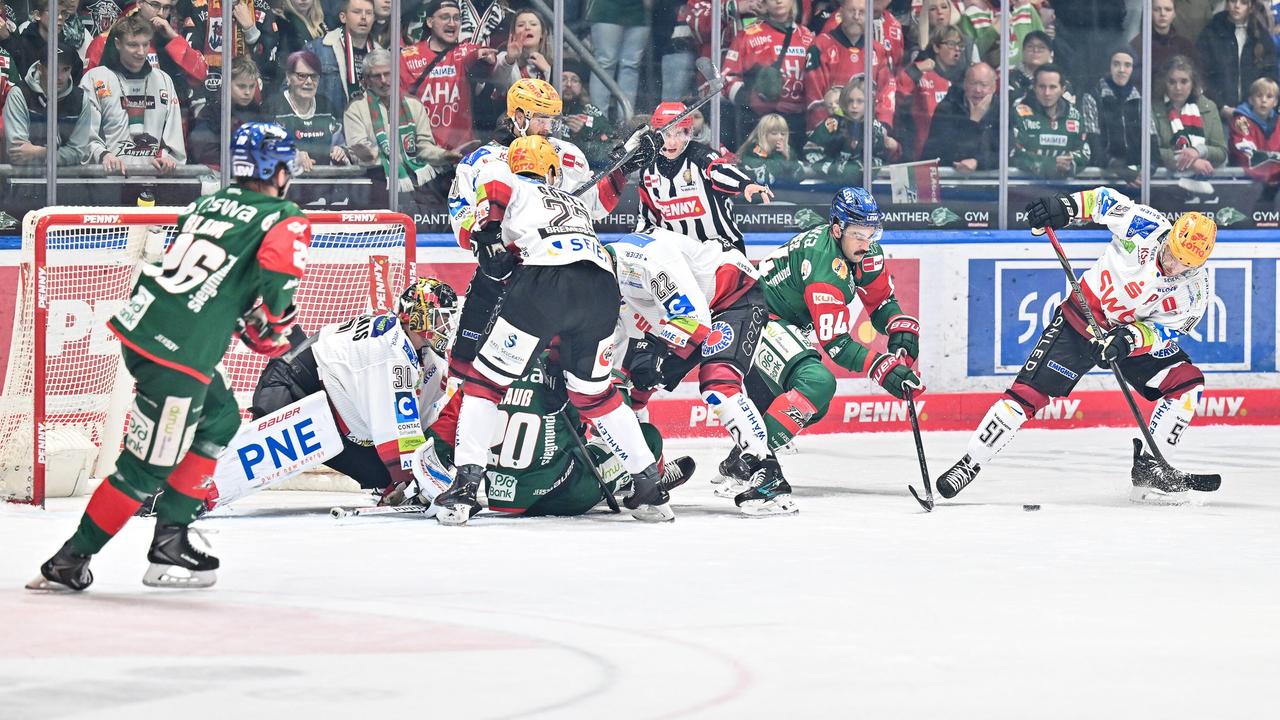
With just 40.6 seconds remaining, Cameron Wright intercepted a loose puck and buried it into the empty net to double the lead. The psychological blow was immediate. With the Pinguins deflated, the Panthers seized one final opportunity, as Alexander Blank added a third goal, turning a narrow 1-0 deficit into a comprehensive 3-0 defeat.
Supporting Data and Technical Observations
The statistical reality of the game highlights the Pinguins’ inability to convert their possession into high-probability scoring events.
- Shot Efficiency: While the Pinguins dominated long stretches of zone time, they struggled to penetrate the "slot" area. Ancicka’s performance in the Augsburg net was the standout defensive metric of the night, as he recorded a shutout against a team that typically thrives on offensive volume.
- Special Teams: The game was relatively clean, with both teams showing high levels of discipline. However, the lack of power-play opportunities for the Pinguins meant they could not rely on their secondary units to break the deadlock.
- Goaltending Comparison: Gudlevskis finished the night with a respectable save percentage until the final minutes, but the disparity in the final 60 seconds of play proved that the Pinguins were unable to manage the transition game when pushing for the tie.
Official Responses and Tactical Implications
Following the match, the atmosphere in the Pinguins’ dressing room was one of quiet reflection. While management has not yet issued a formal statement, analysts suggest that the loss highlights a growing need for greater efficiency in the final third.
"We played a game of margins," noted one post-game commentator. "When you face a team like Augsburg that defends with such desperation, you have to be clinical. The Pinguins had their chances, but they couldn’t force the puck past Ancicka. Once they pulled the goalie, they were essentially playing a game of Russian Roulette, and it didn’t pay off."
The implication for the coaching staff is clear: the team must improve its offensive creativity against low-block defenses. Furthermore, the decision to pull the goalie early is a tactical point that will likely be debated in the coming days, though it is a standard practice in the modern DEL when trailing by a single goal in the dying minutes.
Future Outlook: The Road Ahead
The sting of this defeat will have to be forgotten quickly. The Pinguins are scheduled to return to the ice on Sunday at 16:30 for a massive showdown against the Eisbären Berlin.
Berlin, a perennial powerhouse, presents a completely different set of challenges compared to Augsburg. The Pinguins will need to refine their defensive structure and, more importantly, sharpen their finishing if they hope to secure points against such high-caliber opposition.
Why the Berlin Game is a "Must-Win"
- Psychological Momentum: Recovering from a shutout loss is vital to team morale. A strong performance against Berlin would prove that Thursday’s loss was an anomaly rather than a trend.
- League Positioning: With the mid-season point approaching, every point in the table is precious. Losing back-to-back games against bottom-to-mid-table and top-tier opponents would significantly hinder the Pinguins’ playoff ambitions.
- Defensive Discipline: The Pinguins cannot afford the defensive lapses they displayed in the final two minutes against Augsburg when facing the high-octane offense of the Eisbären.
As the team travels back to prepare, the narrative remains focused on resilience. The Fischtown Pinguins have proven in past seasons that they are capable of rebounding from adversity. Whether they can translate that resilience into goals on Sunday remains the most significant question for the fans in Bremerhaven.
Concluding Thoughts
The 3-0 loss in Augsburg is a reality check. In a league as competitive as the DEL, there is no room for complacency. While the Pinguins demonstrated defensive grit for the vast majority of the match, the game was ultimately lost in the margins—a single goal, a single defensive lapse, and a final gamble that failed to materialize.
The focus now shifts to Sunday. The Pinguins know that against a team like Berlin, they will not get as many opportunities to keep the game level. They must capitalize on every chance and maintain their focus for all 60 minutes. As the team looks to move forward, the lessons from Augsburg—patience, efficiency, and defensive composure—will be the cornerstones of their preparation for the week ahead.