
Executive Summary
In the wake of a horrific Islamist terror attack targeting the Christopher Street Day (CSD) parade in Berlin, the queer community in Hamburg has declared its unwavering commitment to visibility and solidarity. Organizers of the upcoming Hamburg Pride events have announced that the demonstration will proceed as planned, emphasizing that the community refuses to be intimidated by violence. As the nation grapples with the fallout of the attack—which left one woman dead and over 30 injured—the Hamburg Pride Week organizers have framed their upcoming march as a defiant stand for safety, dignity, and a future free from fear.
The Berlin Tragedy: A Chronology of Terror
The sense of urgency surrounding the upcoming events in Hamburg is inextricably linked to the carnage witnessed in Berlin. On the day of the Berlin CSD, the festivities—a celebration of diversity and human rights—were shattered by a targeted act of Islamist extremism.
The perpetrator, identified as 21-year-old Abdul Ballout, orchestrated a multi-pronged assault. Utilizing a vehicle, Ballout drove into crowds of parade-goers, inflicting mass casualties. Reports indicate that the assailant further escalated the violence by deploying a machete to attack those in the vicinity. The chaos resulted in the tragic death of one woman and left 31 other individuals with varying degrees of injury.
The response from law enforcement was immediate and intense. Following a frantic manhunt, police successfully tracked Ballout to a Kleingarten (allotment garden) facility. In a final confrontation on Sunday evening, police officers engaged the suspect, ultimately shooting him dead.
Pre-Attack Surveillance and Intelligence Failures
Subsequent investigations have revealed that Ballout was not an unknown entity to German authorities. He was already a person of interest to both police and the judiciary due to his documented connections to Islamist terrorist networks.
Revelations have since emerged that security agencies were monitoring Ballout on the very day of the attack. According to information obtained by Der Spiegel, the Berlin State Office of Criminal Investigation (LKA) had installed a covert camera targeting the residence in Berlin-Tiergarten where Ballout lived. Footage captured the suspect leaving his home hours before he embarked on his lethal mission. These revelations have ignited a fierce debate regarding the efficacy of German counter-terrorism surveillance and the systemic failures that allowed a known threat to carry out a premeditated massacre against a vulnerable minority group.
Hamburg Pride: Solidarity in the Face of Fear
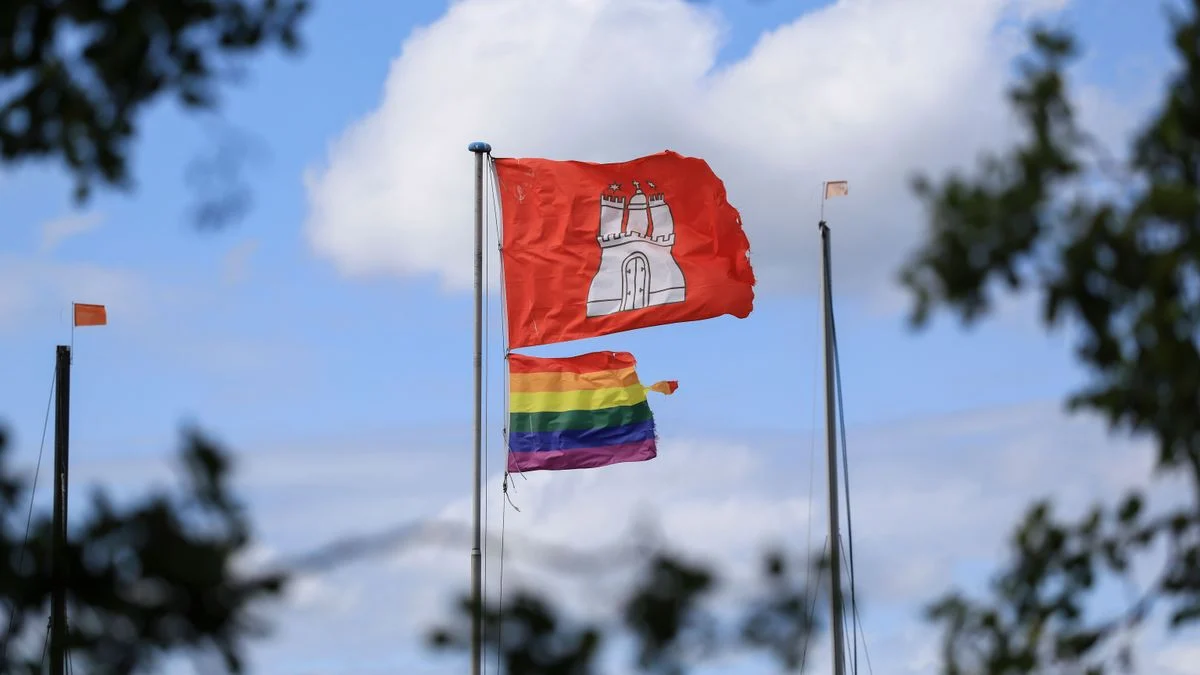
Despite the palpable tension following the Berlin incident, the Pride Week association in Hamburg has sent a clear message: the movement will not be silenced.
"The queer community wants to provide strength to one another," stated association spokesperson Manuel Opitz. The organizers emphasize that while the threat is real, withdrawing from the public sphere would represent a victory for the ideologies that seek to oppress them. The march, which is set to snake through the St. George district toward the city center, will serve as a poignant display of resilience.
The Logistics of Defiance
The demonstration is expected to be one of the largest in recent memory, with over 40 heavy-duty trucks registered to participate. The procession will feature a diverse coalition, including advocacy groups, political parties, private corporations, and various religious congregations, all united under a single, powerful banner: “Solidarisch queer. Haltung zeigen – für eine Zukunft ohne Angst!” (Solidarity Queer. Showing Backbone – for a Future Without Fear!).
In an act of cross-city mourning and solidarity, the CSD association from Berlin will also be present with a dedicated float. In a somber departure from the typical vibrant aesthetic of Pride, participants on this float have committed to wearing dark clothing, signifying the mourning of their lost community member and the gravity of the current political climate.
Official Responses and Political Support
The resolve of the organizers has been bolstered by significant support from Germany’s political establishment. Senior figures from the Social Democratic Party (SPD) and the Green Party have announced their intention to participate, signaling that the protection of queer rights is a matter of national security and democratic value.
Notable attendees scheduled to march include:
- Matthias Miersch, SPD parliamentary group leader.
- Tim Klüssendorf, SPD General Secretary.
- Ricarda Lang, former chair of the Green Party.
Their presence is intended to provide a protective layer of legitimacy and state support, reinforcing the idea that an attack on the queer community is an attack on the foundational values of the German republic.
The Psychological and Societal Implications
The attack in Berlin has forced a long-overdue national conversation about the safety of the LGBTQ+ community in Germany. While political leaders offer solidarity, the mood on the ground remains complex. Within the community, the response is a volatile mixture of shock, grief, and, increasingly, righteous anger.
A Community at a Crossroads
"We are in safety, but we are not doing well," is the sentiment echoed by many in the aftermath. The question now dominating the discourse is: what comes next?
The community is currently fractured over how to proceed. Some advocate for a heightened security presence at all future public events, arguing that the state has a duty to protect its citizens from the rise of Islamist extremism. Others, however, fear that increased militarization of Pride—an event traditionally rooted in the struggle against police brutality and systemic oppression—could alienate the very people it seeks to empower.
The discussion also touches on the broader failure to address the intersection of homophobia and extremist ideology. Critics argue that for too long, the radicalization of individuals like Ballout has been treated as a general security issue, with the specific threats posed to queer, trans, and gender-nonconforming individuals being overlooked or treated as secondary.
Looking Ahead: The Future of Pride
The Hamburg Pride march is no longer merely a celebration; it has transformed into a political statement of survival. The organizers face the daunting task of maintaining a celebratory spirit while acknowledging the mourning of a comrade.
The security apparatus in Hamburg has already announced that they are taking the threat levels seriously. While details of the security plan remain classified, it is expected that there will be a visible police presence, barricades to prevent vehicular incursions, and strict monitoring of the route.
Yet, for those who will march, the ultimate defense remains the strength of the collective. By occupying the streets of St. Georg, the thousands of participants intend to show that the queer movement is not a group of individuals who can be intimidated into hiding, but a robust and integral part of German society.
As the marchers prepare to head out, their message is clear: the ideologies of hate that fueled the Berlin attack have failed to break the spirit of the community. Instead, they have forged a stronger, more unified front that refuses to be silenced by the threat of violence. The upcoming events in Hamburg will not only be a memorial for those lost but a declaration that the future, as the motto suggests, must be one without fear.
Further Context
For those interested in exploring the deeper sociological impact of the Berlin attack on the German queer landscape, detailed analysis on the ongoing debate regarding security measures versus the preservation of the "protest" character of CSD can be found in the latest reports from national media outlets.
As of this writing, authorities continue to investigate the extent of the network surrounding Abdul Ballout, focusing on whether other accomplices remain at large or if the attack was an isolated incident of "lone-wolf" radicalization.