

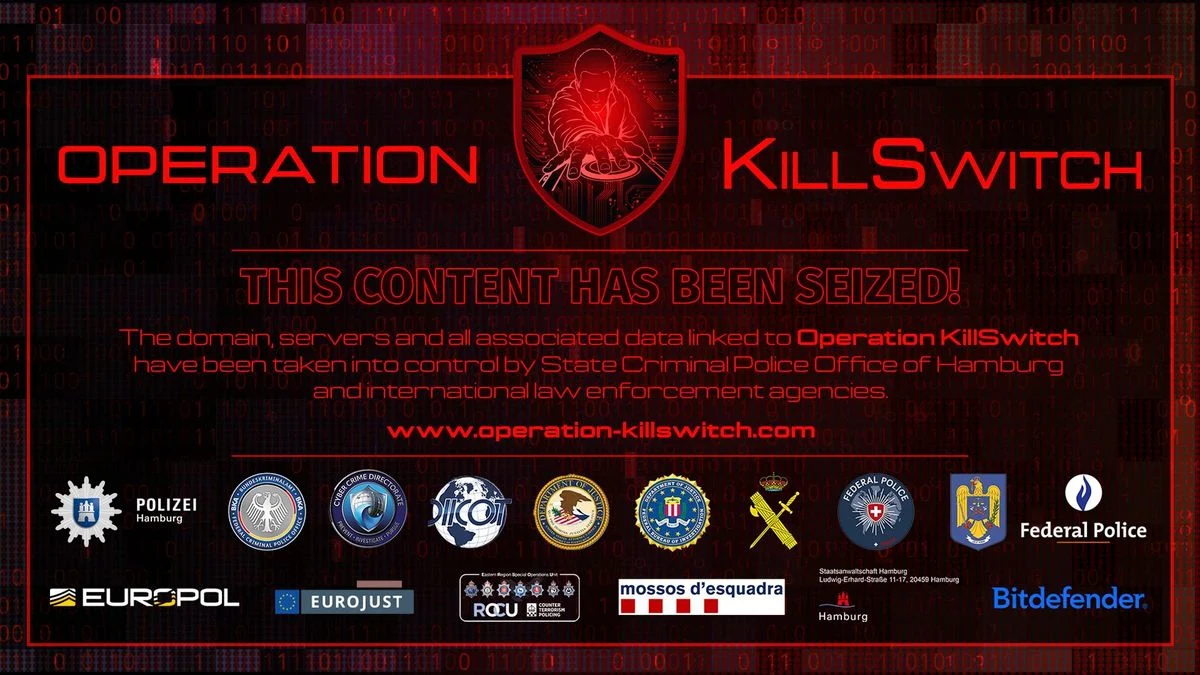
In a striking revelation that has sent shockwaves through international cybersecurity circles, German authorities have announced the successful dismantling of "KillSec," a sophisticated ransomware syndicate allegedly spearheaded by a mere 16-year-old youth. The operation, coordinated by the Hamburg State Criminal Police (Landeskriminalamt) and the Hamburg Public Prosecutor’s Office, marks a significant turning point in the battle against juvenile cybercrime. With the help of law enforcement agencies from eight European countries and the United States, the authorities have managed to neutralize a criminal infrastructure responsible for approximately 1,000 global data theft attacks.
The Anatomy of the Operation
The investigation, which gained significant momentum at the beginning of 2025, culminated in a multi-national crackdown. Authorities executed raids across Greece, Romania, Spain, and the United Kingdom, seizing servers, end-user devices, and significant digital and financial assets.
At the center of this web was a 16-year-old German national who, according to investigators, acted as the mastermind behind the group’s operations. A second primary suspect, also a juvenile at the time of the offenses, was identified alongside other key personnel responsible for negotiation and distribution. The group’s business model was as predatory as it was modern: they specialized in infiltrating sensitive databases, exfiltrating vast quantities of data, and holding it hostage. If the victimized organization refused to pay a hefty ransom, the group would publish the stolen data on their dedicated "leak site," effectively weaponizing private information to force compliance.
Chronology of a Digital Siege
The "KillSec" group began its activities in early 2024. Despite their relatively short lifespan, their impact was disproportionately high. Utilizing advanced technological tools, they targeted a diverse range of organizations worldwide, with at least 70 of their known attacks occurring within Germany.
- Early 2024: The "KillSec" group establishes its ransomware infrastructure, integrating AI-driven tools to identify and vet high-value targets.
- Late 2024: As the frequency of attacks increases, Hamburg investigators launch a coordinated international probe.
- Early 2025: The investigation intensifies. Hamburg authorities successfully gain control of the "KillSec" leak site, effectively severing the group’s primary channel for extortion and publicizing their crimes.
- Mid-2025: The "Operation Killswitch" culminates in the arrest of three main suspects and the seizure of infrastructure across multiple nations, securing over 110 terabytes of data that had been targeted by the group.
Leveraging Artificial Intelligence for Extortion
One of the most alarming aspects of the KillSec case is the group’s early and effective adoption of Artificial Intelligence. Unlike traditional hackers who might rely on manual vulnerability scanning, KillSec leveraged AI to automate the identification of potential victims. By analyzing publicly available data and infrastructure weaknesses, the group could prioritize targets that were most likely to pay substantial ransoms to keep their sensitive data out of the public eye.
This shift toward "AI-assisted cybercrime" represents a dangerous escalation in the threat landscape. It allows smaller, younger groups to achieve a level of efficiency and scale that was previously reserved for nation-state actors or highly organized, multi-national criminal cartels. The 110 terabytes of data recovered by the authorities highlight the sheer scale of the information cache these youths had managed to accumulate—a treasure trove of personal, financial, and institutional records that would have been devastating if leaked in its entirety.
Official Responses and Strategic Significance
The success of this operation was underscored by the direct involvement of Hamburg’s Senator of the Interior, Andy Grote (SPD). Emphasizing the significance of the operation, Grote noted that this is the second major international success for the Hamburg LKA in just a few months, following "Operation Medusa," which targeted sexual violence against sedated persons.
"This operation sends a clear signal to everyone who thinks they can hide in the perceived anonymity of the internet while committing the most serious crimes," Grote stated during the press conference. He highlighted that the collaborative nature of the effort—bridging the gap between the Hamburg authorities and international partners in the US and Europe—is the new blueprint for effective digital policing.
Law enforcement agencies are now in the complex process of analyzing the seized servers and devices to identify further victims and potentially prevent future breaches that might have been automated by the group’s infrastructure.
Implications for Modern Cybersecurity
The KillSec case serves as a grim reminder that the barrier to entry for cyber-terrorism is plummeting. When teenagers can lead global syndicates and generate massive financial returns through extortion, the traditional perceptions of "cyber-criminals" as clandestine, highly experienced professional hackers must be recalibrated.
The Threat of "Child Prodigy" Hackers
The fact that the primary architects of this scheme were juveniles at the time of their offenses raises critical questions for society, the education system, and parents. It highlights a generation that is not only "digitally native" but also technologically empowered to the point of danger. The ease with which these individuals accessed and exploited global infrastructure underscores a lack of baseline security in many of the targeted organizations.
The Impact on Data Privacy
The victims of KillSec range from private businesses to public entities. While the names of the specific victims have not been fully disclosed to protect ongoing investigations, the pattern of their attacks suggests a complete disregard for the privacy of the individuals whose data was stolen. The threat of a "data dump"—where sensitive files are released on the dark web for anyone to download—has become the primary weapon of the 21st-century digital criminal.
What Businesses and Citizens Should Do
For organizations, the KillSec case is a warning to bolster defenses against ransomware. Essential steps include:
- Regular Backups: Ensuring data is backed up in an immutable, offline format.
- Endpoint Protection: Utilizing advanced AI-driven security tools to counteract those used by attackers.
- Data Minimization: Not holding onto sensitive information that is no longer needed.
For citizens, the threat of data leaks is an ever-present reality. As seen in recent high-profile cases, such as the hack of the Berlin city administration, the fallout of a data breach can last for years. If individuals suspect their data has been compromised, they are urged to:
- Monitor Financial Accounts: Watch for unauthorized transactions.
- Change Credentials: Update passwords immediately and enable multi-factor authentication (MFA) everywhere.
- Be Vigilant for Phishing: Attackers often use stolen data to create highly convincing "spear-phishing" emails to gain further access to private accounts.
Conclusion: A New Era of Policing
The dismantling of KillSec is a victory, but it is also a harbinger of the challenges ahead. As the tools for cybercrime become more automated and accessible, the ability of law enforcement to stay ahead of the curve will depend entirely on the speed of international cooperation.
The Hamburg-led operation proves that when police agencies across borders share intelligence, intelligence-sharing platforms, and legal resources, even the most elusive digital shadows can be brought into the light. However, the youth of the perpetrators serves as a sobering reminder that the digital world is a playground that can turn into a battlefield in an instant. For the 16-year-old mastermind and his accomplices, the "anonymity" of the internet has finally dissolved, replaced by the stark reality of criminal accountability. As the legal proceedings move forward, the global cybersecurity community will be watching closely, analyzing the wreckage of KillSec to build a more resilient digital future.





















