The atmosphere in the working-class neighborhood of Vallecas reached a boiling point on Saturday afternoon. In an unprecedented turn of events, the La Liga clash between Rayo Vallecano and Athletic Bilbao was definitively abandoned, as supporters of the home side turned their ire against the club’s leadership, transforming the pitch into a stage for a surreal and disruptive protest.
What was supposed to be a celebratory return to their historic home ground—following a period of exile due to stadium infrastructure issues—quickly devolved into a spectacle of defiance. The match, which stood at 0-0 at the time of the final whistle, now serves as a grim symbol of the deepening rift between the fanbase and the club’s hierarchy, led by President Raúl Martín Presa.
A Chronology of the Disruption: From Paper Planes to Abandonment
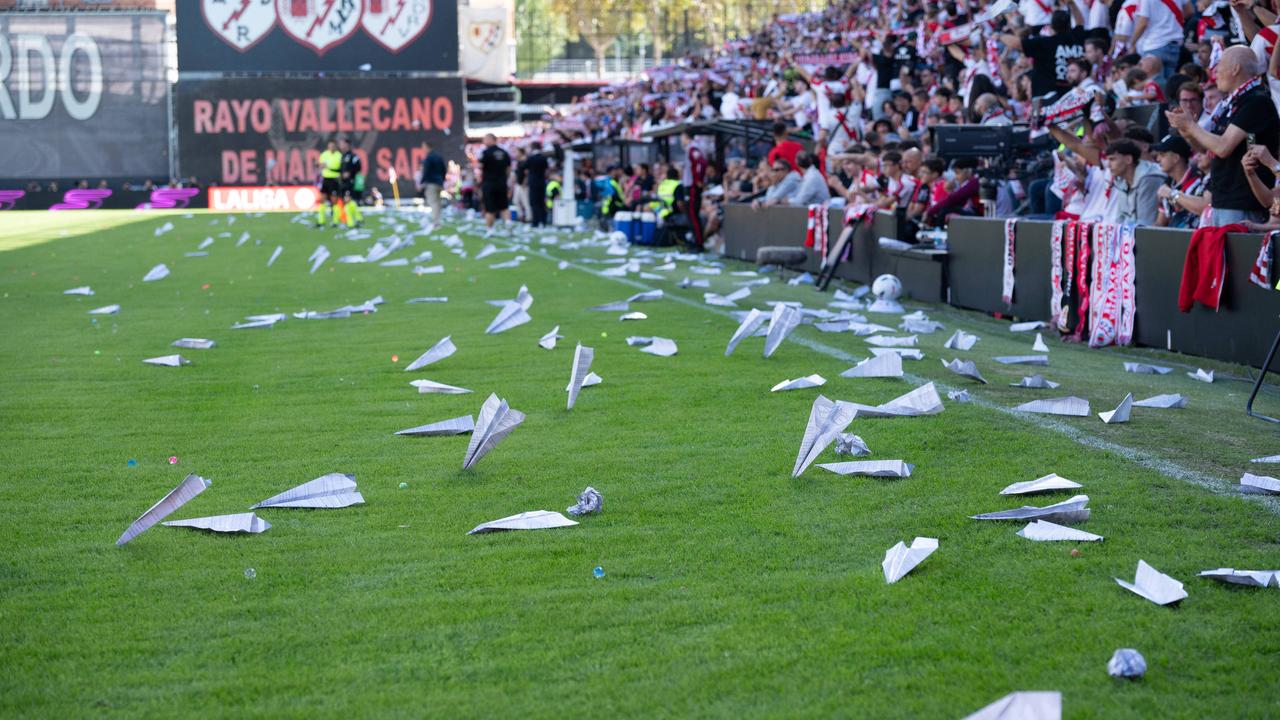
The protest was meticulously organized, yet visually whimsical, belying the serious frustration simmering beneath the surface. From the very start, the air inside the Estadio de Vallecas felt heavy with tension. By the 13th minute, the first wave of projectiles descended from the stands.
Initially, the referee, José Sánchez Martínez, was met with a flurry of paper planes and rubber balls. While seemingly harmless, the sheer volume of debris created an impossible playing surface. The match officials acted in accordance with protocol, pausing play and ordering the players to the sanctuary of the dressing rooms.
However, the break provided no cooling-off period. Upon returning to the pitch, the fans resumed their barrage with even greater intensity. It became clear that this was not a momentary outburst, but a sustained campaign of civil disobedience. Recognizing that the safety of the players could not be guaranteed and that the match could not proceed under such conditions, Sánchez Martínez took the definitive step to abandon the fixture entirely.
The Roots of Dissent: A President Under Siege
At the center of this firestorm is Raúl Martín Presa. The Rayo Vallecano president has long been a polarizing figure, but the current grievances go beyond mere tactical disagreements or transfer market activity. The core of the anger stems from what fans perceive as a systematic neglect of the club’s heritage and physical assets.
For years, the Estadio de Vallecas—a stadium known for its intimacy and proximity to the pitch—has been in a state of visible decay. Supporters argue that the club’s leadership has failed to invest in the necessary infrastructure, leading to a venue that many now consider unfit for top-flight football.
The situation recently hit a breaking point. Rayo Vallecano was forced to play their first three home matches of the season at the Butarque stadium in Leganés, as the local government identified "significant safety deficiencies" at the Vallecas home ground. This forced exile was viewed by the fanbase as the ultimate humiliation and a clear indication of administrative incompetence. While the stadium has finally reopened its gates, the damage to the relationship between the fans and the front office appears, for the moment, to be irreparable.
The Terzic Factor: An Unfortunate Debut for a High-Profile Appointment
The abandonment of the match also carries significant sporting implications, particularly for Athletic Bilbao. The Basque club entered this season with high expectations, bolstered by the appointment of Edin Terzic as head coach. The former Borussia Dortmund manager, who earned widespread acclaim for his emotional connection to the "Yellow Wall" in Germany, faces a baptism of fire in Spain.
For Terzic, Saturday was meant to be a test of his team’s resolve against a tenacious Rayo side. Instead, he found himself standing on the touchline, watching his players navigate a shower of toys and paper. This disruption is a major setback for Bilbao’s early-season momentum. Integrating a new tactical philosophy requires stability, and a match abandoned in such a fashion provides zero data for the coaching staff to analyze. Terzic, known for his pragmatic and calm demeanor, was seen in consultation with officials throughout the ordeal, clearly frustrated that his side’s professional preparation had been undermined by off-pitch politics.
Infrastructure and Investment: The Broader Context of Spanish Football
The crisis at Rayo Vallecano sheds light on a larger conversation regarding the state of football infrastructure in Spain. While the giants of La Liga—Real Madrid and Barcelona—have poured billions into state-of-the-art stadium renovations, smaller clubs like Rayo are often left to grapple with aging facilities that struggle to meet the increasingly stringent requirements of modern professional leagues.
Critics of the current system point to the financial disparity in La Liga, where revenue sharing and budget caps make it difficult for clubs to balance competitive spending on the squad with the massive capital expenditure required for stadium maintenance. The Vallecas situation is a cautionary tale: when a club loses the trust of its local community, the stadium stops being a fortress and starts becoming a battleground.
Official Responses and Next Steps
In the aftermath of the abandonment, the league authorities have been tight-lipped, though a formal investigation is all but guaranteed. La Liga’s regulatory committee will have to decide on the outcome of the match. While the standard procedure for an abandoned game due to fan interference often results in a forfeit loss for the home team, the unique circumstances—specifically the safety concerns and the nature of the protest—may lead to a protracted legal and administrative review.
Rayo Vallecano’s management has yet to release a detailed statement addressing the specific demands of the fans, though sources close to the club indicate that Presa is preparing a formal response. Meanwhile, the supporters’ groups have vowed to continue their protests, signaling that the match against Bilbao was merely the beginning of a larger movement aimed at bringing about a change in the club’s ownership or governance structure.
The Implications for La Liga
The incident in Madrid raises uncomfortable questions for the Spanish Football Federation. Can a top-flight league allow its fixtures to be dictated by the agendas of fan groups? Conversely, how much power should a fanbase have in holding leadership accountable for the decline of their club?
The images of the paper planes—symbols of a lighthearted childhood pastime—cluttering the hallowed grass of a professional pitch are deeply ironic. They represent a fanbase that feels their club has lost its way, grounded in the frustration of a community that feels ignored.
As the dust settles on the Estadio de Vallecas, the ripple effects will be felt across the league. Athletic Bilbao must now find a way to maintain focus amidst the chaos, while Rayo Vallecano faces an existential crisis that extends far beyond the 90 minutes of football that were never played. Whether this protest serves as a catalyst for meaningful change or merely as a spark for further instability remains to be seen. One thing is certain: the eyes of the footballing world will be fixed on Madrid, waiting to see how the authorities navigate this volatile intersection of passion, protest, and professional sport.