

As the 2026 pre-season concludes, Borussia Dortmund finds itself at a critical juncture. Following a lucrative but disruptive tour of Japan, the BVB hierarchy is working tirelessly to finalize a squad capable of mounting a serious title challenge. With new tactical directives under head coach Niko Kovač and a strategic overhaul of the roster, the club is betting big on youth and high-ceiling talent to bridge the distance to league leaders Bayern Munich.
1. Main Facts: A Club in Motion
The current atmosphere at Signal Iduna Park is one of calculated ambition. Borussia Dortmund enters the new campaign with a clear mandate: to dismantle the status quo that has seen Bayern Munich dominate the domestic landscape.
The club’s recent seven-day tour of Japan, while financially rewarding—bringing in approximately €5 million—has highlighted the growing pains of a team in transition. The professional squad is currently integrating high-profile new signings and returning national team players, but the ripple effects of the club’s global commercial ambitions were felt acutely back home. The U19 squad, stripped of six key players for the Asian tour, suffered a premature 3-4 defeat to Holstein Kiel in the first round of the DFB-Pokal.
While the loss serves as a "collateral damage" narrative in the eyes of management, it underscores the rigid prioritization of the first team. The objective is singular: winning at all costs, even if the "beautiful football" traditionally associated with Dortmund is momentarily sacrificed for a more pragmatic, results-oriented approach.
2. Chronology of the Summer Window
The summer of 2026 has been defined by a series of decisive, if somewhat ruthless, personnel changes.
- The Early Exit Phase: The club initiated a radical "cleansing" of the squad, parting ways with established names. Julian Brandt and Niklas Süle were deemed surplus to requirements, signaling a departure from the previous tactical era. The high-profile sale of Karim Adeyemi to FC Barcelona provided the financial fuel necessary to reinvest in the squad’s future.
- The Asian Expedition: In late July, the first team traveled to Japan. The trip was designed to bolster the club’s international brand, but it forced head coach Niko Kovač to navigate training sessions with a fragmented group.
- The Integration Phase: As of early August, the team has returned to Germany. The focus has shifted toward blending the new tactical systems with the arrival of international players who were granted extended leave following summer tournaments.
- The Ongoing Pursuit: As the transfer deadline looms, the club is locked in complex negotiations to replace the attacking void left by Adeyemi, with FC Köln’s Said El Mala emerging as the primary target.
3. Supporting Data: The Investment in Potential
Dortmund’s transfer strategy this season reflects a shift toward acquiring high-potential, physically elite players. The club has committed substantial capital to secure two young prospects who they believe will be the cornerstones of the next great BVB side.
The Midfield Architect: Konstantinos Karetsas
The arrival of 18-year-old Konstantinos Karetsas from KRC Genk has been met with significant excitement. A playmaker with the refined technical ability rarely seen at his age, Karetsas represents a €30 million investment. The club views him as the successor to the creative roles vacated by the summer departures.
The Defensive Powerhouse: Joane Gadou
Perhaps more intriguing is the acquisition of 19-year-old center-back Joane Gadou. Recruited from RB Salzburg for a fee in the region of €20 million, the former PSG academy graduate is a physical anomaly. Standing at 1.95 meters (6’5”), Gadou combines his imposing stature with top-tier speed—reportedly clocking over 34 km/h in top-speed sprints. His defensive metrics in Austria were stellar, characterized by an exceptionally high win-rate in duals achieved without the need for tactical fouling, a testament to his positioning and intelligence.
4. Official Responses and Tactical Vision
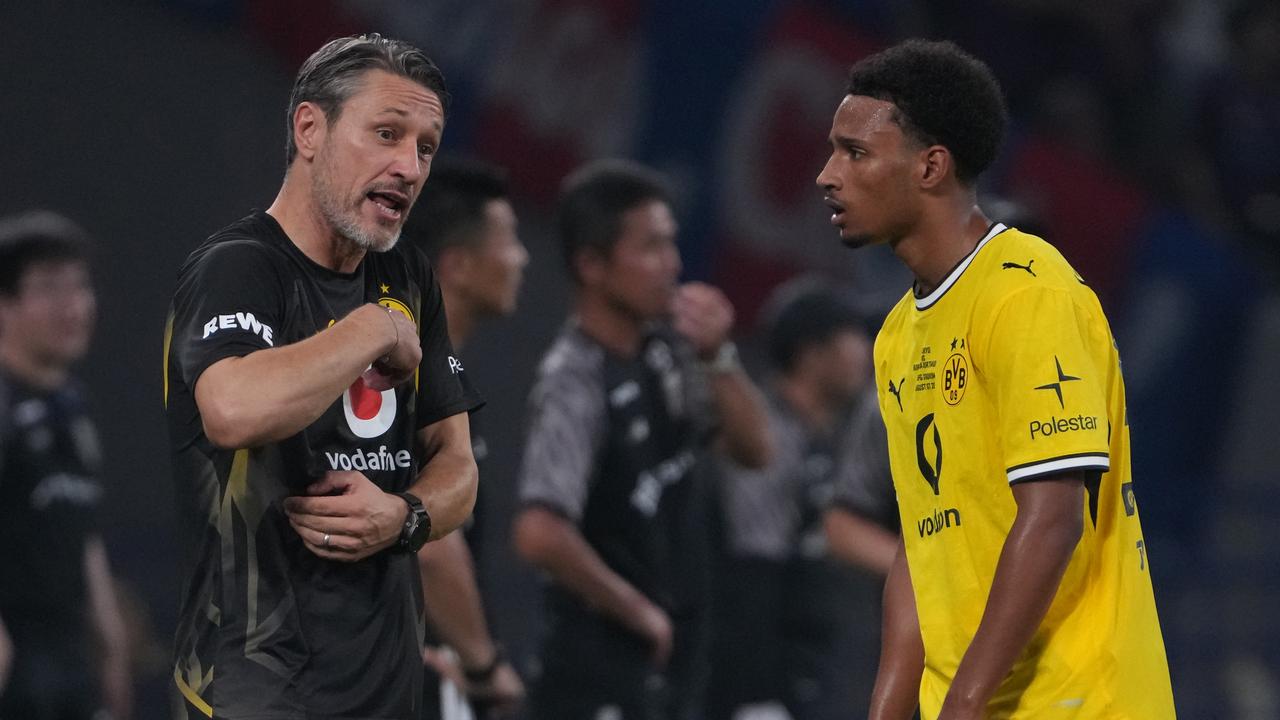
Head coach Niko Kovač has been remarkably transparent about his philosophy, emphasizing that the club’s identity for the 2026/27 season will be forged in the fire of competition rather than aesthetic purity.
Kovač on Philosophy
"We are confident that we will assemble a strong, competitive squad for the upcoming season," Kovač stated during a press briefing in Tokyo. "We don’t always have to play beautiful football. We want to win; that is the ultimate priority. Everything else comes second."
Ole Book on Market Realities
Sporting Director Ole Book, tasked with the delicate balance of replacing stars while maintaining fiscal responsibility, acknowledged the frustration surrounding the missing piece in the attack. "Naturally, we would have preferred to have signed an attacking player by now," Book admitted. "But at the end of the day, you have to respect the laws of the market. We are working diligently, and we will get it done."
5. The "El Mala" Saga: A Strategic Impasse
The most compelling subplot of the final weeks of the window is the pursuit of Said El Mala. The young star is highly sought after, with FC Köln demanding a valuation near €50 million. Dortmund, maintaining a disciplined approach to their internal salary and transfer caps, has reportedly set a ceiling of €30 million.
Despite the gap in valuation, the player’s camp has reportedly prioritized a move to Dortmund, even rejecting significantly more lucrative offers from Premier League clubs. This loyalty has given the BVB management a boost of confidence. The club is playing a high-stakes game of patience, betting that the player’s desire to join their project will eventually force a compromise from the Köln hierarchy.
6. Implications: The Price of Progress
The current situation at Borussia Dortmund reveals a club that has learned the hard lessons of previous seasons. By sacrificing the U19’s cup campaign to facilitate the first team’s growth, the board has made it clear that "project excellence" is the only metric that matters.
Tactical Implications
With Kovač at the helm, fans should expect a shift toward a more robust, transition-heavy style. The signings of Gadou and the pursuit of a dynamic winger like El Mala suggest a team designed to play vertically and exploit space at high speed. The focus on younger, faster, and more physically imposing players is a direct response to the tactical evolution seen across Europe’s top leagues.
The Competitive Gap
The central question remains: Is this enough to catch Bayern? The departure of seasoned veterans like Brandt and Süle is a gamble. While the new blood—Karetsas and Gadou—brings excitement, they lack the Bundesliga experience that has often been the hallmark of Dortmund’s most successful title runs.
However, there is an undeniable sense of purpose at the club. The management is no longer chasing "names" but rather "profiles." By adhering to the "laws of the market" rather than panic-buying, Dortmund is attempting to build a sustainable path to the top. The financial success of the Japan tour serves as a buffer, allowing the club to navigate these negotiations from a position of relative strength.
As the squad begins its final preparations for the season opener, the pressure on Kovač to deliver is immense. He has requested a specific type of player, and he has received the backing of the board to reshape the dressing room. Whether the gamble on youth and raw pace will pay off remains to be seen, but one thing is certain: the 2026/27 version of Borussia Dortmund is built to fight, to win, and to disrupt the established order of German football.
The coming weeks will not only define the club’s roster but likely the trajectory of the entire Bundesliga title race. The stage is set; the players are arriving; and for Dortmund, the wait for a new era of success is entering its most critical phase.