In a dramatic shift of power within the gymnastics world, the Chinese women’s team has reclaimed the throne, ending a historic seven-championship winning streak by the United States. As the dust settles in Rotterdam, the results have not only reshaped the landscape of the sport but have also solidified the first wave of qualification for the 2028 Los Angeles Olympic Games.
The Turning Point: A Historic Victory for China
For nearly two decades, the global gymnastics community has become accustomed to the dominance of the United States. Since 2006, the American women’s team has functioned as a juggernaut, steamrolling through World Championships and Olympic Games with an aura of invincibility. However, the narrative shifted dramatically on October 21, 2026, in Rotterdam.
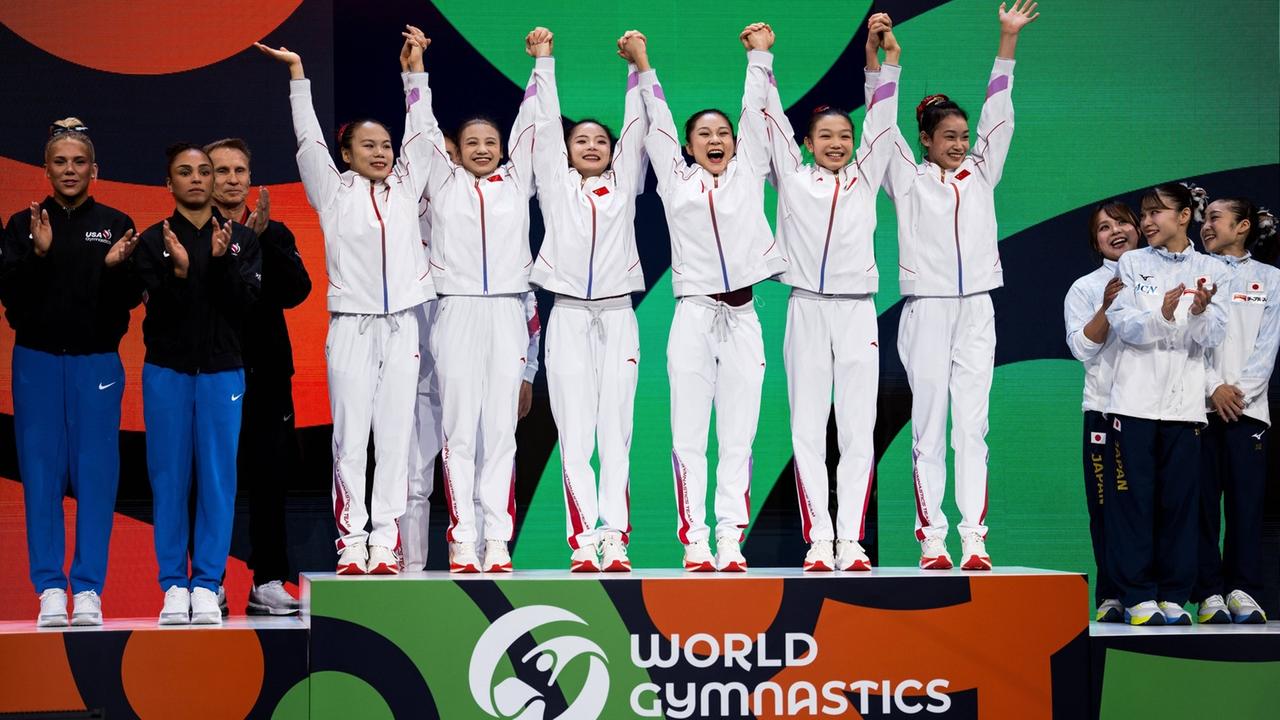
Led by the exceptional poise of balance beam specialist Zhang Qingying, the Chinese squad delivered a performance of surgical precision. They concluded the team final with a total score of 165.764, narrowly edging out the United States, who finished with 165.531 points. Japan rounded out the podium with a score of 164.063, signaling a rising tide of Eastern Asian dominance in the team apparatus.
For China, this victory marks a return to glory that has been nearly twenty years in the making. The pressure was immense, yet the Chinese gymnasts executed their routines with a technical proficiency that emphasized clean lines, precise landings, and a mental fortitude that proved superior to their rivals on this particular evening.
Chronology of the Final: A Narrow Margin
The competition was a nail-biter, defined by fractional differences that underscore the razor-thin margins at the elite level of gymnastics.
- The Vault Phase: The opening rotation saw the Americans start strong, banking on their traditionally high-difficulty vaults. However, the Chinese squad kept pace, refusing to allow the U.S. to build the psychological buffer they are accustomed to in the early stages of a final.
- The Uneven Bars: Often a strength for both nations, the bars provided the setting for the critical separation. Zhang Qingying’s performance on the beam later proved to be the anchor that kept the Chinese momentum steady.
- The Beam and Floor: As the competition progressed to the more precarious apparatus, the U.S. team—competing without the talismanic presence of Simone Biles—showed signs of vulnerability. While the American gymnasts displayed immense power, the consistency of the Chinese team under pressure was the decisive factor.
- The Final Tally: When the final scores were tabulated, the 0.233-point gap between China and the U.S. reflected the sheer closeness of the contest. It was a victory won in the details—the slight adjustments on landings and the perfection of execution scores that ultimately tilted the gold in China’s favor.
The Absence of an Icon: Analyzing the U.S. Performance
Much of the post-match discourse has focused on the absence of Simone Biles. Without the greatest gymnast of all time in the lineup, the U.S. team functioned as a unit in transition. While they remain a formidable force, the loss of Biles’s high-scoring potential and, perhaps more importantly, her stabilizing presence, was evident.
However, it would be reductive to attribute the American defeat solely to the absence of one athlete. The U.S. program is currently undergoing a generational shift. Young athletes are being integrated into the senior circuit, and while they possess world-class talent, the transition to high-stakes team finals requires a level of cohesion that the Chinese team demonstrated in spades. This silver medal serves as a "reality check" for the U.S. program, forcing a re-evaluation of their strategic approach as they look toward the road to Los Angeles 2028.
The Road to Los Angeles 2028: Olympic Qualification
Beyond the prestige of the World Championship title, the Rotterdam event served a functional purpose: the distribution of the first Olympic berths.
With their top-three finish, China, the United States, and Japan have officially punched their tickets to the 2028 Los Angeles Olympics. This provides these federations with a significant advantage, allowing their coaching staffs to shift their focus from high-pressure qualification cycles to long-term talent development and specialized training blocks.
The remaining nine spots for the Olympic Games will be contested during the upcoming World Championships in Chengdu, China. The pressure will be immense for the nations currently on the outside looking in, as the qualification path narrows significantly after this initial cycle.
The European Perspective: The German Effort
While the headlines were dominated by the battle for gold, the European contingent had a complex outing. The German women’s team, spearheaded by the rising star Helen Kevric, narrowly missed the cut for the team final.
Despite a stellar performance in the qualification rounds, the team finished in tenth place with 158.661 points. While the collective result was disappointing for the squad—which included Karina Schönmaier, Lea Marie Quaas, Emma Malewski, and Madita Mayr—the individual performance of Helen Kevric was a beacon of hope for German gymnastics.
Kevric, the European champion on the uneven bars, solidified her status as an individual medal contender. Her ability to qualify as the second-best athlete for the individual bars final suggests that Germany has the individual talent to compete with the world’s best, even if the team structure is still finding its equilibrium. Kevric is now the primary focus of German sports media as she prepares to vie for a medal on the bars, a testament to her technical evolution over the past year.
Technical Data and Supporting Metrics
To understand the scale of the Chinese victory, one must look at the specific scoring components. The gap between the top three nations was remarkably small, totaling less than two points across all four apparatuses:
- China: 165.764 (Execution: 83.100, Difficulty: 82.664)
- USA: 165.531 (Execution: 82.400, Difficulty: 83.131)
- Japan: 164.063 (Execution: 81.900, Difficulty: 82.163)
The data suggests that while the U.S. team attempted a higher degree of difficulty, the Chinese team’s superior execution scores provided the winning margin. This reinforces a recurring theme in modern gymnastics: the move away from "difficulty at all costs" toward a more balanced, error-free approach.
Official Responses and Future Outlook
The reaction from the Chinese camp was one of controlled exhilaration. Coaches emphasized that this victory was the result of a multi-year plan focused on consistency. "We didn’t change the sport; we simply executed our plan better than we have in a decade," noted one team representative.
For the United States, the response was one of resolve. Team management acknowledged the difficulty of the transition period but expressed confidence in the depth of the American pipeline. "We are a team that thrives on challenges," a team spokesperson said. "The silver medal isn’t a defeat; it’s a blueprint for what we need to refine over the next two years."
As the gymnastics world looks ahead to the World Championships in Chengdu, the narrative is clear: the monopoly has ended. The rise of a more competitive, multipolar environment in international gymnastics is a positive development for the sport’s growth and popularity.
Conclusion: A New Competitive Landscape
The 2026 Rotterdam World Championships will be remembered as the moment the status quo was shattered. China’s victory was not merely a win for their program; it was a win for the sport of gymnastics, proving that even the most dominant streaks can be broken through tactical discipline and poise.
As we pivot toward the 2028 Los Angeles Games, the stage is set for a historic rivalry. The U.S. will be looking for redemption on home soil, Japan is proving that its technical foundation is among the world’s best, and China has reasserted itself as a global superpower. For fans of the sport, the next two years promise an era of unparalleled competition where every landing, every rotation, and every score will be scrutinized with renewed intensity.
The gymnastics world is no longer a one-nation show; it is a global battlefield where only the most prepared will rise to the top. As Helen Kevric and the other individual specialists prepare for their respective finals, the broader takeaway remains: the pursuit of perfection has never been more competitive.