By Sports Editorial Staff
October 9, 2026
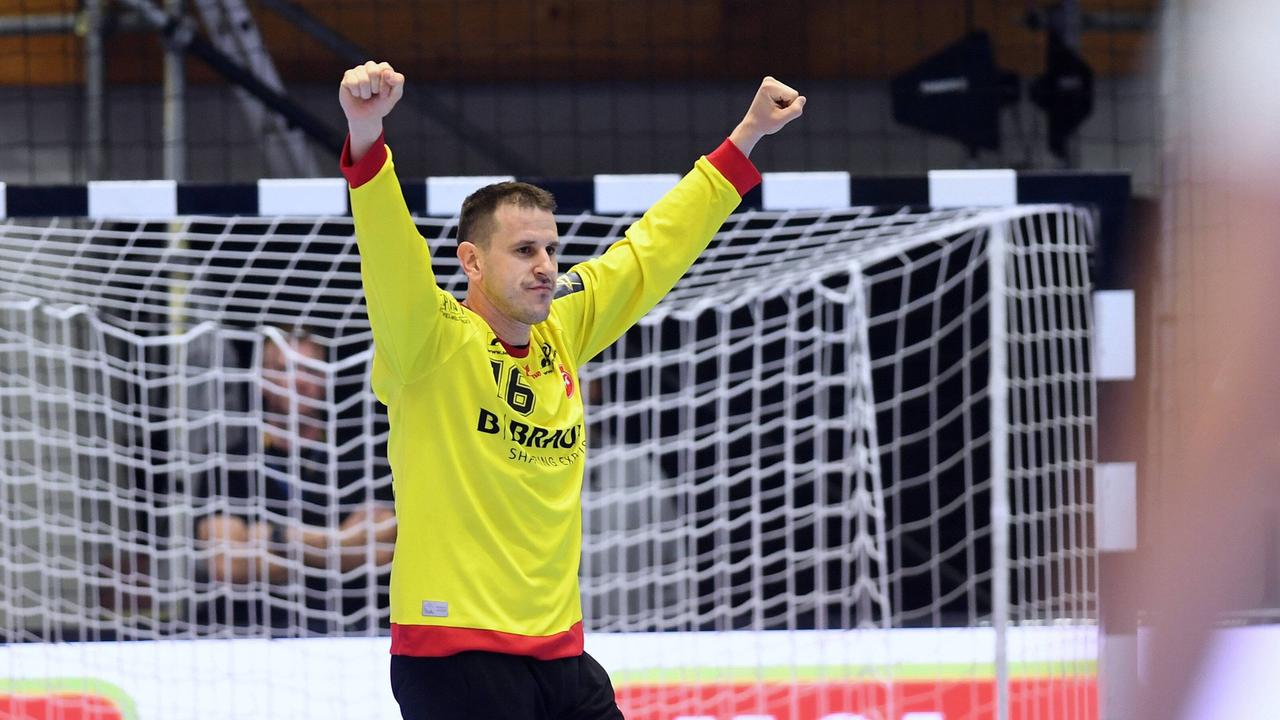
In a display of defensive mastery that will be studied by handball tacticians for weeks to come, MT Melsungen has announced its arrival as a genuine force in the EHF Champions League. On Tuesday evening, the North Hessian powerhouse dismantled French giants HBC Nantes with a 28:23 victory, a result that propelled them to the top of Group B. At the heart of this triumph was the indomitable Nebojsa Simic, whose performance between the posts transcended the standard definition of "goalkeeping" to reach the realm of the legendary.
The Architect of Victory: A Night of Pure Dominance
The narrative of the match was written not just by the scorers, but by the man who prevented them. Nebojsa Simic, the Montenegrin international, delivered a performance for the ages. Finishing the match with an astonishing 42 percent save efficiency, Simic turned the Rothenbach-Halle into a "no-fly zone" for the visitors from France.
While the scoreboard eventually reflected a comfortable five-goal cushion, the reality on the court was a high-stakes chess match. For long stretches, Nantes—a team renowned for their pace and tactical depth—found themselves completely stymied by the sheer presence of the Melsungen keeper. When a goalkeeper enters the "zone" as Simic did, the psychological impact on the opposition is profound; shooters begin to second-guess their angles, pass unnecessarily, and ultimately succumb to the pressure of an impenetrable wall.
Chronology of a Tactical Masterclass
The match began with high intensity, as both teams sought to establish dominance in the transition phase. Melsungen, fueled by the energy of 3,456 raucous home fans, set a defensive tone early.
The Opening Gambit (0′ – 30′)
From the opening whistle, it was clear that Simic had arrived with a specific agenda. By the midway point of the first half, the French side was visibly frustrated. Simic’s movement was fluid, his anticipation uncanny. By the time the halftime buzzer sounded, he had already amassed 11 saves from 22 attempts. This defensive foundation allowed the Melsungen attack, led by a clinical performance from Julian Drosten, to build a 14:11 lead. The scoreline, however, did not fully reflect how suffocated Nantes felt in their offensive sequences.
The Mid-Match Crisis (31′ – 45′)
As is often the case in high-level European handball, momentum is a fickle companion. Returning from the break, Melsungen experienced a brief lull. Their offensive rhythm stuttered, and for a terrifying ten-minute window, Nantes surged. In the 44th minute, the unthinkable happened: HBC Nantes took the lead for the first time in the match. The atmosphere in the arena grew tense, as the specter of a collapse began to loom. It was a critical juncture—a moment where the "old" Melsungen might have faltered.
The Final Surge (46′ – 60′)
What followed was a testament to the character of this Melsungen squad. Rather than panicking, they tightened their defensive shell. Simic, having seen his save percentage dip, recalibrated. The team responded with a ferocious 14-minute defensive clinic, conceding very few high-percentage looks to the French side. The transition game roared back to life, and the home side reeled off a decisive run that left Nantes trailing in their wake. By the final whistle, the 28:23 victory was not just secured—it was a statement of intent.
Supporting Data: Breaking Down the Numbers
To understand the magnitude of this victory, one must look beyond the final score. The match statistics provide a granular look at how Melsungen controlled the game:
- Goalkeeping Efficiency: Nebojsa Simic’s 42% save rate is a statistical anomaly at this level of play. In the Champions League, where the margins for error are razor-thin, a 30% save rate is typically considered "good." A 40%+ performance is usually reserved for the elite, game-winning displays.
- Offensive Distribution: MT Melsungen showcased a balanced attack that prevented Nantes from focusing on a single threat. Julian Drosten led the way with 6 goals, but the supporting cast—including Ignatow (4), and a cohort of players contributing 3 goals each (Enderleit, Mandic, Golla, Sigrist, Mensing)—made Melsungen incredibly difficult to scout and defend.
- The Nantes Struggle: Conversely, Nantes relied heavily on Tournat (6) and Garciandia (4). Their inability to find consistent scoring from their wing players, largely due to the angle-denying positioning of the Melsungen defense, proved to be their ultimate downfall.
Official Reactions and the "Golla" Factor
The win was particularly significant given the backdrop of the current season. Outside of the court, the club has been embroiled in a whirlwind of speculation regarding the future of their captain, Johannes Golla, and his reported interest in a return to Flensburg.
In the post-match press conference, the Melsungen coaching staff was quick to emphasize the professionalism of the squad. "We have been dealing with a lot of noise, but the focus remains on the next training session and the next opponent," a team representative noted. The victory serves as a vital anchor for the team, proving that the internal "transfer saga" has not compromised their collective goal.
For the players, the message was one of unity. Despite the speculation, Golla himself contributed 3 goals to the cause, demonstrating that his commitment to the Melsungen crest remains absolute for the duration of his tenure. The victory was, in many ways, a public relations masterstroke, proving that the club is currently operating at a level where it can transcend external distractions.
Implications: A New Hierarchy in Group B?
Where does this leave the EHF Champions League Group B landscape?
- Top of the Table: Melsungen’s rise to the top spot is a significant disruption to the established order. European heavyweights will now be forced to treat every trip to North Hesse as a potential "trap game."
- Psychological Edge: By dismantling a team of Nantes’ pedigree, Melsungen has earned the respect of the continent. They are no longer the "dark horse"; they are a contender that must be factored into the knockout stage calculations.
- Future Momentum: With the team hitting their stride, the upcoming fixtures will be crucial in determining whether they can secure a direct path to the quarterfinals. The challenge now is consistency—maintaining the defensive intensity that defined this victory throughout the grueling winter schedule.
Conclusion: A Night to Remember
As the fans filed out of the Rothenbach-Halle, the mood was one of jubilation. In a sport defined by speed, power, and tactical complexity, it was a moment of individual brilliance—Nebojsa Simic’s performance—that provided the spark. But beneath the heroics of the goalkeeper lay a team that has found its identity.
MT Melsungen is currently a team with a clear mission. If they can continue to harness the energy of their home crowd and maintain the defensive discipline displayed against Nantes, the rest of Europe should be very afraid. The road to the Champions League final is long, but after tonight, the path through North Hesse looks more treacherous than ever.