By International Affairs Desk, reporting on reporting from MDR Sachsen
The political landscape in Germany is currently gripped by a high-stakes debate regarding the future of the Alternative for Germany (AfD). As the party’s influence has grown across federal and state levels, so too has the intensity of the discourse surrounding its potential prohibition. Most recently, Henning Homann, the leader of the Social Democratic Party (SPD) in Saxony, has emerged as a central figure in this movement, calling for the immediate establishment of a joint federal-state working group to prepare the groundwork for a potential ban proceedings against the party.

The Core Conflict: Protecting Democracy vs. The Right to Political Opposition
At the heart of this controversy lies a fundamental tension within the German Basic Law (Grundgesetz). While Germany prides itself on being a "militant democracy" (wehrhafte Demokratie), designed to protect the state from those who would use democratic processes to dismantle democratic institutions, the threshold for banning a political party is exceptionally high.
Henning Homann’s recent intervention in the "Sachsen-Politik" podcast has elevated the discussion from theoretical musing to a concrete political demand. Homann argues that the evidence of extremism within the AfD is now too significant to ignore. He points to the official classification of several AfD state chapters as "confirmed right-wing extremist" entities by the Federal Office for the Protection of the Constitution (BfV). Furthermore, he highlights a mounting repository of documented statements from party functionaries that he describes as "overwhelming" evidence of an anti-democratic agenda.

"Democracies must protect themselves in good time," Homann stated during his interview. "We cannot wait until it is too late."
Chronology of the Escalation
The discourse surrounding an AfD ban has not emerged in a vacuum; it is the culmination of years of political and legal friction.

- Initial Monitoring: For years, the German domestic intelligence services have been observing the AfD, gradually escalating the status of the party and its various state-level branches from "suspected case" to "confirmed extremist."
- Regional Electoral Success: The party’s steady rise in state parliaments, particularly in the former East German states, created a sense of urgency among established democratic parties.
- The "Potsdam" Revelations: The public exposure of meetings involving high-ranking AfD officials discussing plans for "remigration" acted as a catalyst for widespread public protests across Germany in early 2024, bringing the question of a ban into the mainstream conversation.
- The Current Push: Throughout late 2024 and heading into late 2026, the call for a ban has evolved from street-level demands to high-level parliamentary maneuvering. Homann’s current call for a dedicated working group represents the most structured attempt yet to formalize the legal preparation required to approach the Federal Constitutional Court.
Supporting Data and Legal Precedents
To understand the gravity of Homann’s proposal, one must look at the specific legal mechanism involved. Under Article 21 of the Basic Law, the Federal Constitutional Court in Karlsruhe is the only entity with the authority to ban a party. The process is not a matter of executive decree; it is a rigorous judicial review.
A petition to initiate such a process can only be filed by the Bundestag (Federal Parliament), the Bundesrat (Federal Council), or the Federal Government. If a petition is filed, the court must determine whether the party is actively working to undermine or abolish the "free democratic basic order."
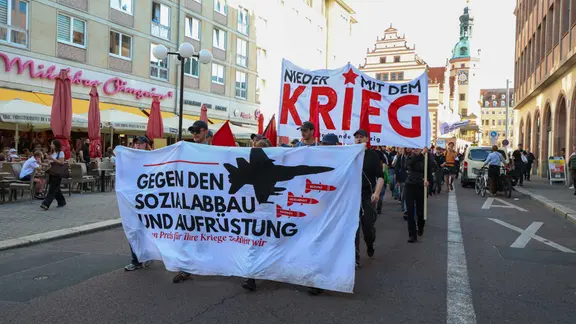
Historically, the bar is set extremely high. Germany has banned only two parties in its post-war history: the Socialist Reich Party (SRP) in 1952 and the Communist Party of Germany (KPD) in 1956. The failed attempt to ban the National Democratic Party of Germany (NPD) in 2017 serves as a cautionary tale for modern proponents. While the Court acknowledged that the NPD held anti-democratic views, it ruled that the party lacked the actual "potential" to achieve its goals, rendering a ban unnecessary at that time.
Critics of the current initiative, including Saxony’s Minister-President Michael Kretschmer (CDU) and Interior Minister Armin Schuster (CDU), argue that the high legal hurdle remains the primary obstacle. They fear that if a government-led attempt to ban the AfD were to fail in court, it would serve as a massive propaganda victory for the party, effectively validating them as "persecuted victims" and potentially increasing their voter base.

Official Responses and Political Divisions
The response to the idea of a ban is deeply fractured along party lines and regional geographies.
The SPD and Pro-Ban Factions
Homann and his supporters argue that the "potential" argument used in the NPD case does not apply to the AfD. Because the AfD holds significant seats in multiple state legislatures and polls as a leading party in several regions, they argue it has already demonstrated the capacity to disrupt the parliamentary process and influence public policy. They believe that the danger is no longer theoretical but imminent.

The Conservative and Skeptical View
On the other side of the aisle, many in the CDU/CSU block remain wary. While they are ideologically opposed to the AfD, they argue that a ban is a "nuclear option" that could severely damage the legitimacy of the German political system. They prefer to focus on "political containment"—defeating the AfD through better policies, effective governance, and isolating them through a cordon sanitaire (the refusal of other parties to form coalitions with them).
The Stance of the State of Saxony
Saxony presents a particularly complex case. As a stronghold for the AfD, the political climate there is volatile. Homann noted that while he expects the state to cooperate by sharing intelligence and data for a federal-state review, he suspects the state government might lean toward abstention during a formal vote in the Bundesrat. This illustrates the delicate balancing act that state leaders must perform, navigating between the pressure of their national party platforms and the reality of their local constituencies.
Implications: The Long-Term Consequences
Should the German government decide to move forward with a formal application for a ban, the implications would be profound and multi-layered.
1. A Years-Long Judicial Ordeal
Legal experts anticipate that any proceedings would take years. The discovery phase alone would require the state to prove that the party as a whole—not just individual members—is committed to dismantling the democratic order. This would require the disclosure of vast amounts of intelligence material, some of which may be deemed too sensitive for public release.

2. The Impact on Political Polarization
There is a legitimate fear that a ban would not "solve" the grievances that led voters to the AfD in the first place. If the party is dissolved, the voters who supported it may not simply return to the mainstream fold. Instead, they might drift further toward fringe movements, potentially radicalizing segments of the population that already feel alienated from the political establishment.
3. The Burden of Proof
The burden of proof remains the most significant hurdle. The intelligence services must demonstrate that the AfD’s actions go beyond "radical rhetoric" and constitute a genuine threat to the stability of the Republic. This requires a precise legal distinction between protected political speech and actionable subversion.

4. The "Democracy’s Paradox"
Ultimately, this debate forces Germany to confront its own paradox: how to remain a democracy while simultaneously using anti-democratic tools (like the banning of a political entity) to defend itself. It is a question that has occupied German political scientists for decades, and the answer, as Henning Homann suggests, may soon be put to the ultimate test in the halls of the Federal Constitutional Court.
Conclusion: A Strategic Crossroads
As the discussion continues, it is clear that the call for an AfD ban is not merely about a specific party; it is about the resilience of the German state. Henning Homann’s push for a federal-state working group marks a critical phase in this ongoing saga. Whether this leads to a formal legal challenge or remains a cautionary debate, the process itself highlights a system that is deeply concerned with its own survival.
While the legal and political risks are immense, the proponents of a ban argue that the cost of inaction is higher. As the nation watches the debate unfold, the consensus among political observers is that the outcome will define the trajectory of German politics for the next generation. The focus, as Homann rightly emphasizes, must remain dual-tracked: while the legal mechanisms are prepared, the primary challenge remains the political work of regaining the trust of citizens who have sought refuge in the rhetoric of the far-right. The defense of democracy, it seems, must be fought as much in the courtrooms as it is in the ballot boxes and the public square.