By [Your Name/Journalistic Desk]
Date: October 26, 2026
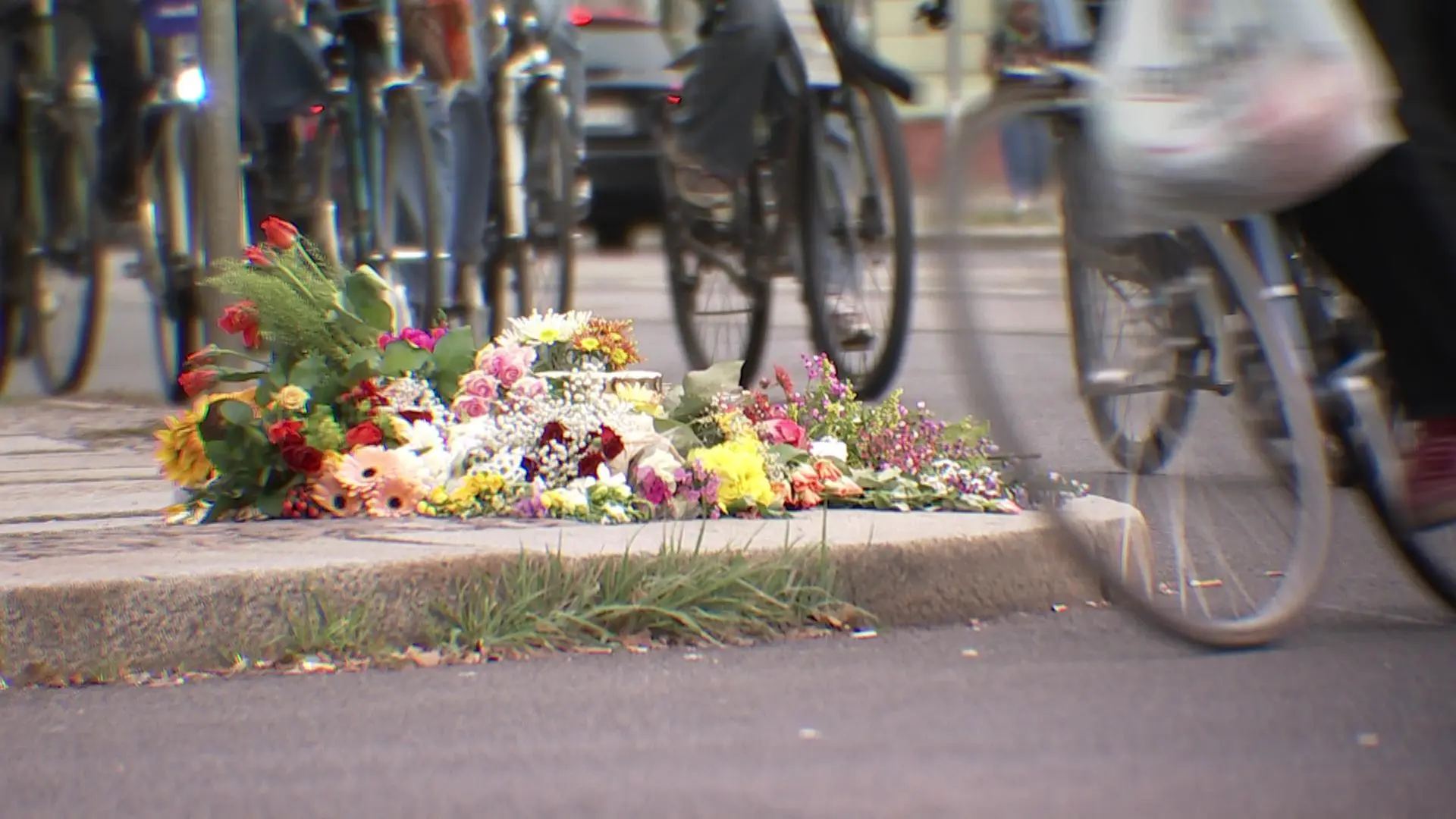
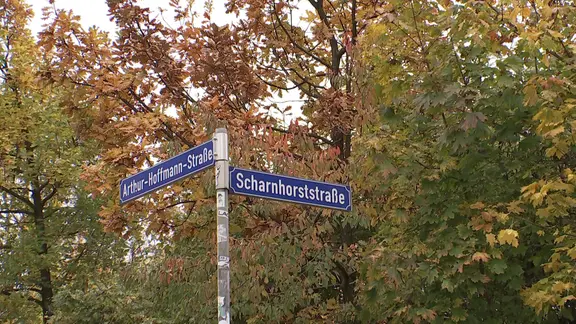
The intersection of Arthur-Hoffmann-Straße and Scharnhorststraße in Leipzig’s Südvorstadt district has become a site of profound grief. For days, the pavement outside a local bakery has been transformed into a makeshift memorial: white, yellow, and pastel-pink flowers lie against the cold concrete, accompanied by flickering tea lights in mason jars. Passersby frequently stop, shedding the pace of urban life to offer a moment of silence for a life cut tragically short.
The victim, a 20-year-old woman, lost her life on Wednesday after being struck by a heavy goods vehicle (HGV) at this busy junction. While police investigations into the exact cause of the collision are still in their infancy, the tragedy has catalyzed a city-wide debate, forcing residents, urban planners, and safety advocates to confront the glaring deficiencies in Leipzig’s cycling infrastructure.
The Facts of the Tragedy
On Wednesday afternoon, the 20-year-old cyclist was navigating the Arthur-Hoffmann-Straße—a corridor notorious among local commuters for its precarious traffic mix. According to initial reports from local law enforcement, the young woman was struck while crossing the intersection. The impact was fatal.
Police spokesperson Paul Engelmann confirmed that while the intersection is not officially classified as an "accident hotspot" based on recent history, the numbers tell a concerning story. Over the past seven years, four accidents involving cyclists have occurred at this specific junction. While one resulted in light injuries and another in severe trauma, the most recent incident marks the first fatality.
The investigation is currently focusing on the dynamics of the collision, specifically the visibility and maneuverability of the HGV driver in relation to the cyclist. However, authorities caution that it is too early to assign blame, as they continue to analyze traffic flow, speed, and potential technical failures.
A Community in Shock
The death of the 20-year-old has resonated deeply across Leipzig, a city where cycling is not merely a recreational activity but a primary mode of transportation. Data from the ADFC (Allgemeiner Deutscher Fahrrad-Club) suggests that approximately 20 percent of all trips within Leipzig are made by bicycle. As the city has grown, the number of cyclists has doubled over the last two decades, yet the infrastructure has struggled to keep pace.
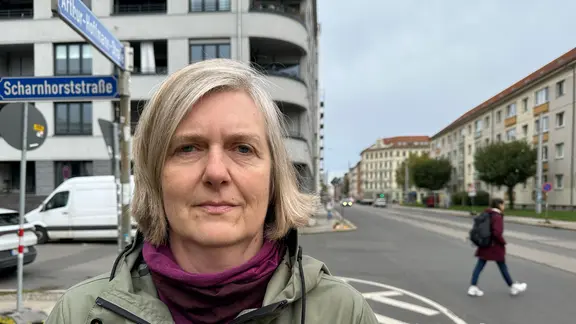
"I am personally deeply shaken," says Anne Schumann, chair of the ADFC Leipzig. "I have spoken to so many people who are genuinely grieving. There is a collective realization that it could have been any one of us. When you ride these streets daily, you know the dangers intimately."
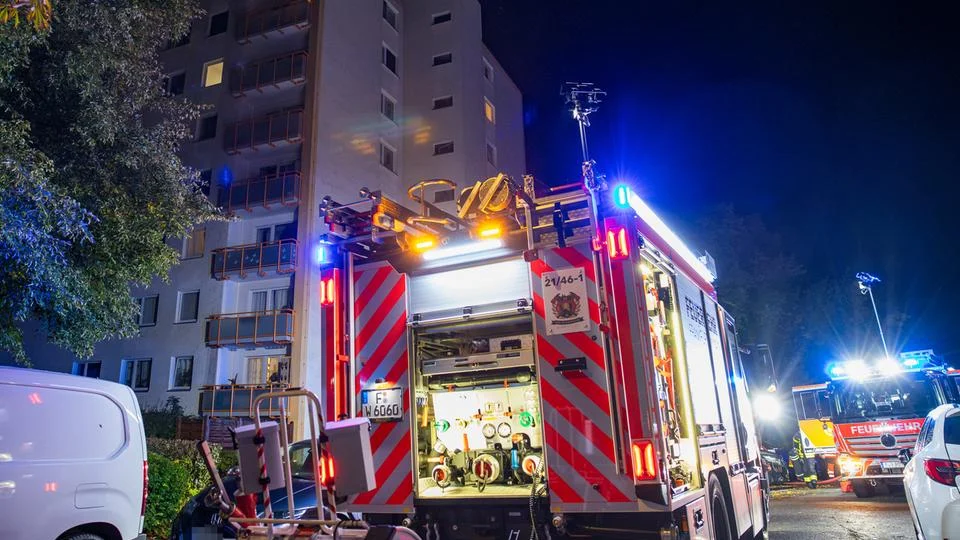
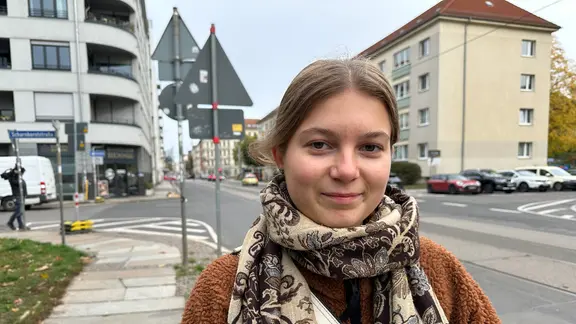
The sentiment is echoed by students and commuters who rely on these routes. Luca Macheel, a 21-year-old medical student, traverses the Arthur-Hoffmann-Straße multiple times a week. She describes the route as a "gauntlet" rather than a thoroughfare. "Between the parked cars and the tram tracks, there is almost no room for error," Macheel explains. "You are constantly looking over your shoulder, wondering if a car door is about to swing open or if the tram is coming up behind you. Seeing the emergency responders at the scene on Wednesday was a chilling reminder of how vulnerable we are."
Supporting Data: The Anatomy of Risk
The structural issues highlighted by residents are backed by sobering statistics. In 2025 alone, Leipzig police recorded 1,339 traffic accidents involving cyclists. The primary culprits are consistently identified as failure to yield and dangerous maneuvers during right and left turns. Since 2021, the neglect of right-of-way rules has been a contributing factor in over 1,100 bicycle-related accidents.
Currently, Leipzig manages 175 identified accident "accumulation points," with 80 of those directly impacting the safety of cyclists. The Arthur-Hoffmann-Straße, in its current state, features a dangerous mix of high-volume traffic (with speed limits of 50 km/h), tram lines, and a lack of dedicated cycle paths. This "Mischverkehr" (mixed traffic) model is increasingly viewed as an outdated approach that prioritizes motorized vehicle flow over the lives of non-motorized road users.
Official Responses and Bureaucratic Challenges
The pressure on the city administration to act has reached a fever pitch. Michael Jana, head of the Office for Mobility and Civil Engineering, admits that the Arthur-Hoffmann-Straße has been on the city’s radar for years due to its poor road surface and lack of bike lanes.
"The situation is complex," Jana stated in an interview. "We have to manage limited financial resources across a vast city, balancing the needs of various districts."
However, Jana was quick to emphasize that the city is not stagnant. "Plans were already in motion before this tragedy occurred. We are scheduled to mark dedicated bike lanes along that stretch in the coming year, which will provide a continuous path for cyclists." Furthermore, the city has already commenced a program to make sidewalks more accessible and plans to install a "sidewalk crossing" at the Scharnhorststraße intersection by 2027. This measure is intended to force turning vehicles to slow down significantly, providing a buffer zone for those on two wheels.
Critics, however, argue that these measures are too little, too late. The delay between identifying a problem and implementing safety infrastructure is often measured in years, a timeline that the cycling community finds unacceptable.

Implications: The Quest for "Vision Zero"
The tragedy has reignited calls for "Vision Zero"—the ethical belief that no loss of life on the road is acceptable and that the transport system should be designed to forgive human error.
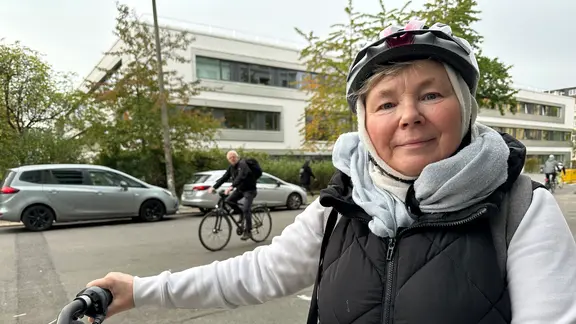
For many in Leipzig, the focus must shift from "educating" cyclists to changing the physical environment. Maargit Hunting, a 62-year-old resident who cycles daily, believes that while personal responsibility is important—she herself began wearing a helmet after a friend’s accident—it cannot replace safe design.
"I often dismount and push my bike at larger intersections because I simply cannot see what is coming," Hunting says. "We shouldn’t have to rely on individual caution to survive our daily commute."
The ADFC concurs. Anne Schumann asserts that "the accident at this location was entirely preventable. If we had proper, protected cycle infrastructure, these vehicles and cyclists would not be occupying the same high-risk space at the same time."
Looking Forward: A Turning Point?
The city administration is now faced with a crossroads. While Michael Jana insists that the planned upgrades will proceed, the public demand is for an acceleration of these projects. There is talk of temporary bike lanes, increased enforcement of speed limits, and a faster rollout of protected junctions.
As the investigation into the 20-year-old’s death concludes, the results will likely serve as the definitive assessment of the junction’s safety. If the findings highlight that the current road layout contributed to the tragedy, the city will face immense legal and political pressure to overhaul its entire traffic management strategy for the district.

For now, the candles continue to burn on Arthur-Hoffmann-Straße. Each one represents not just a mourning for the young woman who died, but a demand for a city where the simple act of riding a bicycle is not a gamble with one’s life.
Leipzig is a city that prides itself on being a hub for students, families, and young professionals. If it is to remain a "city of bicycles," it must now prove that it can protect the people who make it move. The memorial on the corner serves as a stark, silent witness to the fact that until the infrastructure matches the ambition of the city’s cycling culture, the price of mobility will remain far too high.
Key Demands from Safety Advocates:
- Separation of Traffic: Immediate implementation of protected bike lanes on high-traffic corridors.
- Infrastructure Prioritization: Re-evaluation of the 80 critical accident points specifically relevant to cyclists.
- Speed Reduction: Transitioning to 30 km/h zones in dense residential areas to reduce the kinetic energy of potential collisions.
- Visibility Enhancements: Installation of specialized mirrors and improved signal timing at high-risk intersections to assist HGV drivers in detecting cyclists.
The city waits for answers, but more importantly, it waits for change. For the family of the victim and for the cycling community of Leipzig, the memorial on Arthur-Hoffmann-Straße is a reminder that the status quo is no longer an option.