The medical diagnosis is in, and it brings unwelcome news for both FC Bayern Munich and the German national team: Captain Giulia Gwinn will be sidelined for the foreseeable future. Following an injury sustained in Sunday’s high-stakes Bundesliga clash against Eintracht Frankfurt, the star defender faces yet another grueling recovery period.
The Incident: A Sudden Halt in Frankfurt
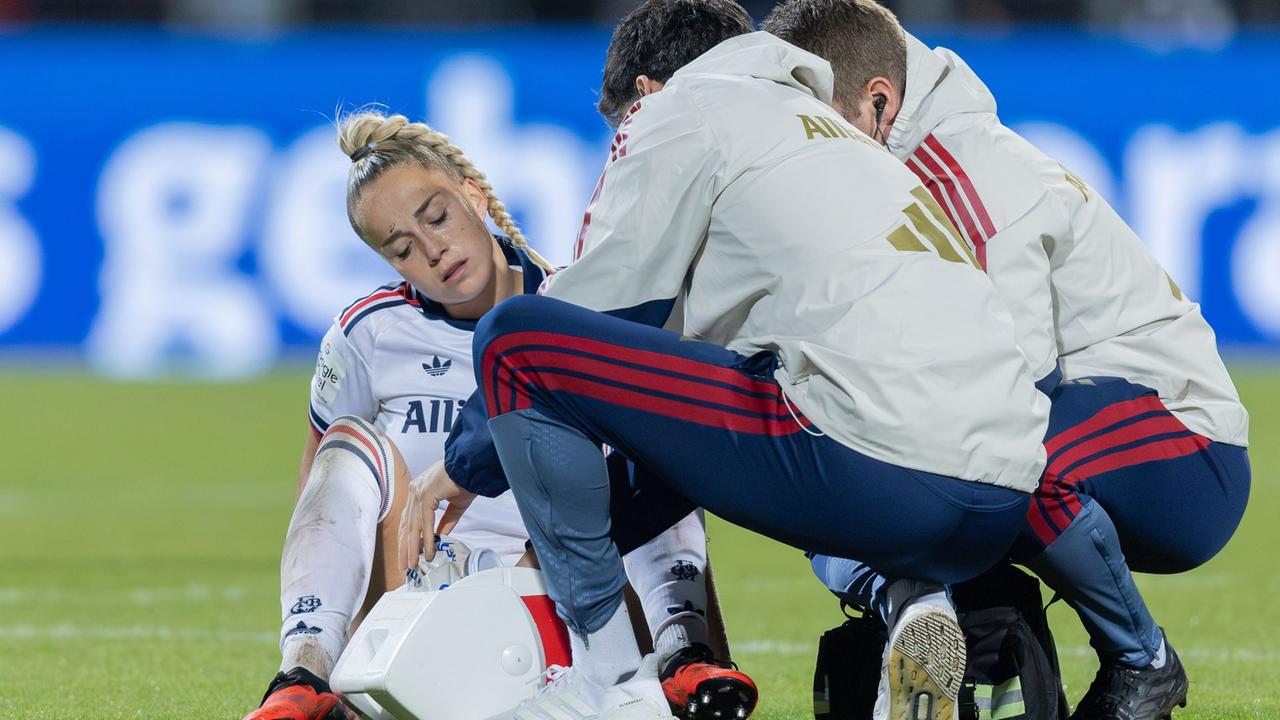
On Sunday afternoon, the intensity of the top-tier Bundesliga matchup between FC Bayern Munich and Eintracht Frankfurt was palpable. However, the game’s narrative shifted abruptly when Giulia Gwinn, one of the most vital figures in the German women’s game, was forced off the pitch. What initially appeared to be a standard collision or a manageable knock quickly escalated into a scene of concern for staff and fans alike.
On Monday, following comprehensive examinations by the club’s medical department, the severity of the incident was confirmed. The diagnosis: a torn lateral ligament in her left ankle. While the club’s statement remains measured, noting only that she will be unavailable for the "coming weeks," the nature of such an injury typically necessitates a significant period of rehabilitation before a player can return to the rigors of professional competition.
Chronology of a Career Marred by Misfortune
To understand the gravity of this latest setback, one must look at the trajectory of Gwinn’s career over the last five years. For a player of her caliber—internationally recognized for her technical prowess, tactical intelligence, and leadership—the frequency of these injuries is particularly devastating.
The Dark Years: 2020–2022
The cycle of physical hardship began in earnest during a period where Gwinn was arguably playing the best football of her young career. Between 2020 and 2022, she suffered two separate anterior cruciate ligament (ACL) tears within a relatively short timeframe. For any professional athlete, a single ACL injury is a career-defining hurdle; two, in such quick succession, represent a mental and physical mountain that few are capable of scaling with such grace.
Recent Hurdles: 2025 and Beyond
The misfortune did not stop there. During the opening match of the European Championship in the summer of 2025, Gwinn suffered an injury to her medial collateral ligament. Most recently, she navigated the conclusion of the previous season while dealing with a persistent shoulder injury—a testament to her stoicism and desire to support her team despite being clearly compromised.
Impact on FC Bayern and the DFB
The implications of Gwinn’s absence are immediate and far-reaching. At the club level, FC Bayern Munich loses a foundational piece of its defensive structure and a creative engine in the wide areas. As Bayern fights to maintain its dominance in the Bundesliga and compete on the European stage, the absence of their captain requires an urgent tactical recalibration by the coaching staff.
At the international level, the timing could not be worse. The German national team (DFB) is entering a crucial window of fixtures, including high-profile matches against Australia and Japan. These games are vital for building chemistry and testing new tactical blueprints under national team management. Gwinn, who serves as the heartbeat of the squad, will be sorely missed as the team attempts to integrate new talent and solidify its standing on the world stage.
Resilience: The Comeback DNA
Despite the recurring nature of her injuries, Giulia Gwinn has consistently demonstrated an extraordinary capacity for recovery. Her career is not merely defined by the injuries themselves, but by the relentless nature of her returns.
Following her three-month absence due to shoulder surgery, for instance, Gwinn returned to the pitch with a level of form that suggested she had never been away. She reclaimed her spot in the starting XI with ease, showcasing the kind of athletic maturity that only seasoned professionals possess.
Observers within the football community have noted that her ability to maintain a positive mindset is her greatest asset. In interviews, Gwinn has often spoken about the "mental weight" of recovery, emphasizing that the physical aspect is only half the battle. Her teammates and coaches frequently highlight her work ethic in the weight room and her dedication to physiotherapy as the gold standard for the squad.
The Broader Conversation: Player Welfare and Load Management
Gwinn’s situation has reignited a critical conversation regarding the physical toll of the modern game. With the expansion of domestic leagues, the intensity of European competitions, and an increasingly dense international calendar, the physical demands placed on top-tier female footballers have reached an all-time high.
Medical experts suggest that the "injury epidemic" currently affecting elite women’s football—characterized by a high prevalence of knee and ligament issues—is a multifaceted problem. It involves a lack of sufficient recovery time between tournaments, the specific biomechanics of female athletes, and, in some cases, a lack of investment in specialized training facilities designed to mitigate these specific injury risks.
While the FC Bayern medical team is world-class, the recurring nature of Gwinn’s injuries serves as a stark reminder that even the most elite athletes are operating at the absolute limit of human endurance.
Looking Ahead: The Path to Recovery
As Gwinn begins her latest rehabilitation program, the support from the global football community has been overwhelming. From fans to rival players, the sentiment is unified: the sport is simply less vibrant without one of its most dynamic talents on the field.
For the immediate future, the focus is entirely on a controlled, methodical recovery. There is no benefit to rushing a lateral ligament injury; the risk of chronic instability in the ankle is too high. The club will likely implement a phased return, starting with low-impact mobility work, progressing to weight-bearing exercises, and eventually transitioning to pitch-based training.
Conclusion
Giulia Gwinn remains an indomitable force in women’s football. While this diagnosis is a significant blow, history has taught us not to write her off. She has stared down the barrel of long-term absences before and emerged stronger, faster, and more focused.
For now, the Bayern faithful must wait. The pitch will miss her signature runs down the flank, her pinpoint crosses, and her tactical leadership. But if there is one thing that defines the career of Giulia Gwinn, it is her refusal to accept the finality of a setback. The road back will be long and arduous, but as the German captain has proven time and again, the comeback is always part of the story.
The football world waits with bated breath for her return, confident that when she steps back onto the grass, she will be ready to pick up exactly where she left off.