


The boxing world turned its eyes to Aschersleben this weekend, where a highly anticipated fight night delivered both heartbreak for a local hero and a masterclass in ring generalship. While Julian Vogel faced a crushing defeat in his bid to solidify his status as a champion, Artur Reis reminded the boxing community why he remains a force to be reckoned with in the super middleweight division.
1. Main Facts: A Tale of Two Fights
The boxing gala in Aschersleben, Saxony-Anhalt, was framed by the aspirations of Julian Vogel, a 23-year-old rising star who entered the ring with high expectations. Following a previous championship victory, the hometown favorite aimed to secure a second belt to bolster his burgeoning professional record. However, the night took a sharp turn as Vogel faced the tactical brilliance of the Parisian challenger, Bakari Diallo.
In the co-headline event, Artur Reis—a fighter with a reputation for power and precision—took to the ring against the Italian Ismail Airoud. Unlike the competitive and tense atmosphere of the main event, the Reis-Airoud clash served as a showcase for a veteran reasserting his dominance in the super middleweight class. While Vogel’s night ended in the bitter disappointment of defeat, Reis’s performance was a reminder of the tactical evolution that veteran fighters must undergo to stay relevant at the elite level.
2. Chronology: The Breakdown of the Ring Action
The Vogel vs. Diallo Superwelter Title Fight
From the opening bell, it was clear that Bakari Diallo had done his homework. Vogel, typically known for his aggressive, forward-moving style, found himself forced into a more cautious approach. Diallo, displaying the composure of a seasoned campaigner, refused to be baited into the wild exchanges that Vogel’s team had hoped for.
The middle rounds were the turning point. Diallo utilized a stiff jab and precise counter-punching to disrupt Vogel’s rhythm. Every time the Aschersleben native attempted to close the distance, he was met with sharp, punishing shots that forced him to reset. By the eighth round, the physical toll was evident. Vogel began to throw wider, more desperate hooks, hoping for a "lucky punch" to turn the tide. Diallo remained disciplined, slipping the shots and punishing Vogel’s defensive lapses.
In the final stages, the disparity in conditioning became the deciding factor. While Vogel fought with heart, his output waned, and his defense became increasingly porous. The judges’ decision was unanimous and clear: Bakari Diallo walked out of the arena with the belt, having executed a game plan that frustrated the local crowd and silenced the challenger’s supporters.
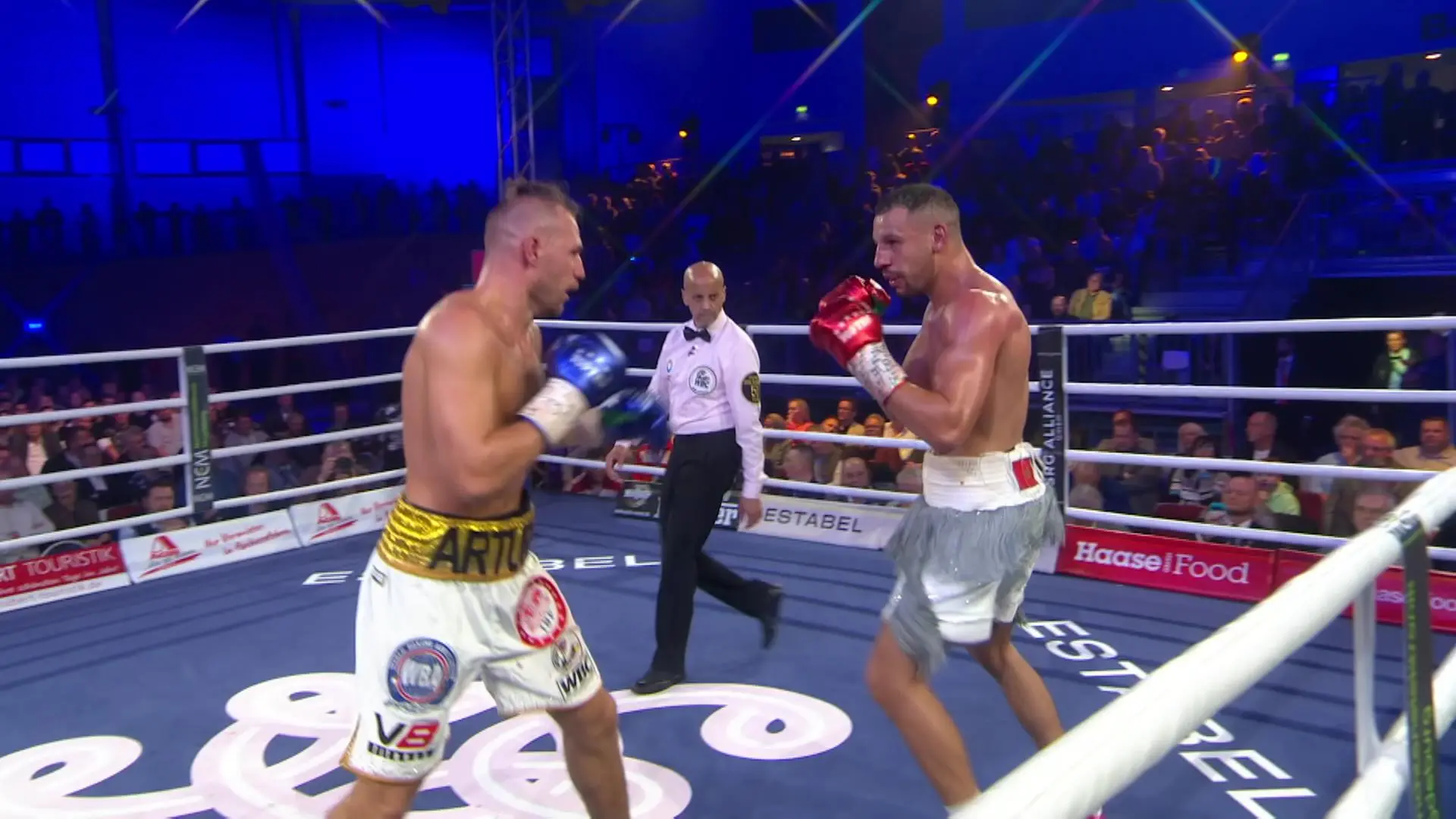
The Reis vs. Airoud Supermiddleweight Clash
Artur Reis’s return to the ring was marked by clinical efficiency. Against Ismail Airoud, Reis leveraged his physical advantages—specifically his reach and raw power—almost immediately. The Wolfsburger, fueled by the energy of the local crowd, dictated the pace of the fight from the first minute.
The turning point occurred in the third round. A crushing combination from Reis caught Airoud clean, leaving the Italian visibly shaken and struggling to regain his defensive composure. For the remainder of the round, Reis acted as the hunter, systematically breaking down his opponent’s guard.
The fifth round saw a momentary flash of danger for Reis, as a desperate offensive surge from Airoud resulted in a cut on the 33-year-old’s face. However, the momentary setback only seemed to sharpen Reis’s focus. He closed the round with a flurry of combinations that left no doubt in the minds of the judges. By the final bell, the victory was never in question, with the coaching staff describing the win as "thoroughly dominant."
3. Supporting Data and Analysis
To understand the significance of these results, one must look beyond the immediate outcome and examine the stylistic evolution of the fighters involved.
- Vogel’s Tactical Dilemma: The loss to Diallo highlights a critical learning curve for the 23-year-old. His inability to adjust when his primary game plan failed suggests that he is still reliant on raw athleticism rather than ring IQ. Against a fighter like Diallo, who possesses a high boxing "motor," Vogel’s lack of a "Plan B" proved fatal to his title ambitions.
- Reis’s Efficiency Metrics: Artur Reis entered the bout having recently refined his training camp focus. The data from the fight shows a high connect percentage for power punches, particularly in the mid-range. His ability to handle the mid-fight adversity of a facial cut demonstrates a maturity that separates journeymen from championship-level contenders.
4. Official Responses: The Aftermath
In the wake of the main event, the atmosphere in the locker room was one of professional respect. Despite the loss, Julian Vogel emerged as a sportsman, offering a public salute to his conqueror. "Diallo was the better man tonight," Vogel stated in a brief press conference. "I expected a war, but he brought a chess match. It is a tough pill to swallow, especially at home, but this is the sport. I will go back to the gym and fix the holes in my game."
Bakari Diallo, modest in his victory, acknowledged the intensity of the crowd. "I knew the fans would be behind Julian, so I had to make sure I didn’t get emotional. My corner told me to stay behind the jab, and that was the key to taking the belt back to Paris."

Artur Reis’s camp was understandably buoyant. His coach noted during the post-fight media scrum: "We knew Airoud was tough, but Artur was completely in control. Even when he got cut, he didn’t panic. He stayed composed, stuck to the game plan, and dominated the rounds that mattered. This is the version of Artur we want to see heading into the next year."
5. Implications for the Future of the Sport
The Aschersleben event carries significant weight for the regional boxing landscape. For Julian Vogel, the loss is a temporary setback, but it necessitates a period of introspection. At 23, his career is far from over, but he must now prove that he can bounce back from the first major disappointment of his professional life. He is likely to face a series of "rebound" fights to regain confidence and ranking points before seeking a return to the title picture.
For Artur Reis, the victory is a springboard. Having demonstrated both power and composure, he is now positioned to challenge for higher-ranked bouts in the international super middleweight circuit. The "spectacular" nature of his win has generated buzz, and his management team is reportedly already in talks for a high-profile matchup in early 2027.
Furthermore, the success of the Aschersleben gala underscores the continued importance of regional hubs for the European boxing scene. By hosting title fights and showcasing domestic talent against international challengers, organizers continue to provide a vital platform for the next generation of pugilists.
The night ultimately served as a reminder of the brutal beauty of boxing: a sport where one fighter’s tactical triumph is another’s bitter defeat. As the lights dimmed in Aschersleben, the paths of Vogel and Reis diverged—one toward the drawing board, the other toward a new horizon of opportunity. The boxing community will be watching both men closely in the months to come, waiting to see how they handle the weight of their respective results.









