By Financial News Correspondent
October 9, 2026
The telecommunications landscape is undergoing a seismic shift. Elon Musk’s aerospace firm, SpaceX, has signaled its most aggressive entry yet into the terrestrial mobile market, sending global stock markets—and the valuations of traditional carriers—into a tailspin. By acquiring a massive, nationwide portfolio of low-frequency spectrum in the United States, SpaceX is positioning its Starlink service to move beyond fixed-location satellite internet and directly into the pockets of millions of mobile users.
The move has prompted a sharp sell-off in the telecommunications sector. Shares of Deutsche Telekom, the parent company of the US giant T-Mobile, plummeted by over six percent in Frankfurt today, marking its worst single-day performance in more than three years. In the United States, T-Mobile US, Verizon, and AT&T all saw their stock prices slide in after-hours trading as investors scrambled to price in the threat of a disruptive new entrant capable of bypassing traditional infrastructure.
The Core Strategy: Direct-to-Cell Connectivity
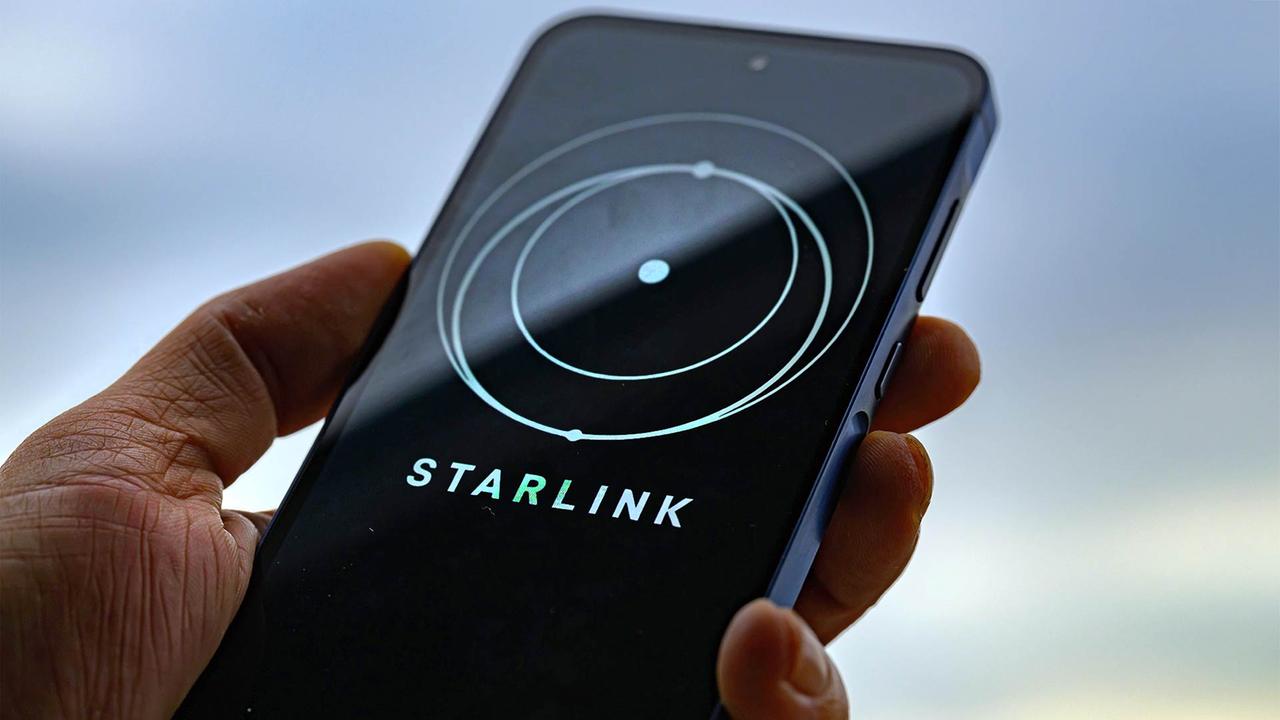
SpaceX’s acquisition of an 800-megahertz spectrum portfolio from the investment firm Grain Management marks a pivotal transition in its business model. For years, Starlink has relied on a hardware-heavy approach, requiring users to install a physical dish with a clear, unobstructed view of the sky to access high-speed internet.
The new spectrum acquisition fundamentally alters this dynamic. By utilizing low-frequency bands, SpaceX can now facilitate signal transmission that penetrates walls and connects directly with standard consumer smartphones. This "direct-to-cell" technology represents the holy grail of satellite communications, effectively turning every mobile phone into a satellite-enabled device without the need for additional bulky hardware.
A Chronology of the Disruption
The events of the past 48 hours are the culmination of a multi-year strategy by Musk to dominate the global connectivity market:
- 2025 – The Global Foundation: Starlink secures a global 2-gigahertz spectrum allocation, investing nearly $19.6 billion to establish a backbone for satellite-based mobile services.
- Early 2026 – Regulatory Green Light: The US Federal Communications Commission (FCC) grants SpaceX approval to deploy an additional 15,000 satellites specifically optimized for 2-gigahertz mobile connectivity.
- October 8, 2026 – The Grain Management Deal: SpaceX formally agrees to purchase a comprehensive portfolio of 800-megahertz spectrum from Grain Management. This acquisition provides the necessary low-band coverage to ensure ubiquitous signal penetration in urban and indoor environments.
- October 9, 2026 – Market Reaction: Following the announcement, investor sentiment shifts rapidly. T-Mobile US, previously the crown jewel of Deutsche Telekom’s portfolio, drops seven percent at the Nasdaq, triggering a broader sell-off in the European Stoxx 600 Telecom index.
Supporting Data and Technical Hurdles
For years, skeptics argued that the physics of satellite-to-phone communication—specifically latency and signal strength—would remain an insurmountable barrier for companies like SpaceX. However, the recent acquisition of low-band spectrum provides the "missing link."
While Starlink’s existing 2-gigahertz spectrum is ideal for high-bandwidth data consumption, the newly acquired 800-megahertz bands are optimized for coverage and penetration. By combining these, SpaceX can offer a hybrid service that provides the reliability of a traditional cell tower with the reach of a satellite constellation.
Industry analysts at William Blair have noted that this creates an "extremely attractive" ecosystem. There is growing speculation that this infrastructure will serve as the delivery vehicle for xAI’s artificial intelligence, "Grok," potentially embedding advanced AI assistant features directly into the network layer of mobile communications.
Official Responses and Industry Skepticism
The reaction from established carriers has been a mix of strategic downplaying and frantic back-office assessment. A spokesperson for Verizon, attempting to stabilize shareholder nerves, remarked: "This company may possess a vast array of frequencies, but without an established mobile network, it is largely theoretical. These are, for now, merely unutilized radio waves."
However, the market is not entirely convinced by such dismissals. Graham Hunt, an analyst at the investment bank Jefferies, pointed out that the lack of physical infrastructure may not be a long-term problem for SpaceX. "Starlink could simply integrate into existing ecosystems by leasing space on mobile tower arrays," Hunt noted. Following this observation, shares of tower operators like American Tower saw a modest uptick, suggesting that while traditional carriers may be at risk, the physical infrastructure providers may find a new, deep-pocketed tenant in SpaceX.
Implications for the Future of Telecommunications
The Existential Threat to T-Mobile
The impact on Deutsche Telekom is particularly acute. The company has increasingly relied on its US subsidiary, T-Mobile US, as its primary engine for growth and profitability. With the German domestic market showing signs of stagnation and limited appeal to international investors, the erosion of T-Mobile’s US market dominance presents a significant strategic challenge for CEO Tim Höttges.
Höttges’ recent ruminations on a potential merger between the German business and the US holding—a move aimed at creating a $300 billion entity to bolster stock valuation—now face increased scrutiny. Investors, already cool to the idea of such a massive consolidation, are likely to be even more skeptical if the US market becomes a theater for a price war with a competitor as well-capitalized and technologically agile as SpaceX.
The Looming Price War
The most immediate consequence for consumers may be a aggressive, bottom-line-focused price war. If SpaceX can offer satellite-based connectivity at a lower price point than terrestrial 5G plans, incumbents will be forced to slash prices to maintain market share. This could lead to a rapid devaluation of existing mobile infrastructure investments across the industry.
The Role of Artificial Intelligence
The integration of xAI’s "Grok" into the Starlink ecosystem could redefine the relationship between the service provider and the consumer. If SpaceX can offer an AI-native mobile experience—where the network itself understands and optimizes for the user’s AI-driven requests—it would mark a departure from the "dumb pipe" model that has defined the telecom industry for decades.
Market Outlook: The Path Forward
While the DAX recovered some ground at midday, moving back above the 25,000-point mark thanks to cooling oil prices, the damage to the telecommunications sector remains a persistent concern for investors. The shift in market power from traditional terrestrial operators to space-based service providers is no longer a distant possibility; it is a live, unfolding reality.
As the FCC prepares to finalize the regulatory approval for the SpaceX-Grain Management deal, the industry will be watching closely. The question is no longer whether SpaceX can disrupt the market, but how quickly the legacy giants—Telekom, Verizon, and AT&T—can pivot to defend their territory in an era where the sky is no longer the limit for mobile competition.
The coming months will likely see a flurry of strategic acquisitions, potential mergers, and intense lobbying efforts in Washington as the telecommunications establishment attempts to build a "moat" against the SpaceX satellite juggernaut. For now, however, the momentum remains firmly with Elon Musk.