By Global Environmental Desk
Updated: October 5, 2026
The global agricultural sector faces an existential reckoning. As the world struggles to meet the climate targets established in the Paris Agreement, the livestock industry—a primary engine of the global food supply—finds itself under intense scrutiny. Responsible for roughly 25% of human-induced methane emissions, cattle farming has long been viewed as an environmental villain. However, in the lush, rolling pastures of Tasmania, Australia, a quiet revolution is taking place. Farmers and scientists are partnering to deploy a surprising, ancient biological weapon against modern climate change: a specific strain of red seaweed.
Main Facts: The Methane Problem and the Algal Solution
Cattle are ruminants, possessing a complex digestive system that relies on microbial fermentation to break down tough plant fibers. This biological process, while efficient for extracting nutrients from grass, produces methane as a byproduct, which the animal releases primarily through burping. Methane is a potent greenhouse gas, with a warming potential significantly higher than that of carbon dioxide over a 20-year period.
The discovery at the heart of this agricultural shift centers on Asparagopsis taxiformis, a type of red algae. When introduced into the diets of cattle in minute quantities, this seaweed acts as a natural inhibitor of the enzymes that produce methane in the rumen.
Recent field trials in Australia have shown staggering results. In controlled environments, the addition of small amounts of Asparagopsis to cattle feed has been shown to reduce methane emissions by as much as 80% to 90%. This is not a marginal improvement; it is a transformative shift that could potentially alter the carbon footprint of the entire global beef and dairy industry.
Chronology of the Seaweed Breakthrough
The journey from a laboratory curiosity to a farm-gate reality has been a multi-year effort involving marine biologists, private enterprise, and traditional ranchers.
- 2016-2018 (The Discovery Phase): Research institutions, notably the Commonwealth Scientific and Industrial Research Organisation (CSIRO) in Australia, began exploring the potential of macroalgae to mitigate methane. Initial lab tests produced results so anomalous that researchers initially suspected equipment failure.
- 2019-2021 (Validation): Following rigorous testing, the scientific community reached a consensus: the bioactive compounds within Asparagopsis specifically target the methanogenic pathways in the bovine gut without compromising the health or nutritional uptake of the animals.
- 2022-2024 (Scaling Up): Entrepreneurs recognized the commercial viability. Companies like Seaforest were established, focusing on the development of land-based and near-shore aquaculture systems to cultivate the algae at scale. This moved the process from wild harvesting—which would be ecologically unsustainable—to controlled production.
- 2025-2026 (On-Farm Implementation): Large-scale pilots, such as those conducted on farms in Tasmania, began integrating seaweed-based feed supplements, such as mineral blocks, into the daily routines of commercial cattle herds.
Supporting Data: Why It Works
The science behind the "seaweed snack" is rooted in chemistry. The primary active component in Asparagopsis is bromoform, a compound that prevents the formation of methane by disrupting the enzyme responsible for the final step of methane synthesis in the cow’s stomach.
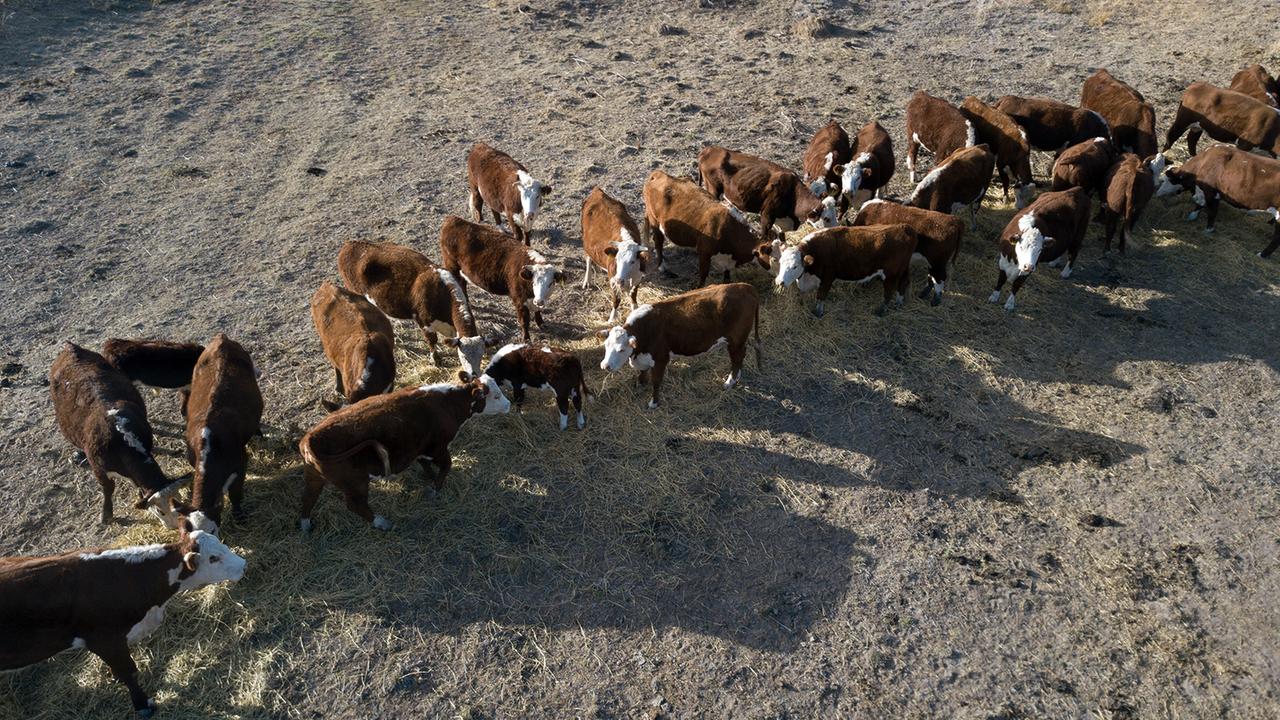
Current data sets from the Tasmanian Institute of Agriculture highlight several critical findings:
- Emission Reduction: Consistent reductions in enteric methane output of 80% or higher have been verified in multiple trials.
- Growth Efficiency: Emerging data suggests that cattle fed on the seaweed additive may actually exhibit improved weight gain and feed efficiency. By preventing the loss of energy through methane production, the animal can divert more metabolic energy toward growth.
- Livestock Health: Long-term studies have shown no adverse effects on the animals, nor have there been reports of negative impacts on the quality, safety, or taste of the resulting beef.
Official Responses and Expert Perspective
The implementation of this technology has garnered significant attention from government advisors and climate scientists. Tim Flannery, a prominent Australian scientist and climate advisor, frames the issue with pragmatic urgency.
"There is no ‘silver bullet’ for climate change," Flannery notes. "However, the methane emitted by livestock is a major contributor to short-term warming. Because methane has a shorter atmospheric lifespan than carbon dioxide, reducing these emissions offers the fastest way to slow the rate of global heating."
Flannery emphasizes that while the ultimate climate goal remains a reduction in total meat consumption, the reality of global demand necessitates a middle-ground strategy. "As long as we continue to farm cattle, we have a moral and environmental obligation to use every tool at our disposal to neutralize the methane they produce. We cannot wait for a global dietary shift to address the immediate crisis."
Industry leaders and farm operators, such as Tasmanian rancher Adam Wesley, share this perspective. For Wesley, the shift is not just about environmental stewardship; it is about market survival. "Consumers are changing," Wesley observes. "They are looking at the footprint of their food. If we can provide a climate-friendly steak, we aren’t just helping the planet; we are securing a premium place in the market for our product."
Implications for Global Agriculture
The successful integration of Asparagopsis into cattle feed has profound implications that extend far beyond the borders of Australia.
The Economic Shift
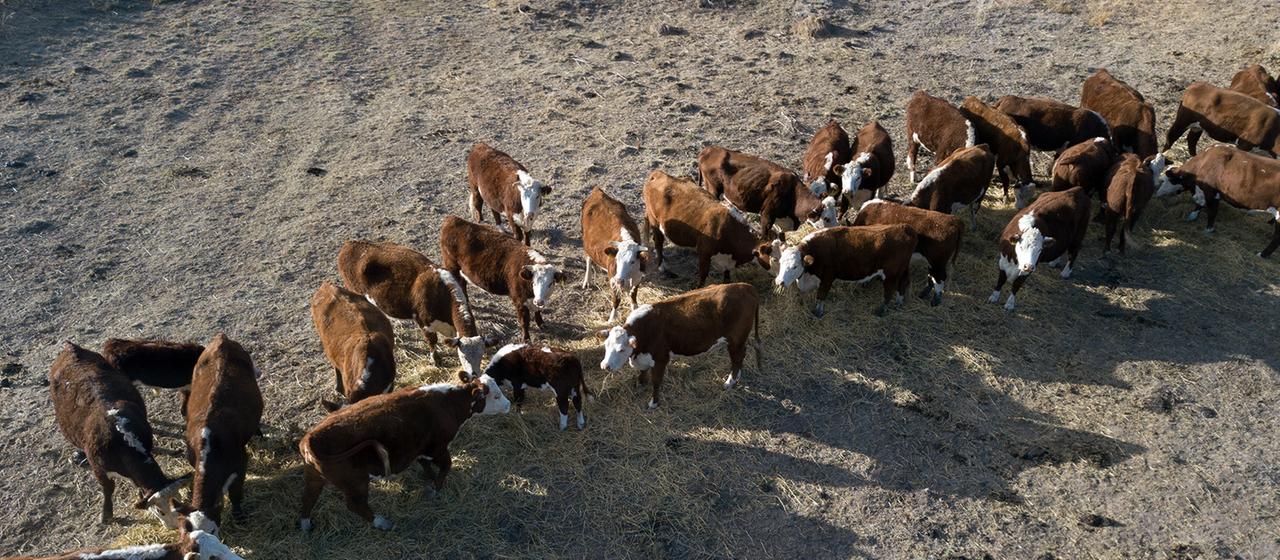
The transition to seaweed-supplemented feeding requires a robust supply chain. It necessitates the creation of a global seaweed aquaculture industry, which could become a new pillar of the blue economy. Farmers will need to absorb the initial costs of these supplements, but the expectation is that these costs will be offset by "climate-positive" price premiums and improved feed efficiency.
Policy and Regulation
Governments are beginning to look at how they can incentivize this transition. If a government can prove that a national herd is producing 50% less methane, it drastically alters that nation’s ability to meet its Nationally Determined Contributions (NDCs) under the Paris Agreement. We may soon see carbon credits being issued to farmers who adopt these feed additives, effectively turning environmental stewardship into a new revenue stream.
Scaling the Technology
The challenge remains the scale. Cultivating enough Asparagopsis to feed the world’s 1.5 billion head of cattle is a massive logistical undertaking. It requires thousands of hectares of controlled aquaculture and the development of cost-effective delivery methods, such as the mineral blocks currently being tested.
A Necessary Transition
Critics argue that relying on technological fixes allows the industry to avoid the harder conversation about reducing industrial livestock numbers. However, the scientific consensus currently leans toward a "both-and" approach: we must optimize the efficiency of current production systems while simultaneously working toward more sustainable dietary patterns globally.
As Adam Wesley drives his buggy across his Tasmanian fields, the reality of the climate crisis feels both daunting and manageable. The cattle he raises are no longer just a source of protein; they are part of a controlled, scientific experiment in planetary cooling.
"It’s a small step," Wesley says, looking over his herd. "But if every farm in the world started using these supplements, we wouldn’t just be talking about slowing down climate change—we would be actively changing the trajectory of our future."
The story of the Tasmanian red-algae project serves as a poignant reminder that innovation often comes from the most unexpected places. In the intersection of marine biology and ancient ranching practices, humanity may have found the bridge it needs to traverse the most challenging decades of the 21st century. Whether this proves to be a permanent fix or a crucial stopgap, the "seaweed solution" stands as a testament to the power of human ingenuity in the face of a changing climate.