Executive Summary: A Volatile Week Ends on a High Note
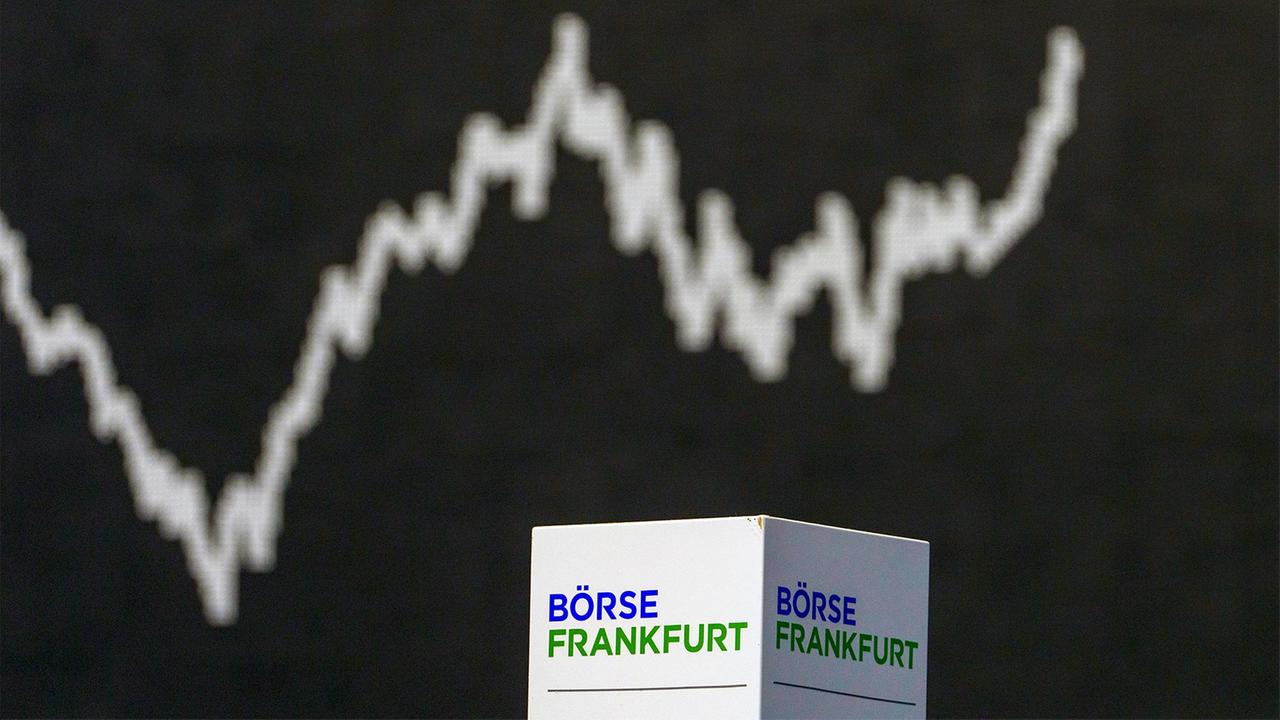
As the trading week drew to a close on October 9, 2026, the German stock market experienced a much-needed sigh of relief. After a period of intense turbulence driven by geopolitical instability in the Middle East and concerns over sovereign debt in the Eurozone, the DAX index managed to reclaim the psychological threshold of 25,000 points.
The benchmark index concluded the session at 25,087 points, marking a daily gain of 1.13%. While this late-week surge provided a positive sentiment to finish the period, it could not entirely offset the broader sell-off, leaving the index with a weekly loss of approximately 0.6%. Simultaneously, the MDAX, which tracks mid-cap German equities, outperformed the broader market with a gain of 1.64%, closing at 29,989 points.
The recovery was primarily fueled by a stabilization in global oil prices and a slight retreat in bond yields. However, beneath the surface, investors remain wary, caught in a complex web of shifting geopolitical narratives and uncertain macroeconomic signals.
Chronology: The Week of Nervousness
The week was defined by the ongoing escalation—and subsequent cooling—of rhetoric surrounding the conflict in the Persian Gulf.
- Monday and Tuesday: Equity markets opened under significant pressure. The rising cost of crude oil acted as an "oxygen thief" for the DAX, as investors priced in the risk of supply chain disruptions and inflationary pressure.
- Wednesday: Anxiety peaked as bond yields in France surged to their highest levels in 24 years, reaching 4.99% for ten-year sovereign debt. The spread between German Bunds and French OATs signaled a growing lack of confidence in the fiscal stability of the Eurozone’s second-largest economy.
- Thursday: The market found a pivot point when U.S. President Donald Trump addressed the nation, stating that the United States would not initiate military action against Iran prior to the November congressional elections. This provided a temporary ceiling on the "war premium" currently baked into oil prices.
- Friday: Markets consolidated these gains. The stabilization of oil prices, combined with a correction in bond yields (falling to 4.85%), allowed investors to rotate back into equities, lifting the DAX back above the 25,000-point mark.
Supporting Data and Market Dynamics
The interplay between the DAX and external macro-variables has become increasingly mechanical. Market analysts note that the German index is currently "on life support," heavily dependent on two key metrics: the price of Brent crude and the yield of long-term government bonds.
The "Oil-Debt" Nexus
The correlation between energy prices and equity valuations has reached a critical stage. High energy costs threaten to erode the margins of German industrial giants, which are already struggling with high operational costs. Analysts at CapTrader, led by Timo Emden, have characterized the current state as a "stranglehold."
Furthermore, the debt situation in France and Italy remains a structural risk. The 24-year high in French bond yields is not merely a regional issue; it reflects a broader skepticism regarding the EU’s ability to coordinate fiscal policy in an environment of high interest rates. If energy prices remain elevated, the European Central Bank may be forced to keep interest rates higher for longer, potentially stifling the growth that investors are desperately hoping for.
The Telecom Sell-off: A Disruptive Force
While the general market trend was upward, the telecommunications sector faced a significant disruption. T-Aktie (Deutsche Telekom) shares plummeted by approximately 8%, serving as the worst performer on the DAX.
The catalyst was the strategic move by Elon Musk’s SpaceX. Through its Starlink satellite division, SpaceX is moving to acquire a massive portfolio of low-frequency spectrum. This initiative is designed to provide direct-to-cell mobile connectivity, bypassing traditional terrestrial cell towers. For investors in T-Mobile US, AT&T, and Verizon, the move represents an existential threat to the legacy business model. The market reaction underscores a broader trend: the "space-based" internet is no longer a futuristic concept, but a competitive reality that is actively eroding the valuation of incumbent telco providers.
Official Perspectives and Expert Analysis
Market strategists are urging caution despite the Friday rebound. The consensus is that the current market rally is fragile and susceptible to "headline risk."
Geopolitical Fragility
Nick Twidale, Chief Market Strategist at ATFX Global, emphasized that the "half-life" of political promises is extremely short. "The big question for the markets is whether President Trump stays true to his word if Iranian provocations escalate," Twidale noted. This sentiment is echoed by analysts at Helaba, who suggest that the current volatility is likely to persist until at least the U.S. midterm elections in early November.
The AI Narrative at the Wall Street Level
Across the Atlantic, U.S. markets also saw a recovery, with the Dow Jones rising 0.6% and the Nasdaq 100 climbing 0.4%. Much of this movement was driven by a correction in the narrative surrounding Artificial Intelligence.
Earlier in the week, reports suggested that OpenAI’s revenue growth was stalling, sparking fears that the "AI bubble" was bursting. However, a follow-up report by Bloomberg provided a different perspective, suggesting that the company is on track to reach an annualized revenue run rate of $70 billion by year-end. This clarification helped soothe investors who were worried that the massive capital expenditure pouring into AI infrastructure would not yield commensurate financial returns.
Implications: What Lies Ahead?
The market is currently navigating a period where corporate fundamentals are being tested by macroeconomic headwinds. As we move into the final quarter of the year, several critical factors will determine the trajectory of the DAX:
- Corporate Profitability: The primary concern for institutional investors is whether European companies can sustain their earnings margins. As Daniela Hathorn from Capital.com pointed out, the ability to pass on rising financing costs to consumers will be the deciding factor for market resilience.
- The U.S. Election Cycle: The window between now and November 2026 is expected to be characterized by heightened volatility. Markets dislike uncertainty, and the U.S.-Iran dynamic remains the single greatest wildcard.
- The Shift in Connectivity: The drop in telecom stocks indicates that investors are increasingly sensitive to technological disruption. As SpaceX and other satellite operators challenge traditional infrastructure, we may see a broader reallocation of capital away from legacy telecommunications and into aerospace and satellite-integrated tech.
- Fiscal Discipline in the Eurozone: The yields on French and Italian debt will remain a "litmus test" for European stability. Should yields resume their upward trajectory, the European Central Bank will face a severe dilemma: fight inflation with high rates or bail out sovereign debt markets.
In conclusion, while the DAX successfully defended the 25,000-point level, the underlying environment remains precarious. Investors are advised to maintain a defensive stance, keeping a close watch on oil prices and the political climate in Washington and Tehran. The path forward for the final months of 2026 appears paved with both opportunity and significant risk, demanding a cautious and well-diversified strategy.